
How do you stop polyester and nylon fabric from clinging to the cutting table in a garment plant in Vietnam? The fabric clings and attracts lint because the charge generated when it is spread and pulled cannot drain away, especially when the air is dry. PRIMEAG recommends measuring the electrostatic field at the head of the spreading table to find hot spots, monitoring humidity, then placing an ionizer bar within 300–1,400 mm and cleaning the emitter pins weekly.
At the end of the year, with dry weather, the cutting team complains that fabric is sticking to the table: by the 60th ply, pulling the top ply drags the one below along with it. Lint covers the fabric surface.
- Synthetic fibres become charged by friction during spreading; dry air makes the charge last longer.
- Measure the field first to find the worst table, then install ionizing equipment.
- Ionizer performance depends on distance and on how clean the pins are.
Static on fabric in the cutting room: where the charge comes from
Polyester and nylon are almost insulators. As fabric slides over the table, the two surfaces touch and separate, leaving a charge behind. The charge stays put on the fabric and even a grounded table cannot drain it, so plies attract each other and attract lint.
Causes in the order to check them
1. Friction at the spreading head
A fast spreading machine with high tension generates the most charge at the head of the table.
2. Low workshop humidity
Dry air makes charge dissipate slowly. Log humidity by shift and compare it with days when fabric clings badly.
3. Plastic or formica table tops
Insulating table tops charge themselves and hold the bottom ply in place.
4. Machine frames and people not grounded
An ungrounded spreader frame becomes charged and people touching it get a shock.
Rule causes out with measurements
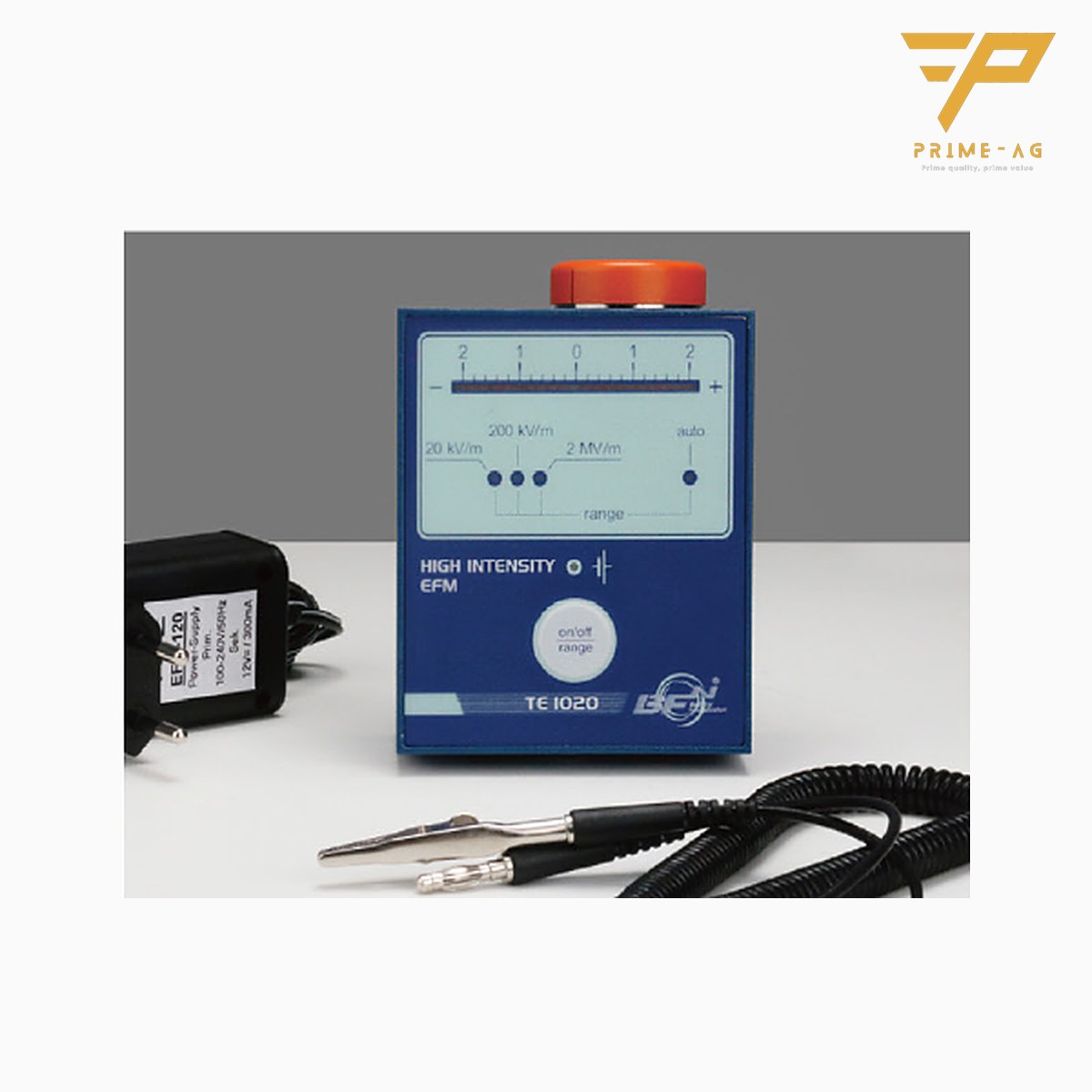
The TE1020 LED-bar electrostatic field meter has three ranges, ±20 kV/m, ±200 kV/m and ±2 MV/m, read on 21 LEDs with the 0 point in green. Its ±1 V analog output can be connected to a data logger.
| Measuring point | A high reading means | Action |
|---|---|---|
| Spreading table head, during spreading | Spreading friction is the main source | Ionizer bar at the table head, aimed at the ply just laid |
| Empty table top | The table top charges itself | Clean it, consider a dissipative surface |
Ionization at the spreading table head and packing tables
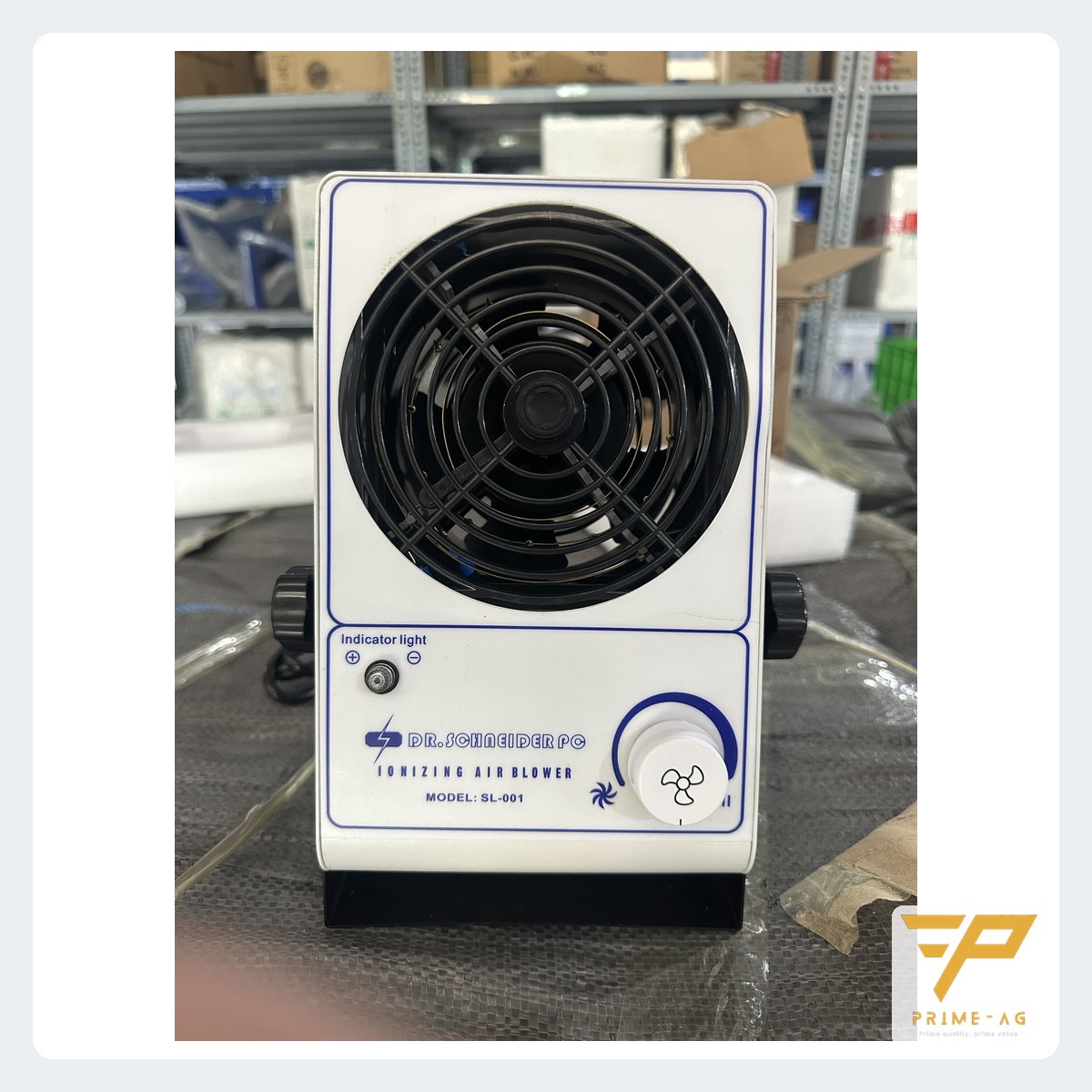
The 702 ionizing bar with 2 fans has an airflow of 160 CFM and a working distance of 300–1,400 mm. According to the catalogue, decay time from ±1,000 V to ±100 V is no more than 2.0 s at 300 mm, with ion balance within ±5 V. A one-person packing table usually needs only a benchtop blower, chosen from the ionizing blowers range.
Ions recombine quickly in air: place the blower close and do not let fabric rolls block the airflow.
- Clean the pins weekly with a cotton swab moistened with IPA, with the power off; clean the intake grille as well.
- If balance is still off after cleaning, replace the pins: an unbalanced ionizer will charge the fabric.
Ions cannot remove lint that has already stuck: for table tops and rigid pattern boards use a silicone sticky roller, and for finished garments use a sticky paper lint roller.
Self-check before the dry season
- Hang a thermo-hygrometer (from the measuring and inspection equipment range) in the cutting room and log readings each shift.
- Check the ground wires on spreader frames and metal tables.
- Measure ionizer balance and decay time with a charged plate monitor (CPM), recommended every 6 months and after every pin replacement.
If the cutting and packing areas already have ESD mats or ESD table tops, PRIMEAG offers resistance testing of those surfaces at your workshop, free of charge, to see whether the lining still works or has degraded; results are for the engineering team’s reference only and are not for submitting to audits.
How to choose between types of ionizing equipment is covered in choosing an ionizing blower, ionizing gun or ionizing bar; lint removal in the finishing area is covered in dealing with lint and loose threads on garments before packing.
Frequently asked questions
- Why does polyester fabric cling to the cutting table more than cotton? — Synthetic fibres absorb little moisture and are insulating, so the charge stays on the fabric; cotton absorbs moisture, so it dissipates charge more easily.
- Is it safe for workers to run an ionizer for a whole shift? — Corona discharge produces a small amount of ozone; the 702 bar is rated at no more than 0.002 ppm. Do not put many ionizers in a closed room.
- If we have ionizers, do spreader machine frames still need grounding? — Yes. Ionizers only neutralise insulators such as fabric and bags; machine frames and people still need to be grounded.
Email: info@primeag.vn · Phone/Zalo: +84 906 108 292
Written by the PRIMEAG engineering team
Updated: 2026-10-26