
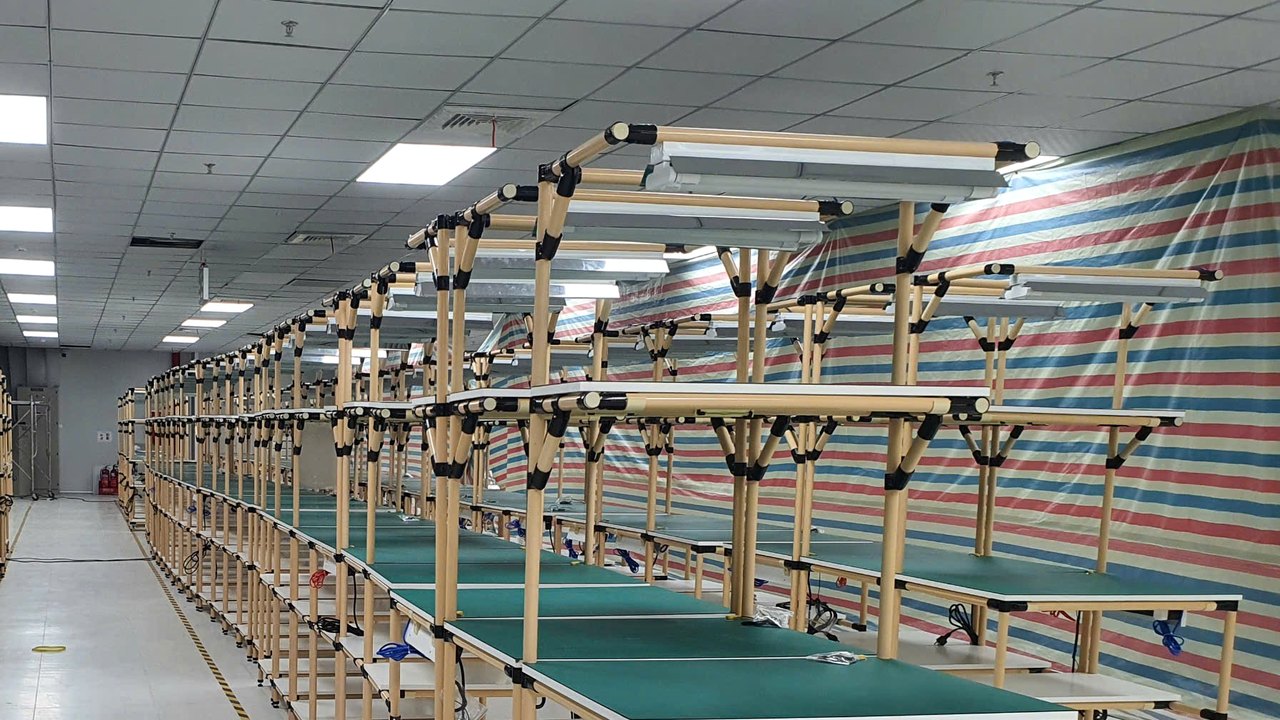
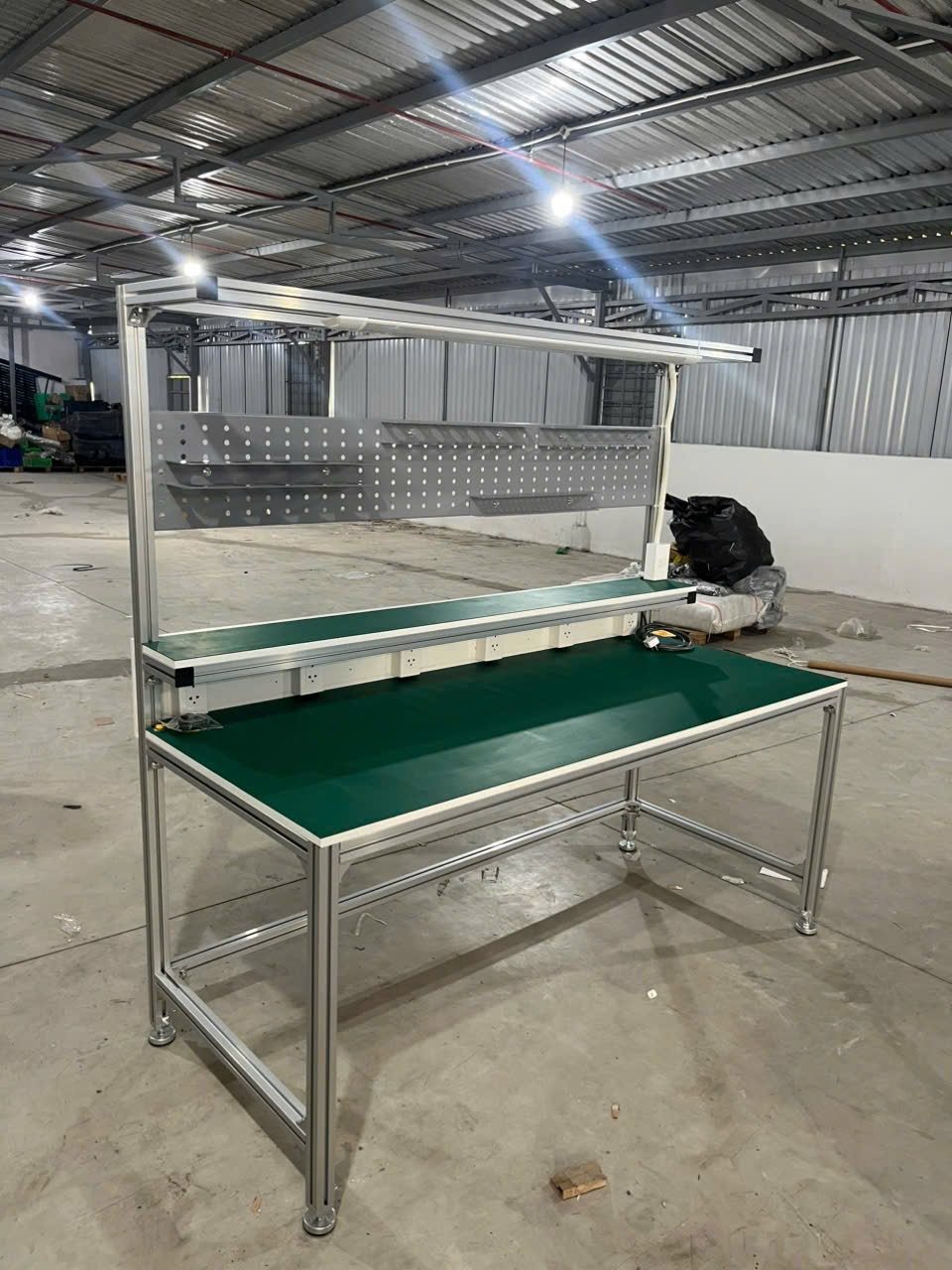
A workbench at the right height is one whose surface sits around the operator’s elbow height: higher for precision work, lower for work that requires force. According to CCOHS (Canada) guidance, heavy work should be 20–40 cm below elbow height. PRIMEAG builds modular-frame benches so the height can be readjusted on site after operators have tried them.
- Use the elbow as the reference: measure the elbow height of the actual operators on the line, not a generic figure.
- By type of work: precision work above the elbow, light work slightly below, force-intensive work well below.
- Lines with many operators: choose a lean pipe workbench (plastic-coated steel pipe, Φ28) or a 40×40 aluminum profile workbench so heights can be adjusted.
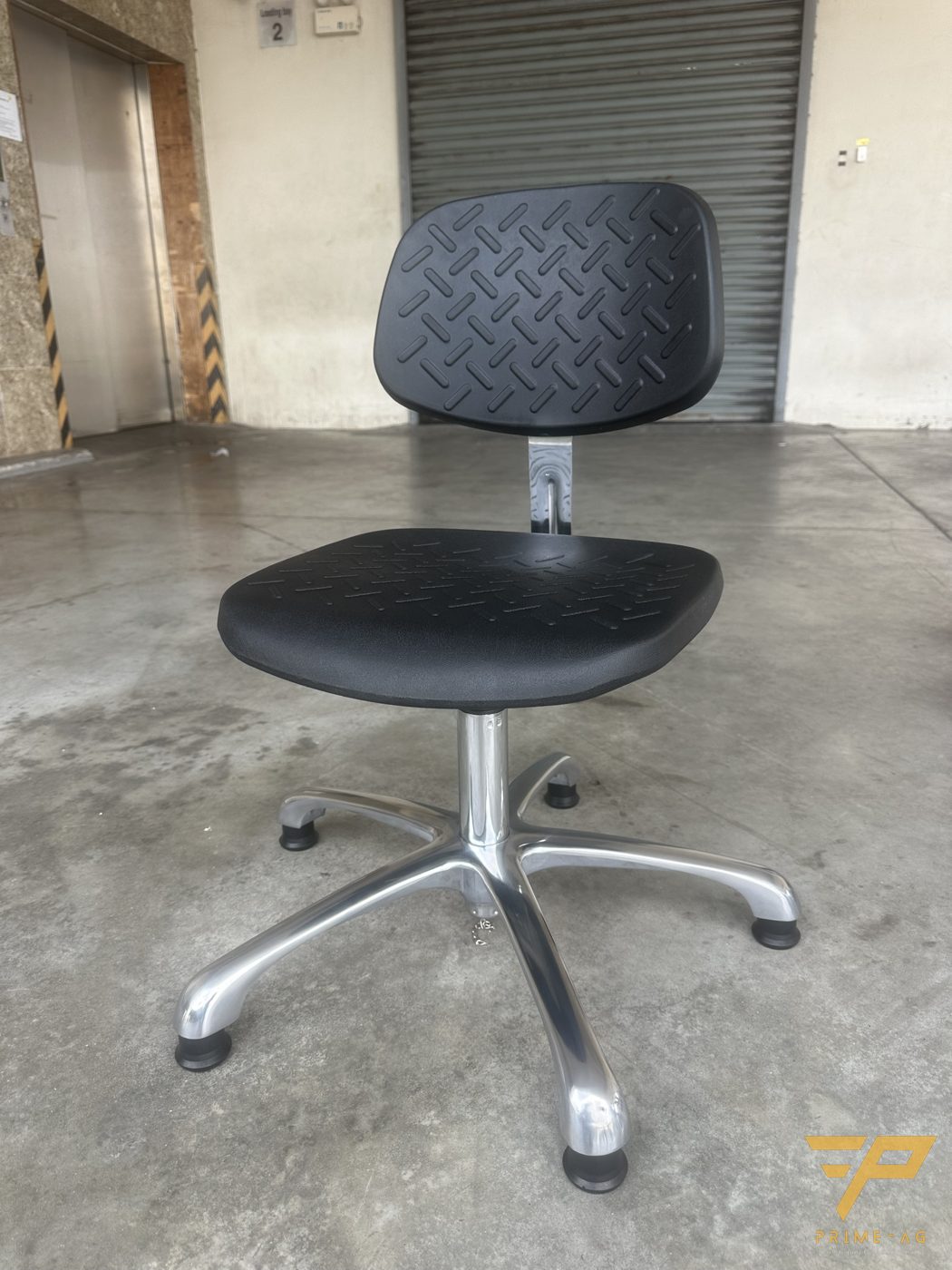
- Seated: chair with backrest and gas-lift height adjustment, feet flat on the floor or on a footrest.
Why bench height causes fatigue
A bench that is too low makes operators bend their back and neck; one that is too high makes them raise their shoulders. Repeated thousands of times per shift, neck and shoulder fatigue and back pain appear by mid-shift, work slows down and errors increase. The most common problem is a whole line using one bench height while operators differ considerably in stature.
1. Standing lines: use the elbow as the reference
CCOHS guidance for standing work: for precision work, the work surface should be about 5 cm above elbow height (with elbow support); for light work such as assembly lines and light mechanical work, 5–10 cm below elbow height; for heavy work requiring strong downward force, 20–40 cm below. Note that the reference is the working height – the point where the hands work – not the bench surface. If a 10 cm tall product sits on the bench, the bench surface must be lowered accordingly.
2. Seated lines: bench, chair and feet work together
When seated, the shoulders should be relaxed, the elbows close to the level of the work surface, the thighs clear of the underside of the bench, and the feet flat. With a fixed-height seated bench, adjustment has to come from the chair: an ESD chair with backrest and gas-lift height adjustment. When shorter operators raise the chair, their feet no longer reach the floor – they then need a footrest. Do not let drawers or crossbars block the space for thighs and knees.
3. Sit–stand stations
Holding one posture for a long time, standing or sitting, causes fatigue. A standing-height bench can be paired with a tall stool with a foot ring so operators can sit and lean when the work allows. Backless stools are only suitable for short periods of sitting. Positions where operators stand all shift on a hard floor should have an anti-fatigue mat.
4. Reach and lighting
Frequently used parts should be within forearm reach; less frequently used parts go on the upper shelf, but not so high that operators must stand on tiptoe. Lighting should not dazzle or cast hand shadows on the product.
Working height selection table
| Type of work | Working height (relative to elbow) | Examples |
|---|---|---|
| Standing – precision work, close visual attention | About 5 cm above elbow, with elbow support | Fine electronics assembly, solder-joint inspection |
| Standing – light work | 5–10 cm below elbow | Assembly lines, light mechanical work, packing |
| Standing – heavy work, force required | 20–40 cm below elbow | Pressing, hammering, packing heavy cartons |
| Seated | Close to elbow level with shoulders relaxed | Hand soldering, fine assembly |
Reference source: CCOHS, “Working in a Standing Position – Basic Information”. The figures above are a starting point; the final height should be confirmed after operators have trialed it.
Project reference
At a Taiwanese-invested electronic components plant in Da Nang (2024–2025), PRIMEAG supplied about 500 ESD workbenches with lights, power outlets and grounding cords, delivered in 4 batches.
How to start
- Measure the elbow height (standing and seated) of the operators on the line, and record the shortest and tallest.
- Record the type of work and product height at each station.
- Build 1–2 modular-frame sample benches, let operators trial them for a few shifts, then confirm the height.
- For lines with many operators: benches with adjustable feet, plus footrests or standing platforms for shorter operators.
Standard-design sample benches are produced in 5–7 working days; new-design samples take 10–15 working days including drawing approval. Bench frames carry a 3-year warranty. See also how to reduce fatigue for operators who stand all shift: anti-fatigue mats, chairs and bench height, and station layout in Lean workstation improvement.
Frequently asked questions
How high should a standing workbench be? There is no single figure. Use the operator’s elbow height as the reference: light work 5–10 cm below the elbow, precision work about 5 cm above, heavy work 20–40 cm below (per CCOHS).
What if operators on one line differ in height? Use modular-frame benches with adjustable feet so each bench can be set individually, combined with standing platforms or footrests for shorter operators and height-adjustable chairs for seated positions.
Should we build a sample bench before equipping the whole line? Yes. Build 1–2 sample benches, let operators trial them for a few shifts, then confirm the height; lean pipe and aluminum profile benches can be readjusted with a hex key.
Updated: 20/10/2026 — PRIMEAG engineering team
Mon–Sat, 8:00–17:00 (GMT+7) · Phone/Zalo: +84 906 108 292 · Email: info@primeag.vn
Start where it suits you: Free technical advice · Send a drawing or layout · Get a quote within 30 minutes
Written by the PRIMEAG engineering team
Updated: 2026-10-19