
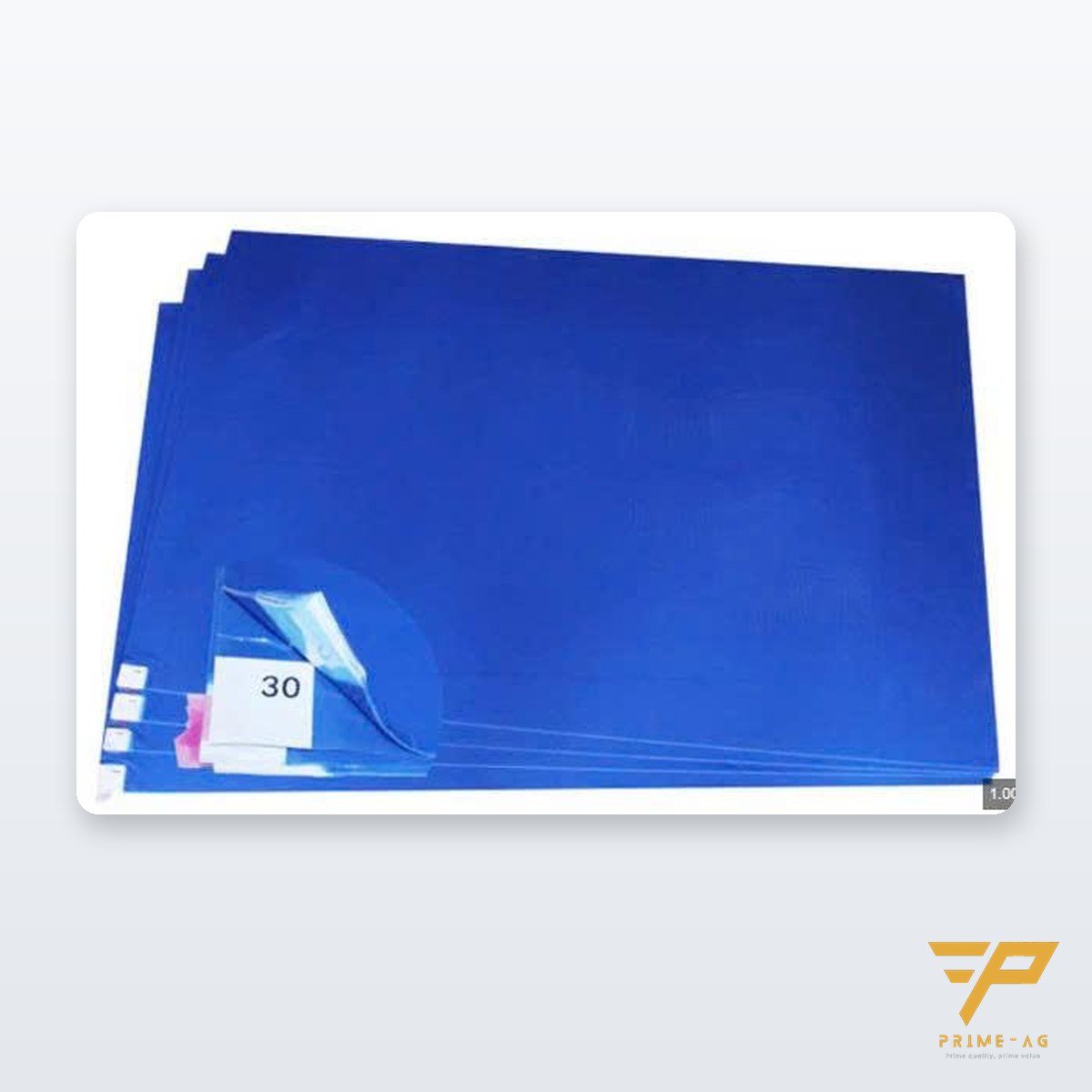
Cross-contamination in pharma and cosmetics packing areas mostly travels with people, shoe soles and trolley wheels. PRIMEAG recommends controlling it in layers: change garments, lint-roll clothing, step over 600×900 mm sticky mats (30 layers; 60 layers for busy doors) at the entrance, then keep the inside clean with rollers and a layer-change routine.
- Entrance: sticky mats placed after the changing area, long enough for each foot to touch the mat at least 2 times.
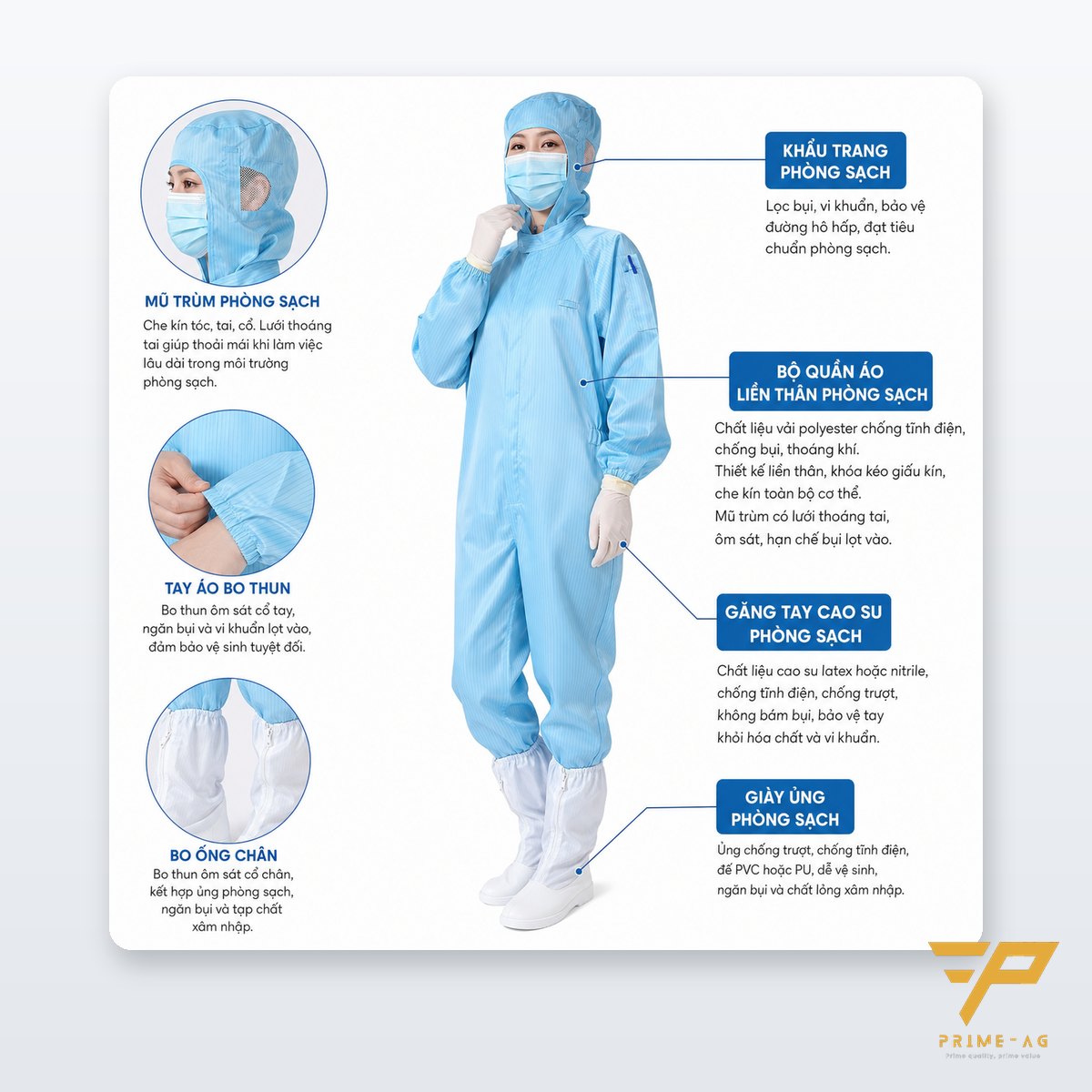
- Garments: hood, shoe covers or dedicated shoes, coverall or gown, face mask and gloves according to the area grade.
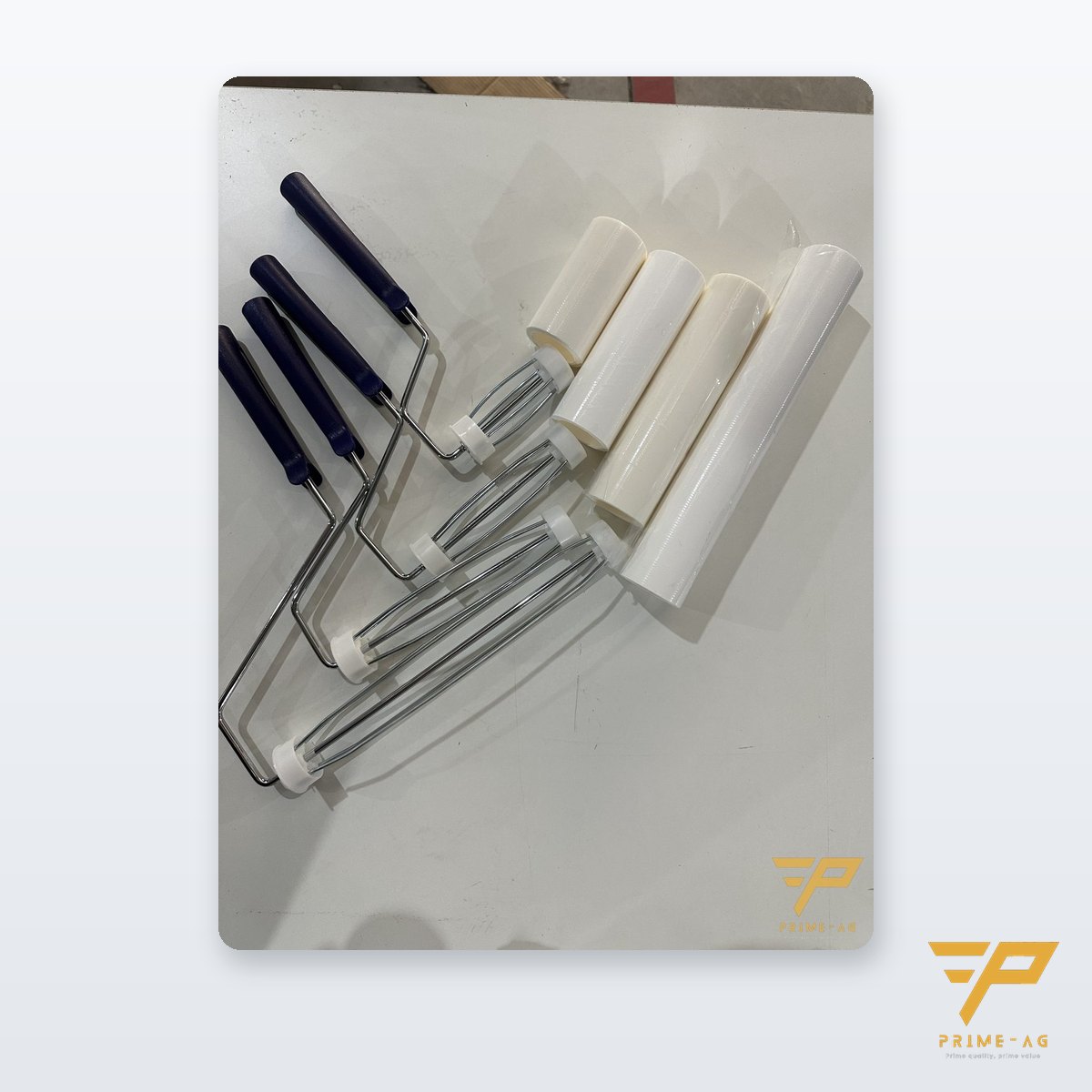
- Lint rolling: paper lint rollers for clothing; silicone rollers + DCR sheets for product and packaging surfaces.
- Procedure: schedule for peeling mat layers, changing roller refills, laundering garments, with records.
1. Sources of cross-contamination entering the packing area
Secondary packing areas (bottles, blisters and tubes already filled with product) are usually not as tightly enclosed as compounding areas, but dust, fibers, hair and microorganisms must still be kept low. There are three main routes in: hair and fibers from street clothes; dust and dirt under shoe soles; dust on trolley wheels, pallets and cartons from the warehouse. Each route needs its own measure, arranged in order from dirty to clean.
2. Order of layers at the entrance
- Changing area: store personal items, put on a hood and shoe covers or change into the area’s dedicated shoes, and wear a cleanroom coverall or gown depending on the area grade.
- Lint-roll garments: hang an 8–12 inch paper lint roller next to the mirror; roll shoulders, back, sleeves and trouser legs. The blue-roll type shows dust clearly and is used when checking is needed.
- Wash hands, put on gloves and mask: lint-free 3-ply cleanroom face mask; powder-free nitrile gloves.
- Sticky mats: placed right at the door into the packing area, on the clean side. One 600×900 sticky mat only covers one step; join 2–3 mats in the walking direction so each foot touches the mat at least twice.
If the clean area has an air shower, see the layout in the article controlling dust at clean-area entrances with air showers and sticky mats.
3. Where goods and trolleys pass
Cartons from the warehouse are a major source of paper dust. Remove the outer carton in the buffer zone and transfer goods to clean plastic bins or stainless trays before bringing them in. Trolleys that run both inside and outside the area must roll their wheels over sticky mats; better still, use dedicated trolleys for the inside and hand goods over through a pass box or transfer table. Packaging surfaces and bottle caps can be rolled before packing with a silicone roller with stainless handle, cleaning the roller on a DCR sheet.
4. Layer-change and inspection procedure
| Item | When to change | Notes |
|---|---|---|
| Sticky mat | When the top layer clearly shows footprints, or on a per-shift schedule | Layers numbered in the corner, easy to log how many remain |
| Paper roller refill | Tear off a sheet after each person or when no longer sticky | Handle lasts long, buy refills only |
| Silicone roller | Roll over a DCR sheet after each use | Silicone core is water-washable, let dry |
| Disposable hoods, shoe covers | Each time leaving the area | Lidded bin placed on the dirty side |
| Fabric coverall | Per the area’s laundry schedule (usually every shift or every day) | Launder separately, not with ordinary clothes |
Record the number of mat layers peeled and rolls used each week. These figures serve both for periodic ordering and as evidence of implementation in GMP audits. Pharma and cosmetics packing areas without ESD requirements do not need ESD fabric; long-filament polyester garments are still chosen because they shed few fibers.
Where to start
- Draw the flow of people and goods from the gate to the packing table, marking where dirty and clean flows cross.
- Measure door width to calculate the number of mats; count people per shift to estimate hoods, shoe covers and roller refills.
- Send the layout to PRIMEAG; stocked supplies are delivered within 24–48 hours in Ho Chi Minh City, Binh Duong and Dong Nai, and recurring orders have prices held for 6 months.
Frequently asked questions
How long does one sticky mat last? It depends on foot and trolley traffic. Mats have 30 or 60 layers; peel one layer when the top clearly shows footprints or on a per-shift schedule. Log the layers peeled for periodic ordering.
Should we use paper lint rollers or silicone rollers? Paper rollers are for clothing; tear off a sheet once dirty. Silicone rollers are for flat surfaces such as packaging and bottle caps; they are cleaned on a DCR sheet and last a long time.
Do cosmetics packing areas need ESD garments? Not required if the product is not static-sensitive. What matters is low-shedding fabric, hoods, shoe covers and a separate laundry procedure.
Updated: 27/10/2026 — PRIMEAG engineering team
Mon–Sat, 8:00–17:00 (GMT+7) · Phone/Zalo: +84 906 108 292 · Email: info@primeag.vn
Start where it suits you: Free technical advice · Send a drawing or layout · Get a quote within 30 minutes
Written by the PRIMEAG engineering team
Updated: 2026-10-19