
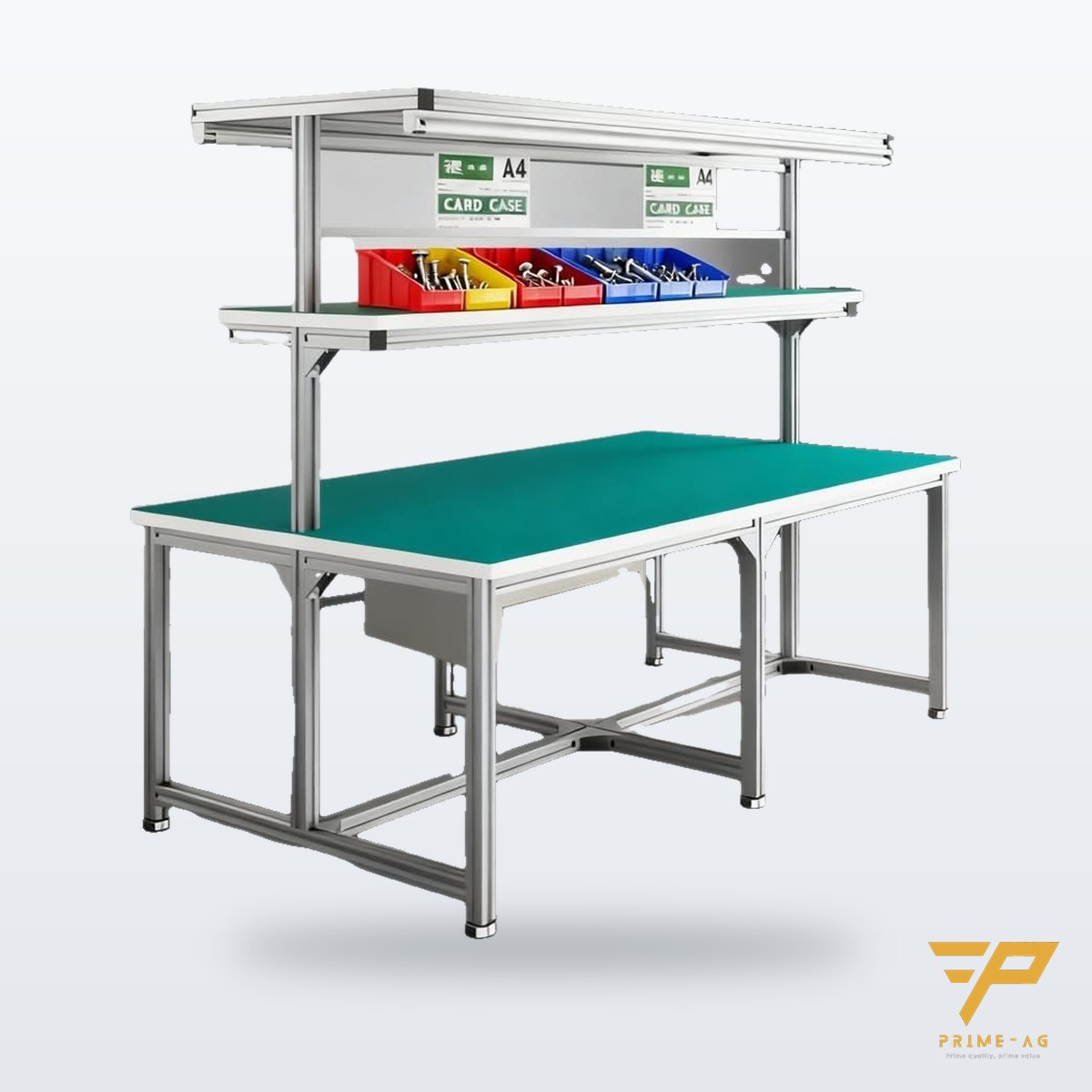
A machine workbench must be sized for the point loads at the machine feet, not just the total weight. For machines over 50 kg concentrated in one spot, or benches longer than 1,500 mm, use 40×40 aluminium profile rated for 300 kg; a standard lean pipe bench carries 150 kg. Send the machine weight and base dimensions so PRIMEAG can calculate before production.
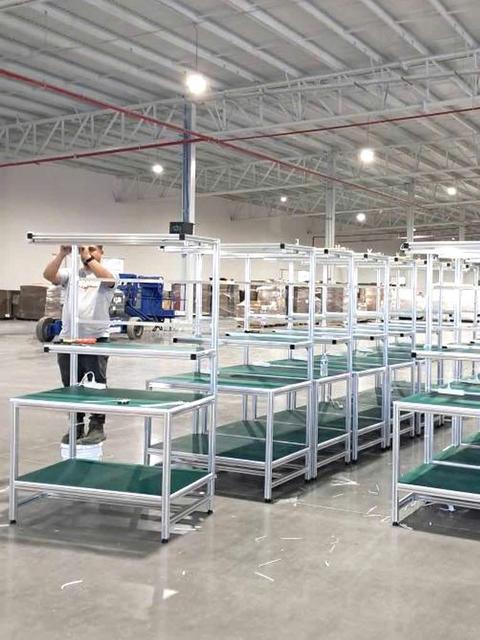
Workbenches are usually designed for manual assembly: light components, load spread evenly over the top. When you put a tester, an automatic screwdriving machine, a film laminator or a clamping fixture on the bench, the problem is completely different: the load is concentrated on a few machine feet, the machine vibrates, and the fixture must stay in position. Choose wrong and the top sags mid-span, fixtures drift out of position and vibration spreads to the next station. This article covers only benches that carry machines; for a general comparison of the two frame types for assembly lines, see choosing workbenches for electronics assembly lines.
- Calculate point loads: record each machine’s weight and foot positions, not just the total.
- Frame: 40×40 aluminum profile when a machine over 50 kg sits in one spot or the bench is longer than 1,500 mm; lean pipe only when reinforced.
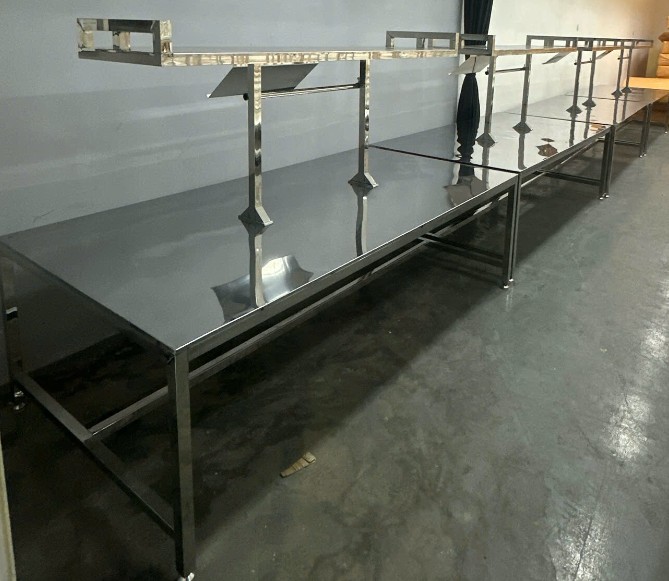
- Top: 25 mm MDF for light machines; ESD-painted steel plate or stainless steel when fixtures are bolted down or there is oil or heat.
- Feet: leveling feet to level the bench; vibrating machines never go on benches with casters.
1. How a machine bench differs from a manual assembly bench
- Concentrated load: a machine on 4 small feet puts its entire weight on 4 points. A wooden top sags mid-span and the fixture is no longer flat.
- Vibration: screwdriving machines, small presses and cooling fans transmit vibration through the frame; joint bolts gradually loosen if not checked.
- Repeatable positioning: fixtures need locating pins, mounting into T-slots or a base plate, with no shifting between shifts.
- Cables and compressed air: machines need cables and air hoses routed neatly under the top, not draped across the work area.
2. Choosing the frame by load
| Situation | Suggested frame | Notes |
|---|---|---|
| Light machine under 50 kg in one spot, bench up to 1,500 mm long | Lean pipe Φ28 or aluminum profile | A standard lean pipe bench carries 150 kg distributed over the top |
| Machine over 50 kg in one spot or bench longer than 1,500 mm | 40×40 aluminum profile | PRIMEAG’s 40×40 bench carries 300 kg evenly distributed |
| Several machines, vibration, rails, guards or sensors to mount | 40×40 aluminum with added bracing | Accessories bolt straight into the T-slots |
| Areas with water or chemicals, labs | Stainless steel 304 frame | PRIMEAG’s stainless lab bench carries 200 kg distributed |
To keep lean pipe for consistency with the rest of the line: use 1.2 mm wall pipe, add a cross member directly under the machine feet, and add a center leg on long benches. Send the machine weight and base dimensions so PRIMEAG can calculate before production.
3. Tops for machines and fixtures
- 25 mm MDF with melamine or ESD laminate: light machines, benches used for both machines and manual work.
- ESD-painted steel plate or stainless steel: fixtures bolted directly to the top, oil, heat, chips.
- Fixtures needing repeatable positioning: mount into T-slots or a base plate with tapped holes; do not drive wood screws into the same spot on MDF over and over.
- EPA areas: anodized aluminum frames have an insulating oxide layer, so the frame needs its own ground wire; the ESD top is grounded through a 1 MΩ cord.
4. Feet, leveling and vibration control
- Use leveling feet to level the bench on uneven floors; check with a spirit level before mounting fixtures.
- Put vibrating machines on benches with fixed feet. If the bench must move, choose locking casters and lock all four while the machine runs.
- Use anti-vibration pads under the machine feet as recommended by the machine manufacturer.
- Retighten frame bolts periodically on benches carrying vibrating machines, and put it in the maintenance schedule.
- Do not put vibrating machines on the same bench as scales, microscopes or measuring stations.
Where to start
- List the machines going on the bench: weight, base dimensions, foot positions, vibration or not.
- Note whether fixtures are bolted down or just placed, and whether there is oil, heat or chips.
- Identify the area: EPA, cleanroom or general workshop.
- Send drawings or photos to PRIMEAG; standard designs are produced in 5–7 working days, new designs in 10–15 working days including drawing approval.
Laying out stations to reduce walking when adding machines to a line: see lean workstation improvement: reducing walking and WIP.
A machine bench inside an EPA needs a worksurface and ground point below 10⁹ Ω; if you are not sure, book a free resistance measurement with PRIMEAG before buying a new bench.
Frequently asked questions
Can a lean pipe bench carry a machine? Yes, for light machines: PRIMEAG’s standard lean pipe bench carries 150 kg distributed over the top. For heavy machines concentrated on a few points or with vibration, use a 40×40 aluminum profile frame, or reinforce with 1.2 mm pipe, cross members under the machine feet and a center leg; send the machine weight so PRIMEAG can calculate.
Does an aluminum frame need grounding? Yes. Anodized aluminum frames have an insulating oxide layer, so the frame needs its own ground wire; the bench’s ESD performance comes from the top: use ESD laminate or a 2-layer rubber mat grounded through a 1 MΩ cord to the common ground point.
How long is the bench frame warranty? The bench frame has a 3-year warranty; ESD tops, lights, power outlets and included accessories have a 12-month warranty.
Updated: 04/11/2026 — PRIMEAG engineering team
Mon–Sat, 8:00–17:00 (GMT+7) · Phone/Zalo: +84 906 108 292 · Email: info@primeag.vn
Start where it suits you: Free technical advice · Send a drawing or layout · Get a quote within 30 minutes
Written by the PRIMEAG engineering team
Updated: 2026-10-23