
Made to order: delivered and installed as quoted, covered by warranty, no returns. Shipping & return policy

Product code: LP-MDF · Specification: Cut-to-size moisture-resistant MDF with melamine / ESD laminate facing
Pre-cut MDF Worktops & Shelf Boards
Common size: full sheet 1,220 × 2,440.
Delivery: stocked items are delivered in 24–48 hours (Ho Chi Minh City, Binh Duong, Dong Nai); cut-to-order 3–5 days; availability is confirmed with the quotation.
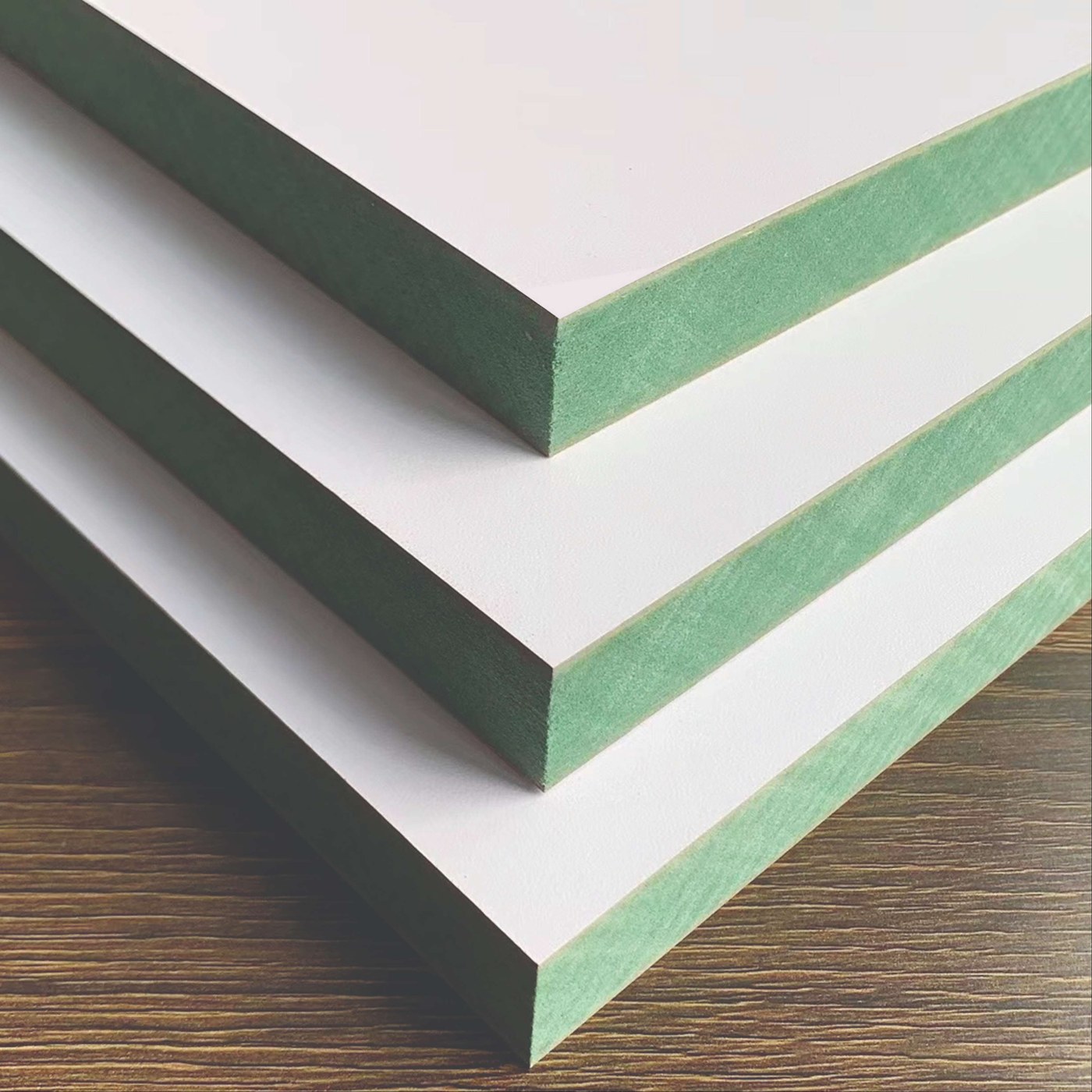
Bench tops, shelf boards and trolley decks made of moisture-resistant MDF (green core, E1 resin) faced with white/grey/woodgrain melamine (low cost, moderate scratch resistance) or ESD laminate (10⁶–10⁹ Ω, for EPA benches), 15 mm thick (shelves), 17 mm (standard bench tops), 25 mm (heavy-duty benches, aluminium benches), with PVC edge banding on all 4 sides against moisture and holes drilled for joints/brackets to drawing. Customers buy them to replace old bench tops, add shelves or build their own benches with LP-PARTS components.
Company logo printing available on request.
| Item | Value |
|---|---|
| Core | Moisture-resistant MDF E1, 15 / 17 / 25 mm (17 mm 01SH standard) |
| Facing | Melamine white, grey, woodgrain; grey ESD laminate 10⁶–10⁹ Ω |
| Edges | 1 mm PVC edge banding in matching colour, R5 rounded corners |
| Dimensions | CNC-cut ±1 mm from 1,220 × 2,440 sheets; maximum 1,200 × 2,400 |
| Machining | Φ8–12 holes, cut-outs, grooves milled to drawing |
| Load | Depends on board thickness and support spacing of the frame — PRIMEAG calculates from the drawing; heavy-duty benches use 25 mm |
| MOQ | 1 cut board; price per m² + machining |
FAQ
– Standard vs moisture-resistant MDF? — Green-core moisture-resistant MDF does not swell when wiped wet; a must for production floors.
– Is ESD laminate bonded to MDF durable? — The ESD laminate layer (HPL type) resists scratches and impact better than melamine. Melamine-faced MDF is common and low-cost; premium laminate costs more but is scratch-resistant. Grounded via trim/screws.
– Do you have rubberwood or phenolic boards? — Yes (laboratory benches), ask separately.
What is moisture-resistant MDF made of?
MDF (medium-density fibreboard) is hot-pressed from wood fibres mixed with resin. A typical composition is about 82 % wood fibre, 9 % urea-formaldehyde resin, 8 % water and 1 % paraffin wax; typical density is 600–800 kg/m³. Moisture-resistant boards are usually dyed green for easy identification — the “green core” sold on the market.
The European standard EN 622-5 classifies MDF as: MDF (general purpose, dry conditions), MDF.H (humid conditions), MDF.LA (load-bearing, dry), MDF.HLS (load-bearing, humid). Be clear: moisture-resistant does not mean waterproof. Low-grade MDF can swell and break up when soaked; MDF that is not fully sealed can warp and swell in humid air. That is why board edges must be fully edge-banded and drilled holes should be covered with screws or caps.
Formaldehyde emissions: E1 and FDI customer requirements
- Urea-formaldehyde resin releases formaldehyde gradually over time. Boards are graded E0, E1, E2 by emission level; E1 is the common level for furniture, E0 is lower.
- US customers may require TSCA Title VI: according to the US Environmental Protection Agency (EPA), the TSCA Title VI limits are equivalent to CARB Phase II; products must be certified and labelled by an EPA-recognised third-party certifier.
- When a customer requires certification, PRIMEAG needs to confirm with the board supplier before quoting — not every board lot comes with certification.
How do melamine and laminate (HPL) differ?
Melamine is resin-impregnated decorative paper pressed directly onto the board at low pressure. High-pressure laminate (HPL) is a separate sheet made of several layers of phenolic-resin-impregnated kraft paper, a decorative paper layer and a melamine-impregnated protective overlay, pressed at 1,000 psi (70 kg/cm²) or more at about 120 °C, and only then bonded to the board. The standard for HPL is EN 438.
| Criterion | Melamine | HPL laminate | ESD laminate |
|---|---|---|---|
| Construction | 1 layer of resin-impregnated paper | Multiple layers, with overlay | As HPL, plus a dissipative conductive layer |
| Scratch and impact resistance | Moderate | Good | Good |
| Antistatic | No | No | 10⁶–10⁹ Ω |
| Used for | Shelves, standard benches | Heavy-use workbenches | Benches in the EPA |
ESD bench tops: testing after installation
- According to ANSI/ESD S20.20, worksurface resistance to ground must be < 1×10⁹ Ω. The ANSI/ESD S4.1 guidance suggests a resistance to the ground point of 10⁶–10⁹ Ω and a minimum point-to-point resistance of 1 MΩ.
- A bench top with point-to-point resistance below 1 MΩ can be hazardous if an exposed live wire touches a person or the bench top.
- Ground via a snap or screw in contact with the conductive layer of the laminate, with a cord to the bench’s common ground point.

Machining, screwing and dust safety
- Plain-shank nails and fine-thread screws hold poorly in MDF, especially in the board edge. Screwing into the edge without a pilot hole can easily split the board.
- For points that are assembled and dismantled repeatedly (joints, brackets, hanging bars), use threaded inserts or through-bolts instead of wood screws.
- Cutting and sanding MDF produces large amounts of fine dust that can cause irritation — the workshop needs on-machine dust extraction and operators should wear dust masks.
Storage and common mistakes
- Stack boards flat on evenly spaced bearers, away from damp floors and direct sunlight; boards stored upright for a long time tend to warp.
- Do not place soldering irons or hot-air guns directly on melamine or laminate surfaces — use a soldering iron stand.
- Do not clean ESD bench tops with silicone- or wax-based products — they leave an insulating film.
- Using standard MDF (brown core) for wash areas and damp areas; drilling holes and leaving edges exposed without edge banding.
Technical references
- Wikipedia – Medium-density fibreboard (composition, EN 622-5, screwing, dust)
- Wikipedia – High-pressure laminate (construction, pressing pressure, EN 438)
- US EPA – Formaldehyde emission standards for composite wood products (TSCA Title VI)
- Desco – Worksurface resistance limits & ANSI/ESD S4.1 (Q&A)
Price: from 700,000 VND (excl. 8% VAT).
REQUEST A QUOTE: send the quantity and specifications you need — PRIMEAG quotes within 30 minutes.
Hotline/Zalo +84 906 108 292 · info@primeag.vn
Written by the PRIMEAG engineering team.
Related guides:MDF Board Warping in Vietnam Wood Factories: Storage, Humidity,…Medium-Duty Shelving Rack Sagging: Causes, Checks and FixesLean Pipe Workbench Price in Vietnam: Φ28 Cost by…
Related products:Industrial PU / ESD CastorsLean Pipe & Aluminium Profile Parts
Updated: 2026-10-23
Giao tận nhà máy TP.HCM, Bình Dương, Đồng Nai, Long An, Tây Ninh · Kèm biên bản đo điện trở ESD theo lô · Hotline 0906 108 292