
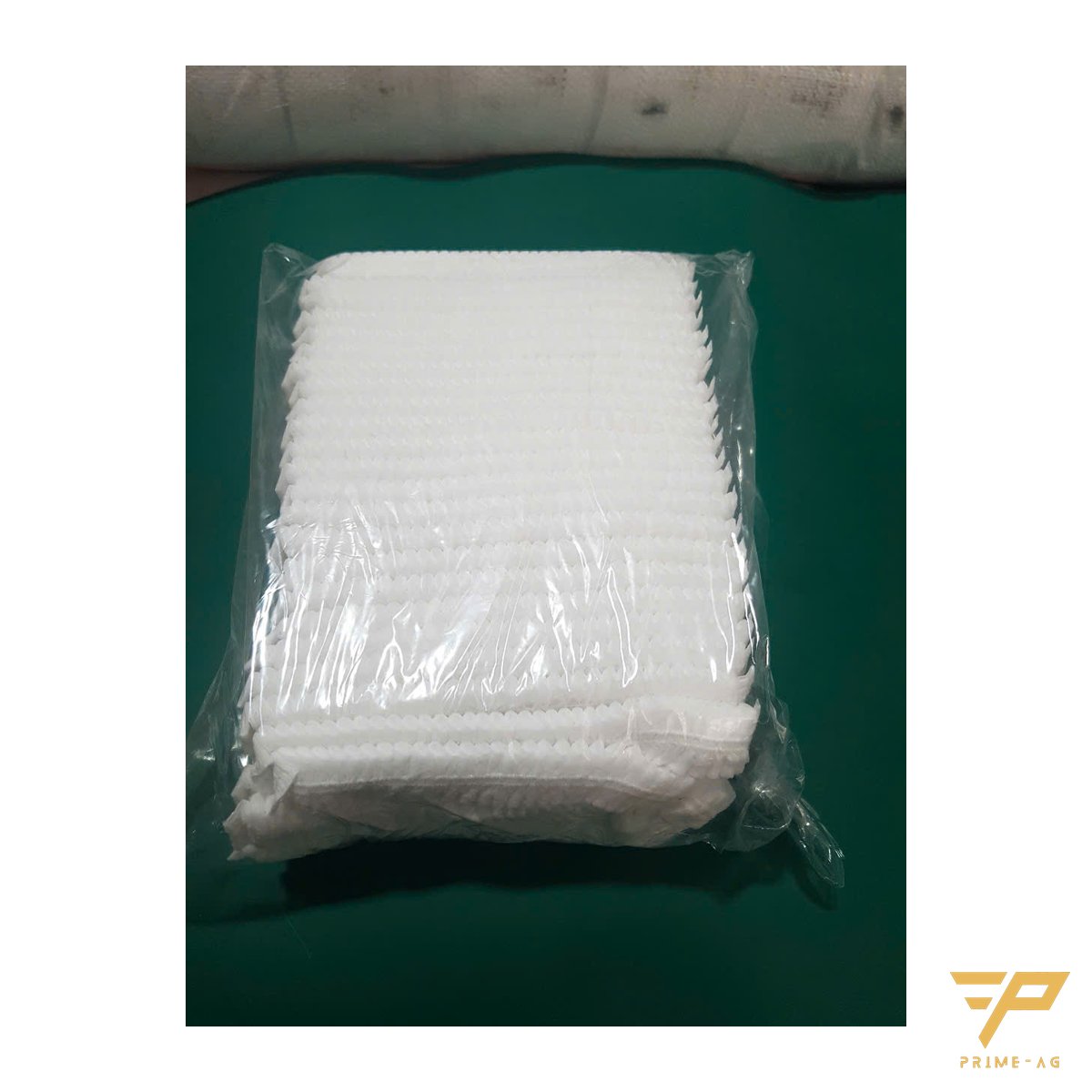
To stop hair and fibers getting into products in food packaging areas, everyone entering the line must wear a cap that fully covers sideburns and the nape, put on the cap before the gown, then check in a mirror and use a lint roller at the door. For food factories in Vietnam, PRIMEAG suggests disposable non-woven bouffant caps, 19–21″, in white or blue.
“Hair in this lot again.” One complaint line triggers a whole morning of tracing. Usually the hair does not come from someone who forgot a cap, but from someone whose cap does not cover fully, who dressed in the wrong order, or who reused yesterday’s cap. Hair as a foreign body is also a frequent question in BRCGS audits and HACCP plan reviews.
- Full coverage: sideburns, behind the ears and nape covered; long hair tied up first.
- Single-use caps: white non-woven for workers, blue for visitors; for color-coding by zone, use hoods.
- Cap first, gown second.
- Checkpoint at the door: mirror, lint roller, sticky mat, someone to remind.
Why hair still gets through when caps are worn
- Cap does not cover sideburns and nape: cap too small or worn askew, short hairs fall onto the line when people bend over.
- Caps used for several days: kept in a pocket and reused, elastic stretched, loose hairs already inside.
- Gown first, cap second: hair falls onto the shoulders of the clean gown and follows the person onto the line.
- Long hair loose, no lint rolling: cap bulges, clothing carries hair in from the changing room.
- Outsiders get “exceptions”: visitors and maintenance technicians come in for a few minutes without caps.
Choosing caps by person and by zone
Most people use disposable non-woven bouffant caps: PP 12 g/m², size 19–21″ with elastic, white or blue, 100 pieces per pack. The 21″ size fits long hair once it is tied up. White for workers and blue for visitors and maintenance is enough to tell roles apart.
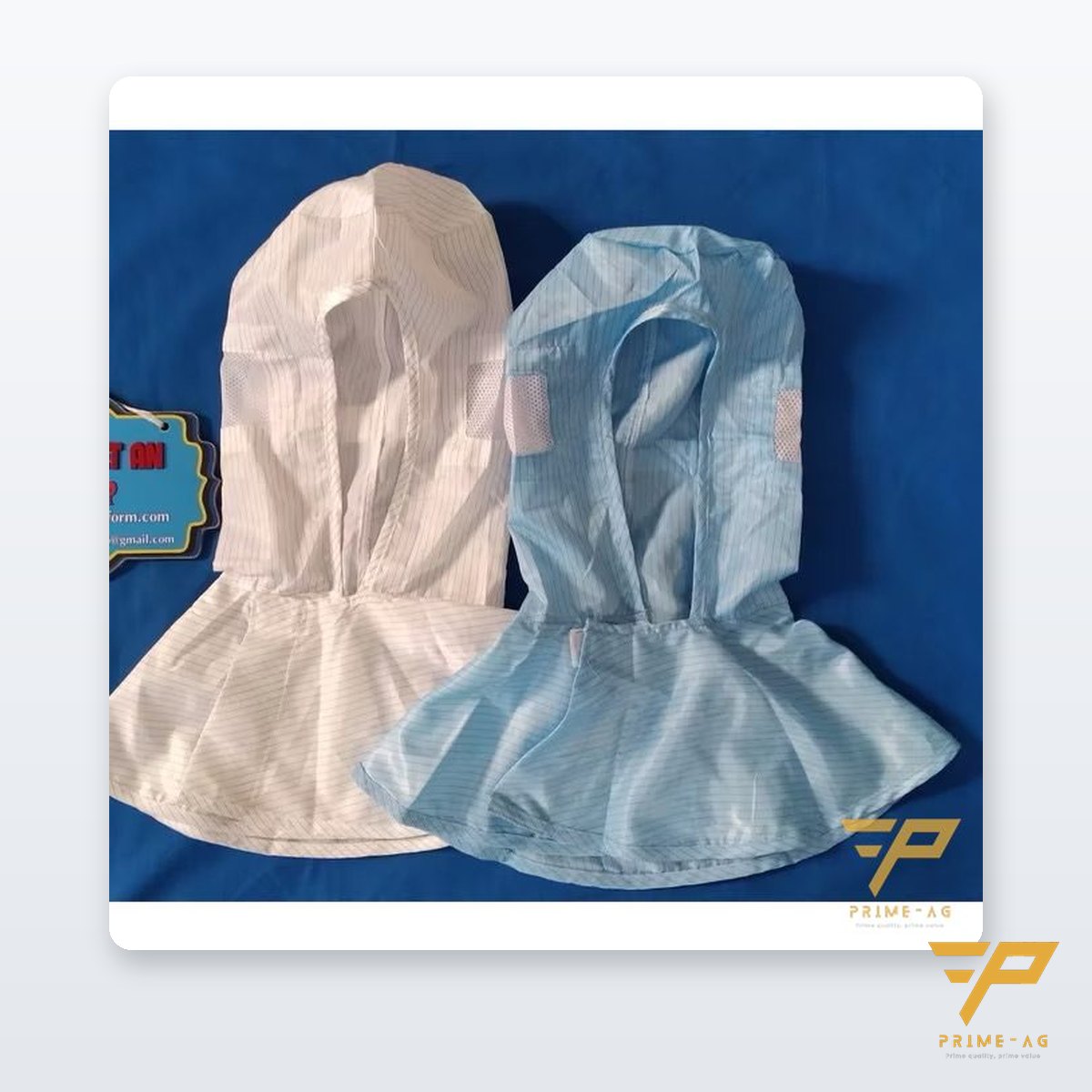
Open-product zones with high requirements use hoods with bib or cleanroom fabric caps, which are washable. The hood covers hair, ears, neck and shoulders; the bib tucks into the gown collar so nape hair cannot fall out. Underneath, wear a non-woven hairnet as well, together with a low-lint 3-ply cleanroom face mask.
| Person | Cap type | Change frequency |
|---|---|---|
| Packing line workers | Non-woven cap 19–21″, white | Every entry to the zone, including after breaks |
| Workers in open-product, high-requirement zones | Hairnet underneath + hood with bib | Hairnet: every entry; hood: laundered with the garment set |
| Visitors, audit teams | Non-woven cap in a different color from workers | Every visit, discarded at the exit |
| Maintenance technicians, contractors | Non-woven cap in the visitor color | Every visit; replace immediately if torn or oily |
Gowning sequence and checkpoint at the door
Post this procedure in the changing room:
- Tie up hair, remove hair clips and jewelry.
- Put on the hairnet (if used) and face mask, then the cap, pulling the edge over the sideburns and nape and overlapping the edge of the mask.
- Put on the gown last; tuck the bib into the collar.
- Check in the mirror: no hair visible at the temples, behind the ears or at the nape.
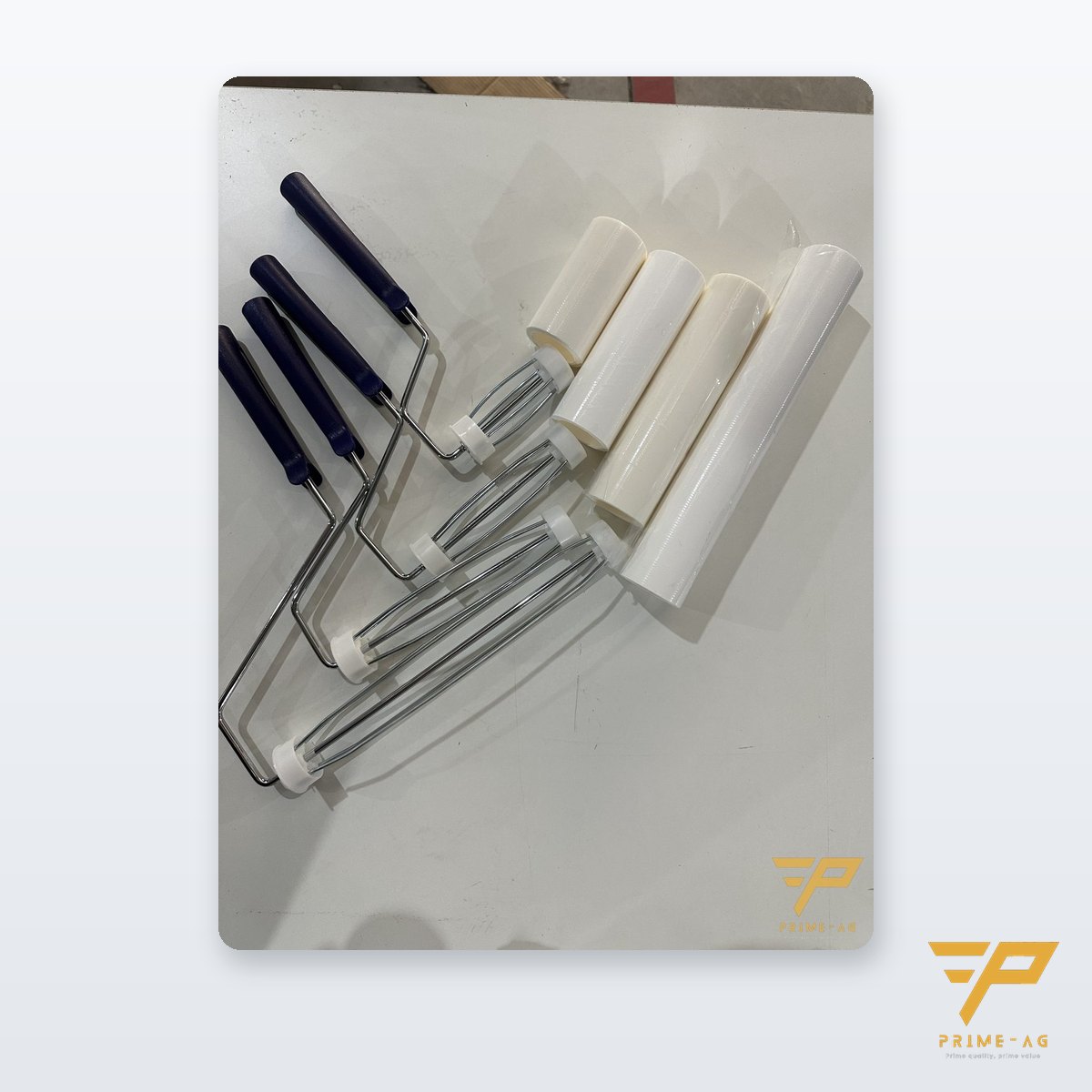
- Roll shoulders, back and sleeves with an 8″ paper lint roller with handle; 50 sheets per roll, 3–5 passes per sheet, then tear it off.
- Walk across a 600×900 mm sticky mat with 30 layers; peel off a layer when about 30–50 % is dusty, or every shift.
If you use washable rollers, read how to keep silicone lint rollers sticky longer. Team leaders check at the start of each shift, after breaks and whenever outsiders enter; repeat the rules every week.
Where to start
- Classify the foreign bodies in complaints: long hair, short hair or textile fibers.
- Stand at the door for one shift and count people with hair showing.
- Fix cap colors by person type (hoods with bib come in 5 colors if you need zone separation); place a lidded bin at the exit.
- Install the mirror, lint rollers and mats before tightening the procedure.
Separating people and material flows on shared lines: preventing cross-contamination in pharmaceutical and cosmetics packaging areas. Caps, lint rollers, mats and face masks are stock items, delivered in 24–48 hours in Ho Chi Minh City, Binh Duong and Dong Nai; ordered items take 3–7 working days. Tell us the number of people per shift and the number of zones needing color-coding via the consultation contact page; a price list comes back within 30 minutes.
Frequently asked questions
- Can disposable non-woven bouffant caps be reused on the next shift? — Not recommended. 12 g/m² PP caps are made for single use; after one shift the cap is stretched and holds loose hairs. Discard the cap when leaving the zone and take a new one when coming back.
- Does a 21-inch bouffant cap fit long hair? — Yes, if the hair is tied up neatly first. For very thick hair, wear a hairnet underneath before putting on the outer cap.
- Do visitors and maintenance technicians entering the line need to wear caps like workers? — Yes, even if they only come in for a few minutes. Give them caps in a different color from workers so team leaders can spot outsiders on the line immediately.
Updated: 2026-10-28 — PRIMEAG engineering team
Email: info@primeag.vn · Phone/Zalo: +84 906 108 292
Written by the PRIMEAG engineering team
Updated: 2026-10-29