
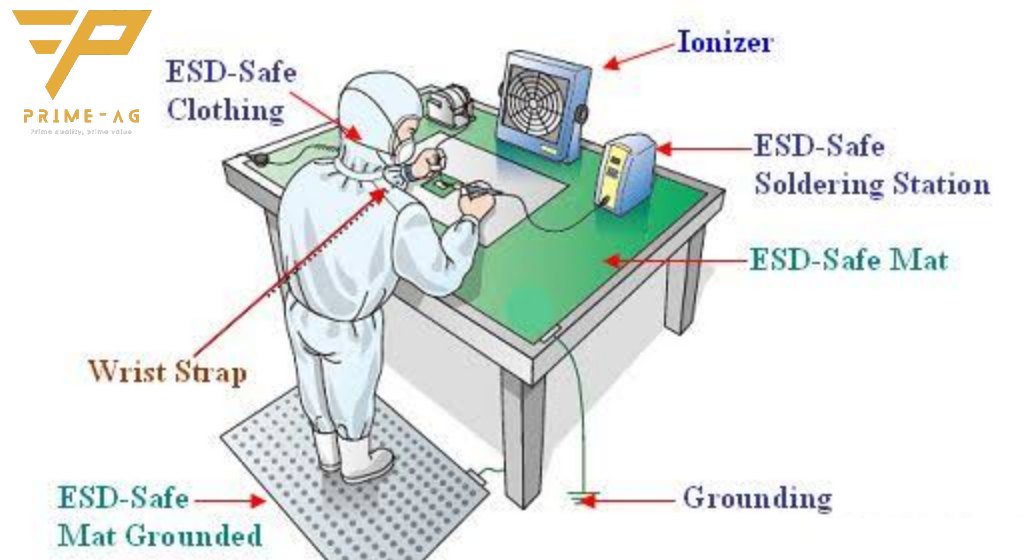
An EPA grounding system that passed acceptance testing may not still pass a few months later: hidden wire breaks, loose snaps, dirty mats. ANSI/ESD S20.20 requires a periodic verification plan. PRIMEAG recommends 4 groups of items, tested on a per-shift – monthly – quarterly schedule and recorded on one standard form.
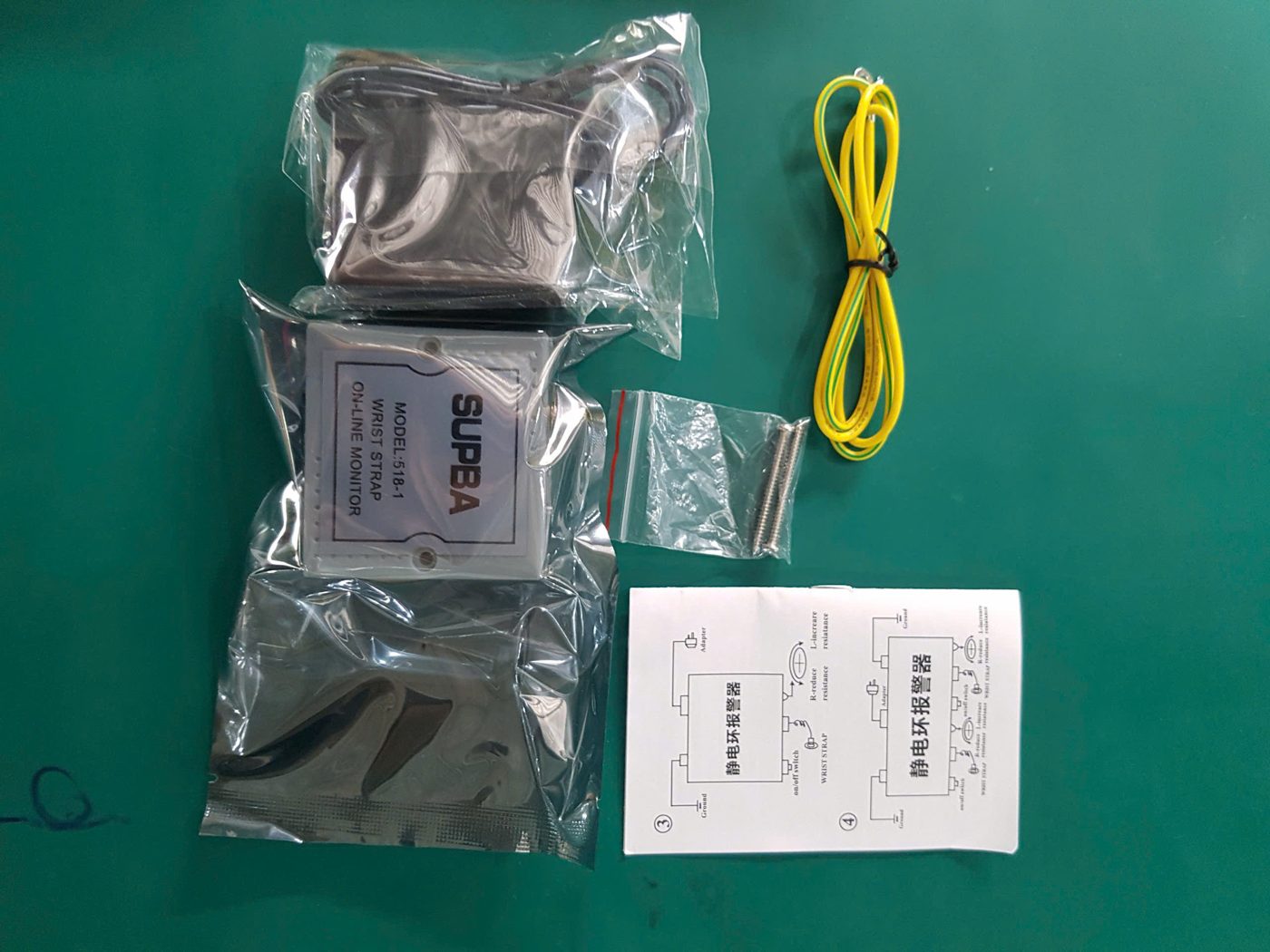
- Every shift: test wrist straps and footwear at the EPA entrance (or use continuous monitors).
- Monthly: measure each station’s worksurface, mat and ground cord to ground.
- Quarterly: measure floors, chairs, trolleys and racks; inspect the common ground point.
- Record on the form: measured value, limit, pass/fail, corrective action.
Why periodic testing is required
ANSI/ESD S20.20 and IEC 61340-5-1 require the organisation to have a compliance verification plan: which items are tested, by which method and how often. The standards do not set fixed intervals; each factory sets its own and must be able to prove them through records. The schedule below is a reasonable starting point and can be extended once several months of data are stable.
Recommended test schedule
| Item | Measurement | Reference limit | Starting frequency |
|---|---|---|---|
| Wrist strap + cord | Person – strap – cord system on a tester | < 3.5×10⁷ Ω (S20.20) | Every shift, before entering the line |
| Footwear, heel straps | On the tester footplate | Per the factory’s floor – footwear system configuration | Every shift |
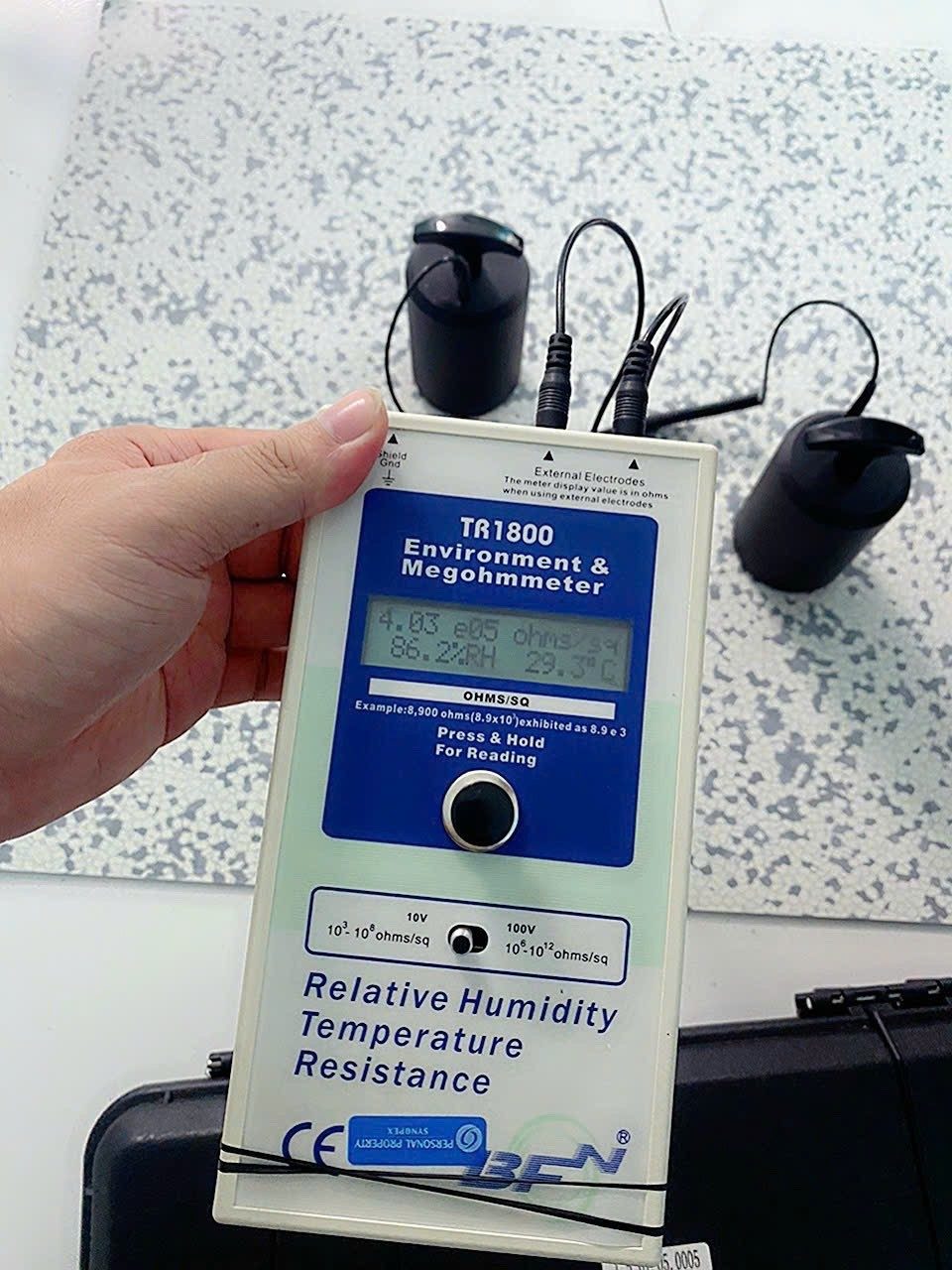
| Worksurface, bench mat | Resistance to ground (Rtg) | < 1×10⁹ Ω | Monthly |
| ESD floor | Resistance to ground | < 1×10⁹ Ω | Quarterly, after floor finish stripping |
| Chairs, trolleys, racks | Resistance to ground through casters/feet | < 1×10⁹ Ω | Quarterly |
| Ground sockets, cords, common ground point | Continuity, terminal tightening, visual inspection | Continuous, not loose, no oxidation | Monthly |
Limits are taken from ANSI/ESD S20.20; actual values follow each factory’s approved ESD control plan. S20.20 does not fix test frequencies: the monthly/quarterly schedule above is intended for high-risk areas or the initial operating phase; once results are stable, many factories extend worksurfaces and mats to 6 months and floors to 12 months. Test methods for worksurface materials, mats and floors: see resistance standards for rubber mats, ESD floors and meters.
Equipment you need
- Wrist strap testers and surface resistance meters: a wrist strap/footwear tester at the EPA entrance; a resistance meter with 5 lb electrodes for worksurfaces and floors.
- Spare cords and ground sockets: heel straps and grounding cords, wrist straps with 1.8 m coiled cord to replace immediately when a station fails.
- Stations working continuously with highly sensitive components: consider ESD monitors for continuous monitoring instead of start-of-shift testing.
Results recording form
One row per test point. Each station on the line has its own code (e.g. L2-ST05) labelled on the bench frame for cross-reference.
| Date | Station code | Item | Instrument | Measured value (Ω) | Limit | Pass / Fail | Corrective action | Tested by (job title) |
|---|---|---|---|---|---|---|---|---|
| … | L2-ST05 | Bench mat to ground | Surface resistance meter | … | < 1×10⁹ | … | … | ESD technician |
When a result fails
- Stop using that station for sensitive components and tag it “failed”.
- Look for the cause in this order: dirty surface → loose snap → broken cord → ground socket → common ground point.
- Clean the mat with a cleaner that leaves no insulating film, replace the cord or socket, and re-measure.
- Record the corrective action; if an item fails repeatedly, shorten its test interval.
Choosing between continuous monitors and start-of-shift testing: see continuous ESD monitors vs. start-of-shift wrist strap testing.
Factory has no meter yet, or wants to cross-check its own results? PRIMEAG measures on site free of charge within 3–5 working days of confirming the schedule; the results are for internal reference (a calibrated, signed and stamped test report is issued only with goods purchased under a supply contract).
Frequently asked questions
How often do the standards require EPA grounding to be tested? ANSI/ESD S20.20 does not set a fixed frequency; each factory draws up its own compliance verification plan. A common starting point: wrist straps every shift, worksurfaces monthly, floors and trolleys quarterly.
When does a wrist strap pass? Under ANSI/ESD S20.20, the resistance of the person – strap – cord system measured on a tester must be below 3.5×10⁷ Ω; the cord contains a 1 MΩ safety resistor, so the value is never close to 0.
Does PRIMEAG carry out testing for factories? PRIMEAG supplies meters, wrist straps, cords and ground sockets, and shows you how to test and set up the form; for ESD floors installed by PRIMEAG, acceptance testing is performed and a test report is handed over.
Updated: 06/11/2026 — PRIMEAG engineering team
Mon–Sat, 8:00–17:00 (GMT+7) · Phone/Zalo: +84 906 108 292 · Email: info@primeag.vn
Start where it suits you: Free technical advice · Send a drawing or layout · Get a quote within 30 minutes
Written by the PRIMEAG engineering team
Updated: 2026-10-23