
Trolleys in garment factories in Vietnam become hard to push, squeak and jam mainly because thread, lint and elastic wrap around the caster axles and then work their way into the swivel bearings. PRIMEAG recommends clearing thread from the axles weekly, servicing the swivels per the manufacturer’s instructions, then checking tires and load; on floors with gaps, use PU casters of at least D100.
After a few weeks of line operation, almost every caster axle in a garment factory has a wad of thread mixed with lint and elastic wrapped around it. The wad gradually tightens between the tire and the fork, so garment factory trolleys jam, become hard to push and squeal when turning. Most of the time it is a maintenance issue.
- Culprit number one: thread and elastic wrapped around the axle.
- Check next: swivel bearing, flat-spotted tires, overloading, caster size.
- Maintenance: clear thread from axles weekly, tighten bolts monthly, service swivels per the manufacturer’s instructions.
- When replacing: PU tires, D75 or D100 according to load per caster.
Why garment factory trolley casters jam
Polyester thread is fine and tough. The caster rolls over a scrap of thread, the strand slips into the gap between tire and fork, and every turn tightens it further. Lint floats into the swivel bearing and mixes with grease into sludge. Elastic gets wound in and compresses hard like a washer.
Check order when a trolley is hard to push
1. Thread wrapped on the axle
Tip the trolley on its side and spin each caster by hand. If a caster stops after a few turns and there is a ring of thread at the hub, that is the fault. Cut the wad along the axle and pull it out with pliers; if it is deep, remove the axle bolt.
2. Lint in the swivel bearing
If the wheel rolls fine but the fork does not swivel with the push direction, the two ball races between the top plate and the fork are packed with lint and dried grease. Blow out with compressed air and apply fresh grease; if it still jerks, the balls are worn.
3. Flat-spotted or unevenly worn tires
PVC and soft rubber tires flatten easily when standing under heavy load for long; PU rarely does. Replace cracked tires or tires separating from the core.
4. Overloading
Load per caster equals trolley weight plus the heaviest load, divided by 3 (usually only three casters carry the load). A 40 kg trolley carrying 200 kg of fabric means 80 kg per caster, which needs D100. See also warehouse trolley caster failure, tipping and load selection.
5. Casters too small for floor gaps
Small casters drop into floor joints and door tracks; every bump transfers force to the swivel bearing. On floors with gaps or tracks, use at least D100.
| Diameter | Reference load per caster | Suited to |
|---|---|---|
| D75 | 60–80 kg | Light trolleys, flat floors |
| D100 | 100–130 kg | Multi-tier trolleys, floors with gaps |
| D125 | 150–200 kg | Fabric roll trolleys |
Loads in the table are for reference; they are confirmed per item code when quoting.
Routine cleaning
Weekly, remove thread, hair, PE film and tape from around the axles. Monthly, tighten the top-plate bolts or threaded stems; grease swivel and wheel bearings per the manufacturer’s instructions (sealed 2RS bearings need no greasing).
Φ28 pipe frames: check the joints, since loose joints make casters contact the floor unevenly. Replacement pipes, joints and leveling feet are in the lean pipe and aluminum profile components range.
When to replace casters, and which type
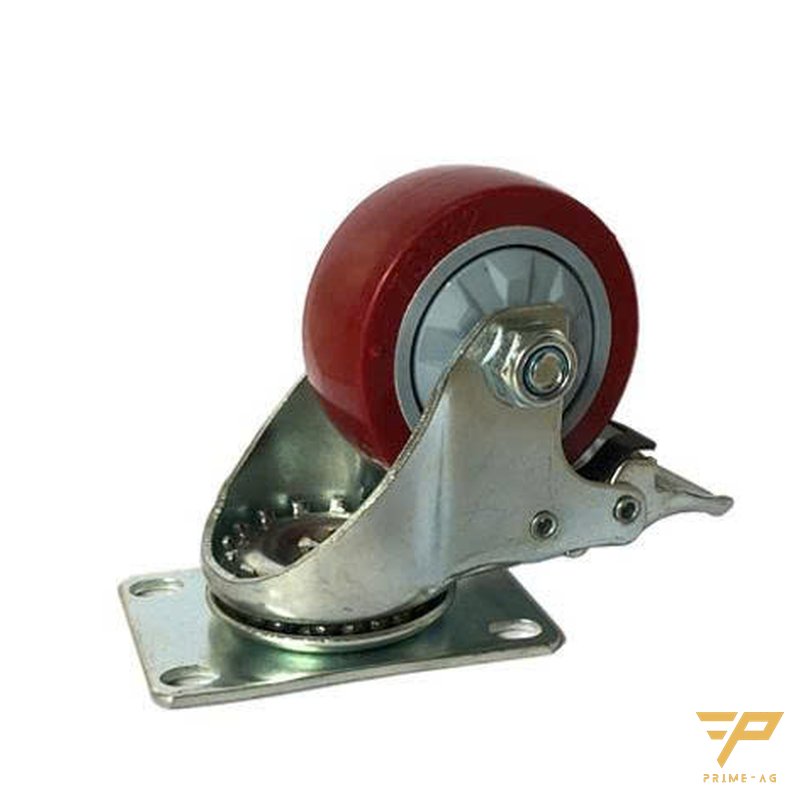
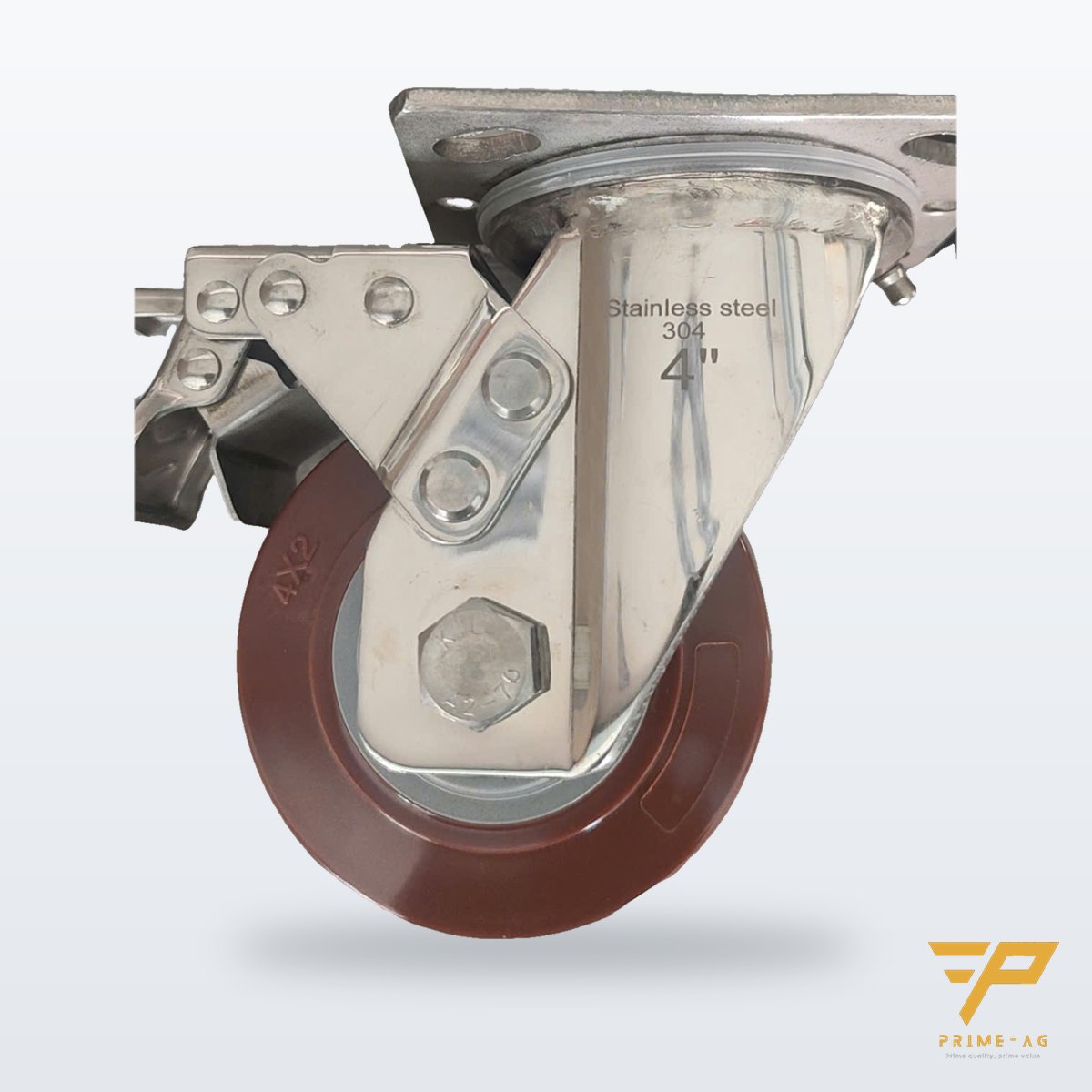
Replace when tires are cracked, separating from the core or worn down, when the fork still jams after cleaning, or when the brake no longer holds. Industrial PU casters are the default: quiet, durable and non-marking. The common configuration is 2 swivel casters with brakes and 2 fixed casters; narrow aisles between lines use 4 swivel casters. Damp areas call for 304 stainless forks. To match your old casters: send a photo, the diameter, and the thread size or plate hole pattern; minimum order 4 casters.
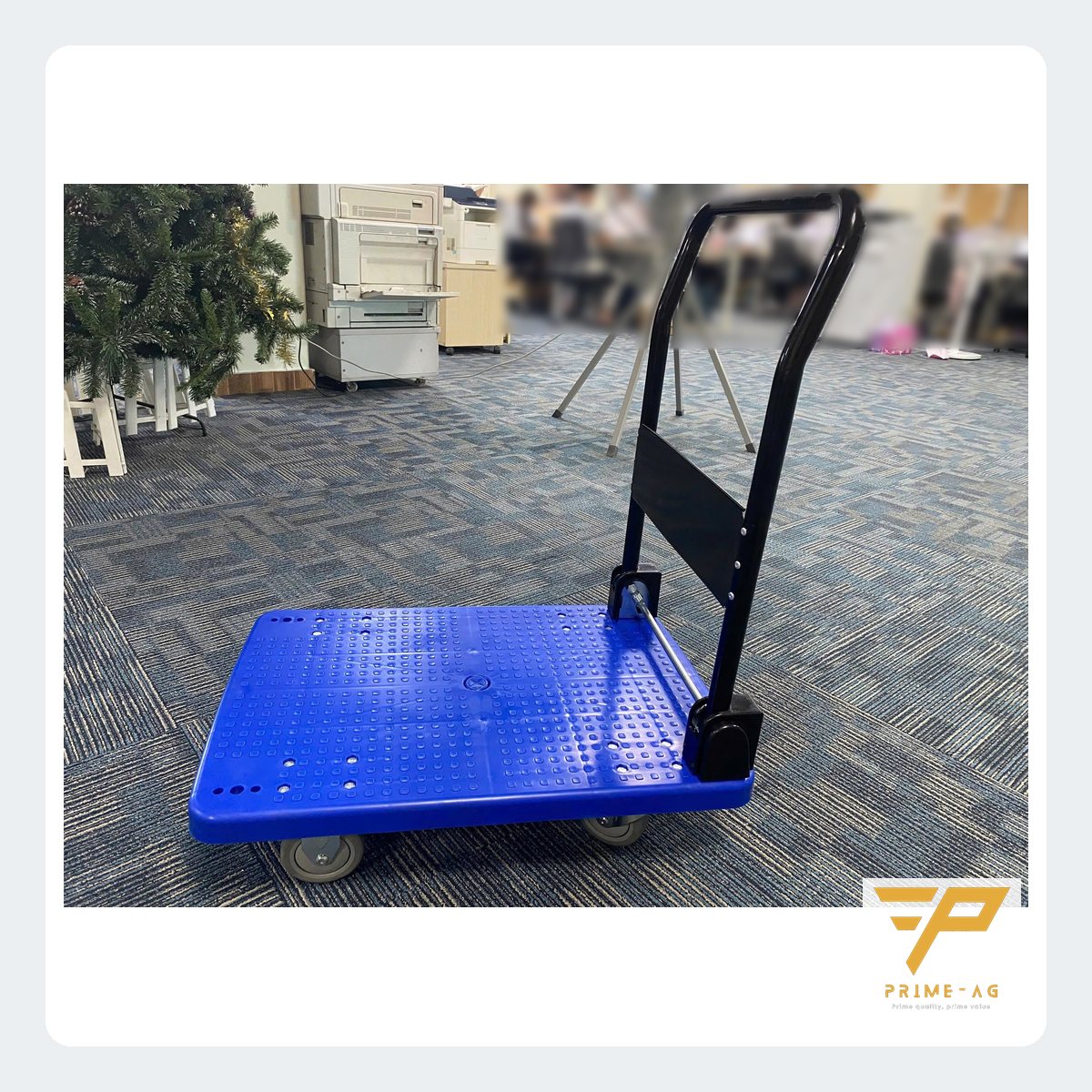
If the frame is too old, replace the trolley. The multi-tier lean pipe (plastic-coated steel pipe) trolley carries 100 kg per tier, with Φ75 PU casters for light loads and Φ100 when carrying close to 400 kg in total; standard designs take 5–7 working days, with a 3-year frame warranty and 12 months on casters. For factory offices and trim stores, use the 500 × 700 mm plastic-deck trolley, 200 kg load, folding handle. Placing trolleys between operations: WIP pile-ups between operations in garment factories.
Self-check before replacing a trolley
- Spin each caster by hand and mark any that turn unevenly.
- Remove thread from the axles and blow out the swivel bearings.
- Estimate total load, divide by 3, and compare with the rating of the fitted casters.
- Push the trolley over a floor gap; if it still bumps, go up to D100.
Send a photo of the old caster or the trolley dimensions through the caster and trolley consultation form; quote within 30 minutes.
Frequently asked questions
- How often should thread be removed from caster axles? — Weekly in cutting and sewing areas; in trim and accessory stores, on the monthly cleaning schedule. Clear it immediately once a trolley starts squeaking.
- Will spraying oil on the axle make the casters roll easier? — Only temporarily. Thin oil traps lint and quickly turns into gunk; remove the thread, wipe clean, then grease.
- PU or PVC casters for garment factory trolleys? — PU. PU tires are quiet, durable and flatten less when the trolley stands for long periods; PVC is cheaper but flattens easily.
Updated: 30 Oct 2026 — PRIMEAG engineering team
Email: info@primeag.vn · Phone/Zalo: +84 906 108 292
Written by the PRIMEAG engineering team
Updated: 2026-10-30