
MDF worktops swelling at the edges in humid factories in Vietnam usually come down to standard board used instead of green-core moisture-resistant MDF, open cut edges, unsealed screw holes and too much water during cleaning. PRIMEAG’s advice: if the core at an open edge is still firm, re-apply 1 mm PVC edge banding; if the core has gone soft, replace the top with a 17 or 25 mm moisture-resistant board.
The table edge puffs up like a wafer and the melamine cracks and peels off, often after just one rainy season in a paint area, a washing area or a dry-food store.
- Check the core: brown means standard board, green means moisture-resistant.
- Water gets in through edges and drilled holes, rarely through the laminate face.
- Repairable while the core is still hard; if it is soft and crumbly, replace the top.
- Water splashes every shift: switch to stainless steel.

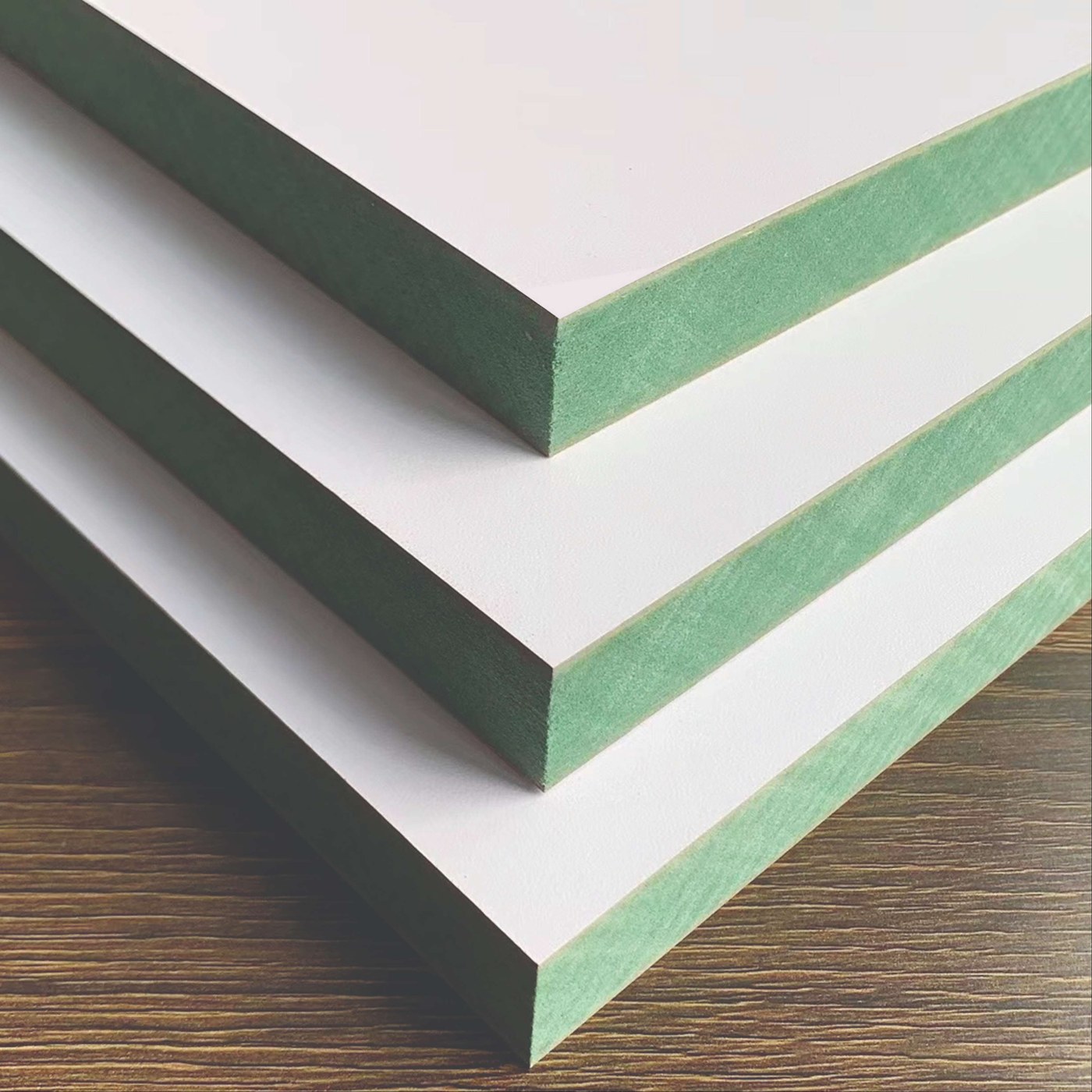
Causes, in the order to check them
1. Standard board, not moisture-resistant MDF
Look at the core where the edge has lifted. Brown means standard MDF, meant for dry areas; EN 622-5 defines a separate MDF.H grade for humid conditions. Moisture-resistant still does not mean waterproof.
2. Cut edges without edge banding
Wood fibres at the edge absorb moisture fastest. A top cut on site and left bare, or banded on only three sides, will swell from the open edge.
3. Unsealed drilled holes and screw holes
Holes for brackets, shelves and cable routing lead water straight into the core; a round blister around a screw head is the classic sign. Screws driven into the edge without a pilot hole also split the board.
4. Cleaning method and chemicals
Hosing the top, leaving puddles overnight or using strong solvents weakens the adhesive under the laminate. Wipe with a well-wrung cloth, then wipe dry.
5. Placed against a damp wall or on a wet floor
A table pushed against a seeping wall, or standing on a floor that is washed often, absorbs moisture through its back edge and legs all day.
6. Heavy point loads
A heavy machine in the middle of a span makes the top sag, the laminate develops hairline cracks, and water follows them into the core.
Reading the damage
| Symptom | Usual cause | Fix |
|---|---|---|
| One edge swollen, brown core | Standard board, open edge | Replace with a moisture-resistant top |
| One edge swollen, green core | Edge banding lifted or missing | Sand flat, re-apply PVC edge banding |
| Round blister around a screw head | Unsealed hole, wrong screw type | Seal the hole, switch to threaded inserts |
| Melamine cracked mid-panel | Point load, support span too long | Add a support rail, move the machine closer to the legs |
How to repair while the core is still firm
Let the top dry out completely in a ventilated spot. Sand the swollen section flat and band all four edges with PVC. Fill unused holes; where parts are fitted and removed repeatedly, use threaded inserts or through-bolts.
Sanding MDF produces a lot of fine dust: work with dust extraction and wear a mask.
When to replace the top and when to switch to stainless steel
Replace the top when the core crumbles when squeezed, the swelling has spread towards the middle, or the laminate has lifted over an area larger than a hand. For tables carrying heavy items, choose 25 mm board.
Where water splashes every shift, the area is hosed down or harsh cleaning chemicals are used regularly, any engineered wood board will fail again; ask about a 304 stainless steel table for the wet area only.
At the same time, pull tables away from walls and fix the seepage; for closed stores with long humid spells, use a dehumidifier.
The right products for humid areas
Cut-to-size moisture-resistant MDF board: E1 core in 15, 17 or 25 mm, white, grey or wood-grain melamine; matching 1 mm PVC edge banding, R5 rounded corners; CNC cut to ±1 mm, up to 1,200 × 2,400; Φ8–12 holes drilled to your drawing. Orders from 1 sheet, lead time confirmed when you order.
To replace the whole table, the lean pipe workbench (plastic-coated steel pipe, Φ28) uses a 15–17 mm moisture-resistant board with plastic edge trim and a 150 kg top load; the steel pipe is ABS-coated with an anti-rust coating inside. For long tables or tables carrying machines, choose the 40×40 aluminium profile workbench with a 25 mm top and PVC banding on all 4 edges; for humid areas, specify moisture-resistant MDF when ordering. Standard-model tables are made in 5–7 working days; the frame carries a 3-year warranty.
See also how to choose workbenches for electronics lines and surface scratches on wooden furniture during assembly and packing.
Where to start
- Break off a crumb where the laminate has lifted and check the core colour.
- Count edges without banding and open drilled holes.
- Ask how the tops are cleaned and how many times per shift.
- Check the distance to walls, the floor condition and any heavy machines.
Frequently asked questions
- Is green-core moisture-resistant MDF waterproof? — No. Green core handles humidity better than standard board but is not waterproof; edges and drilled holes still have to be banded and sealed.
- Do I need to replace the whole worktop if the edge is only slightly swollen? — Not yet, if the core is still firm: let it dry, sand it flat and re-apply PVC edge banding. If the core is soft or the swelling has spread towards the middle, replace it.
- What worktop should I use for a parts washing area? — With constant splashing and wet wiping, use a 304 stainless steel table. If it is only humid air and the top is wiped with a well-wrung cloth, moisture-resistant MDF with fully sealed edges is fine.
Email: info@primeag.vn · Phone/Zalo: +84 906 108 292
Written by the PRIMEAG engineering team
Updated: 2026-10-24