
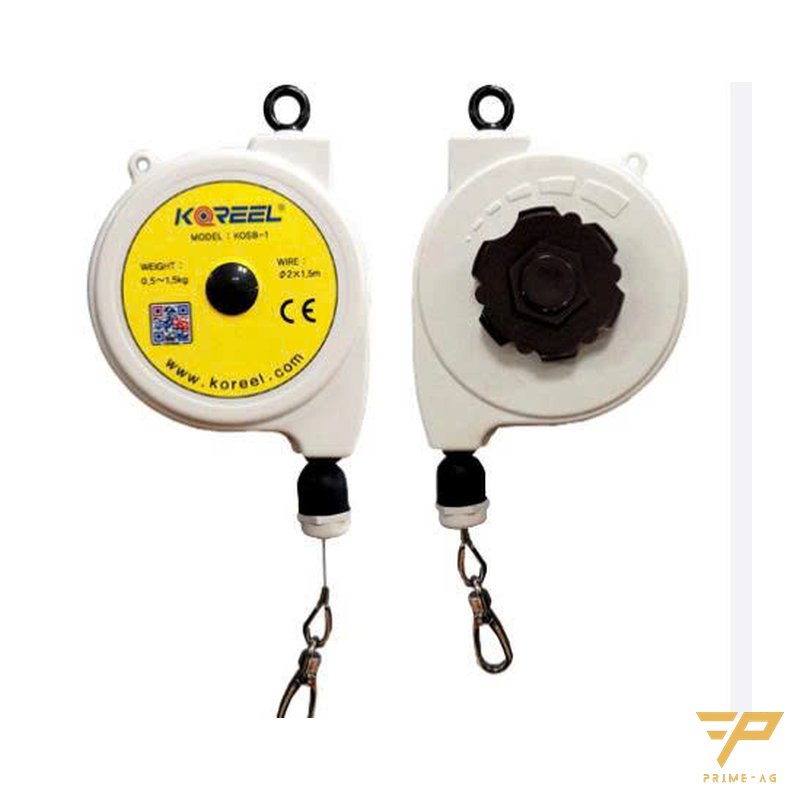
To choose a tool balancer for an electric screwdriver, pick a load range that covers the real weighed mass of the screwdriver, cable and adapter. PRIMEAG recommends hanging it directly above the screwing point, tuning the spring until the tool floats still in mid-air, mounting it on the tool bar of a Φ28 lean pipe bench or an aluminum profile frame, and adding a secondary safety cable.
Toward the end of a shift, operators at screwdriving stations in Vietnamese assembly plants start holding the screwdriver at an angle, screws go in off-axis, and the tool ends up lying among the components. Hundreds of pick-ups and set-downs, and the wrist gets more and more tired.
- Weigh the complete screwdriver assembly before choosing the balancer load range; do not oversize it.
- The hanging point sits right above the screwing position so the pull runs straight along the axis.
- Tune the spring until the tool neither drops nor springs up when released.
- Check the cable, hook and latch regularly; always have a second safety cable.

Why screwdriving stations need a tool balancer for electric screwdrivers
When the screwdriver lies on the bench, the operator has to lift the whole tool and put it down for every use. The result: dropped tools, cables broken at the plug, chipped bits and screws driven at an angle because of tired hands. A tool balancer keeps the tool suspended right above the work area: the operator just pulls it down, drives the screw, lets go, and the tool retracts by itself.
Choosing the load: weigh it, do not guess
- Put the screwdriver, the hanging section of power cable, the adapter and the bit in use on a scale together.
- Choose a balancer whose load range has that figure in the middle, not at the very bottom or top.
- Too large a range makes the spring pull hard, so the operator has to hold the tool down all shift; too small a range and the tool keeps dropping.
- When you change screwdriver model, weigh it again.
Hanging point and pull stroke
The balancer hook goes directly above the main screwing point. If it hangs off-center, the cable pulls at an angle and the bit tilts off the axis. The cable stroke must reach the lowest screwing point without being fully extended; the rest position should be slightly above hand height.
Mounting on the bench frame
The Φ28 lean pipe (plastic-coated steel pipe) workbench has an optional tool bar, a worktop load of 150 kg and bolted joints, so the tool bar is easy to move. Standard-model benches are produced in 5–7 working days, with a 3-year frame warranty. For long stations with many tools hung on rails, a 40×40 aluminum profile workbench is noticeably stiffer. Upgrading an existing bench only needs extra pipes and joints from the lean pipe and aluminum profile components range; send the dimensions and PRIMEAG prepares the BOM and cutting list.
Tuning the balance force and safety cable
Hang the tool, pull it down to mid-stroke and let go. If the tool drops, increase the spring tension; if it springs up, reduce it. It is right when the tool stays still at any height within the work area. Add a secondary safety cable from the balancer body to the frame in case the main hook slips off.
Symptom table for screwdriving stations
| Symptom | Common cause | How to fix |
|---|---|---|
| Tool drops when released | Spring too weak, or the tool assembly is heavier than the load range | Increase tension; if at the last notch, switch to a larger range |
| Operator has to hold the tool down while driving | Excess pull force, range too large | Reduce tension; if still heavy, switch to a smaller range |
| Screws go in at an angle, bit slips | Hanging point offset from the screwing position | Move the hook along the tool bar so it is in line with the axis |
| Power cable breaks near the plug | Cable rubs the bench edge, not bundled along the balancer cable | Clip the cable along the balancer cable, leave a slack loop at the tool end |
| Tool bar vibrates while driving | Long bar span, few supports | Add joints or support posts, or move to an aluminum frame |
After changing the hanging setup, re-check the torque, because the way the tool is held affects how the screw engages the thread.
Self-check of the screwdriving station after fitting the balancer
- Operators work a full shift without having to put the tool down on the bench.
- Cable not frayed, hook not worn, safety latch still closes.
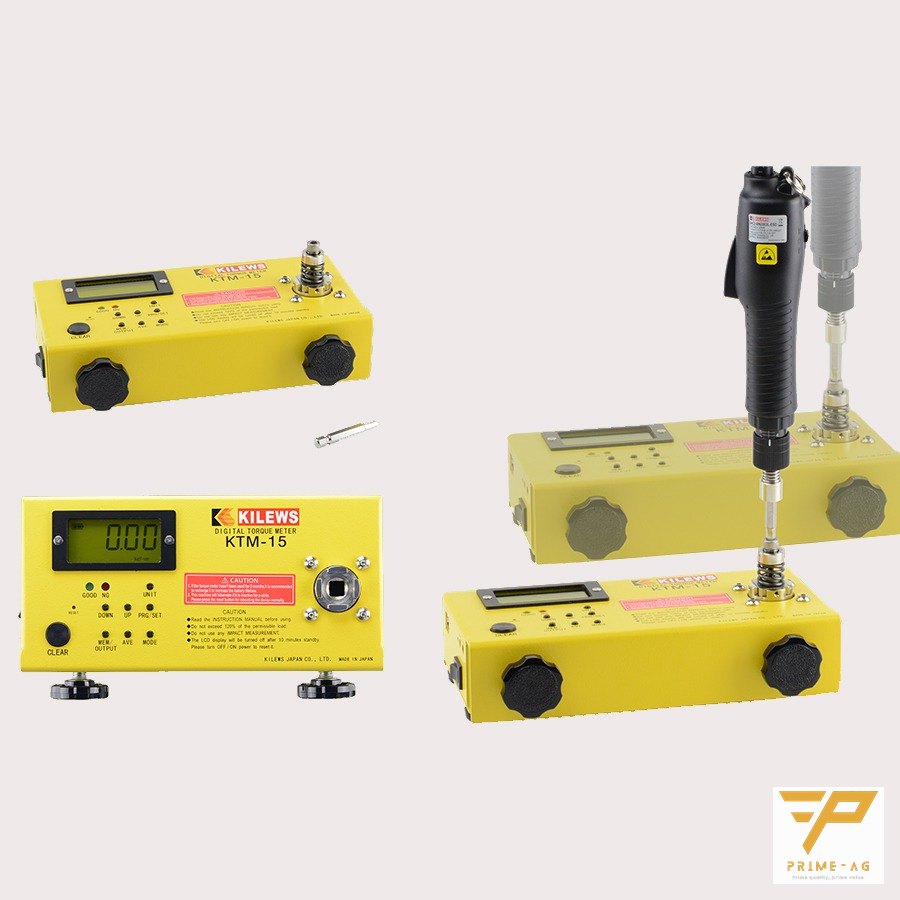
- Check torque at the start of each shift with a Kilews KTM tester as described in the guide wrong screw torque and how to check it with a KTM tester.
- Tools sit within the operator’s natural reach, in line with lean workstation improvement to cut walking.
Frequently asked questions
- Can one tool balancer hold two screwdrivers? — Not recommended. Each tool needs its own balancer so the tension matches its weight and the pull stays in line with the axis.
- What if our existing bench has no tool bar? — Add pipes and joints to the existing frame, or send photos and bench dimensions so PRIMEAG can propose a mounting method.
- How often should the balancer cable and hook be inspected? — Inspect regularly according to the balancer manufacturer’s instructions, and replace immediately when the cable is frayed or kinked or the hook is deformed.
Mon–Sat, 8:00–17:00 (GMT+7) · Phone/Zalo: +84 906 108 292 · Email: info@primeag.vn
Start where it suits you: Free technical advice · Send a drawing or layout · Get a quote within 30 minutes
Written by the PRIMEAG engineering team
Updated: 2026-10-25