
When a TR1800 surface resistance meter gives fluctuating readings, the meter is rarely faulty. The usual causes are a dirty surface, misplaced 5 lb electrodes, reading too early, the wrong 10 V/100 V setting, a weak 9 V battery or a loose lead. PRIMEAG recommends cleaning and re-measuring with a fixed procedure; only if readings still drift should the meter be sent for calibration.
On the same worktop, three electrode placements give three readings an order of magnitude apart. QA suspects the meter, but most of the variation comes from the measuring method and the object being measured.
- Check in this order: surface → electrodes → dwell time → test voltage → battery, leads → humidity.
- When to read: wait for the value to settle; do not record while it is still changing.
- Test voltage: start at 10 V; if the reading is high, switch to 100 V.
- Log sheet: record the %RH and °C shown on the display as well.
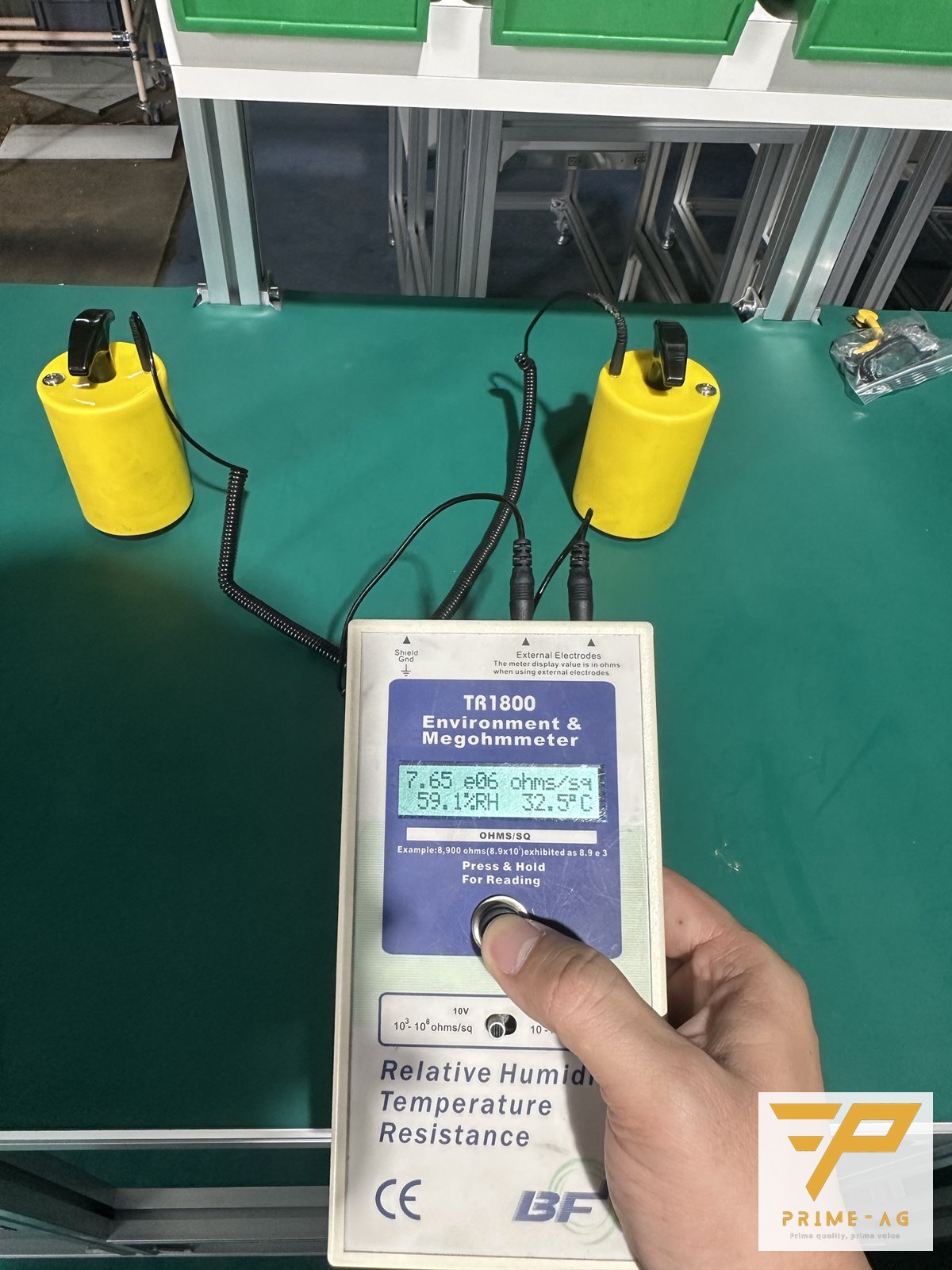
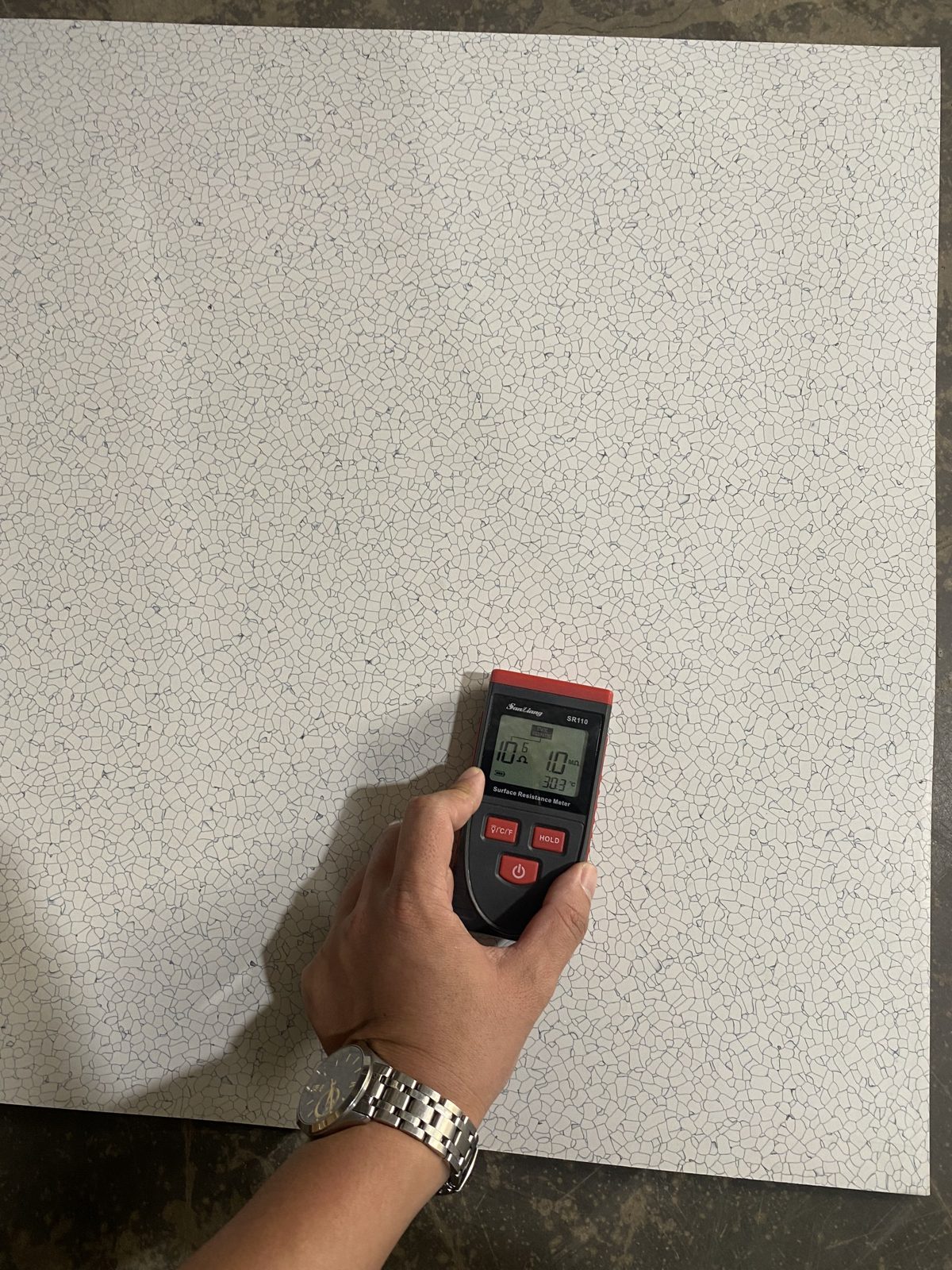
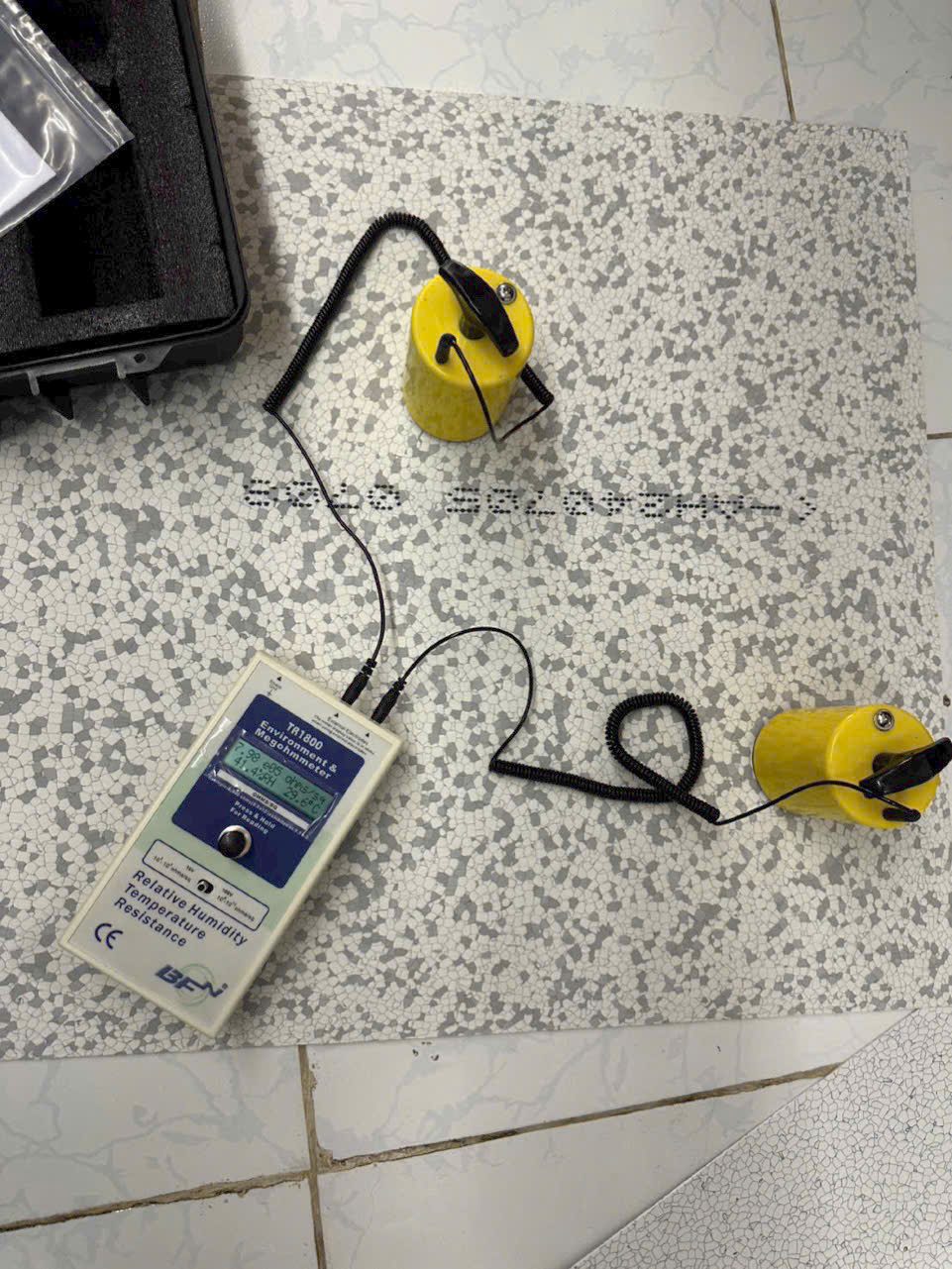
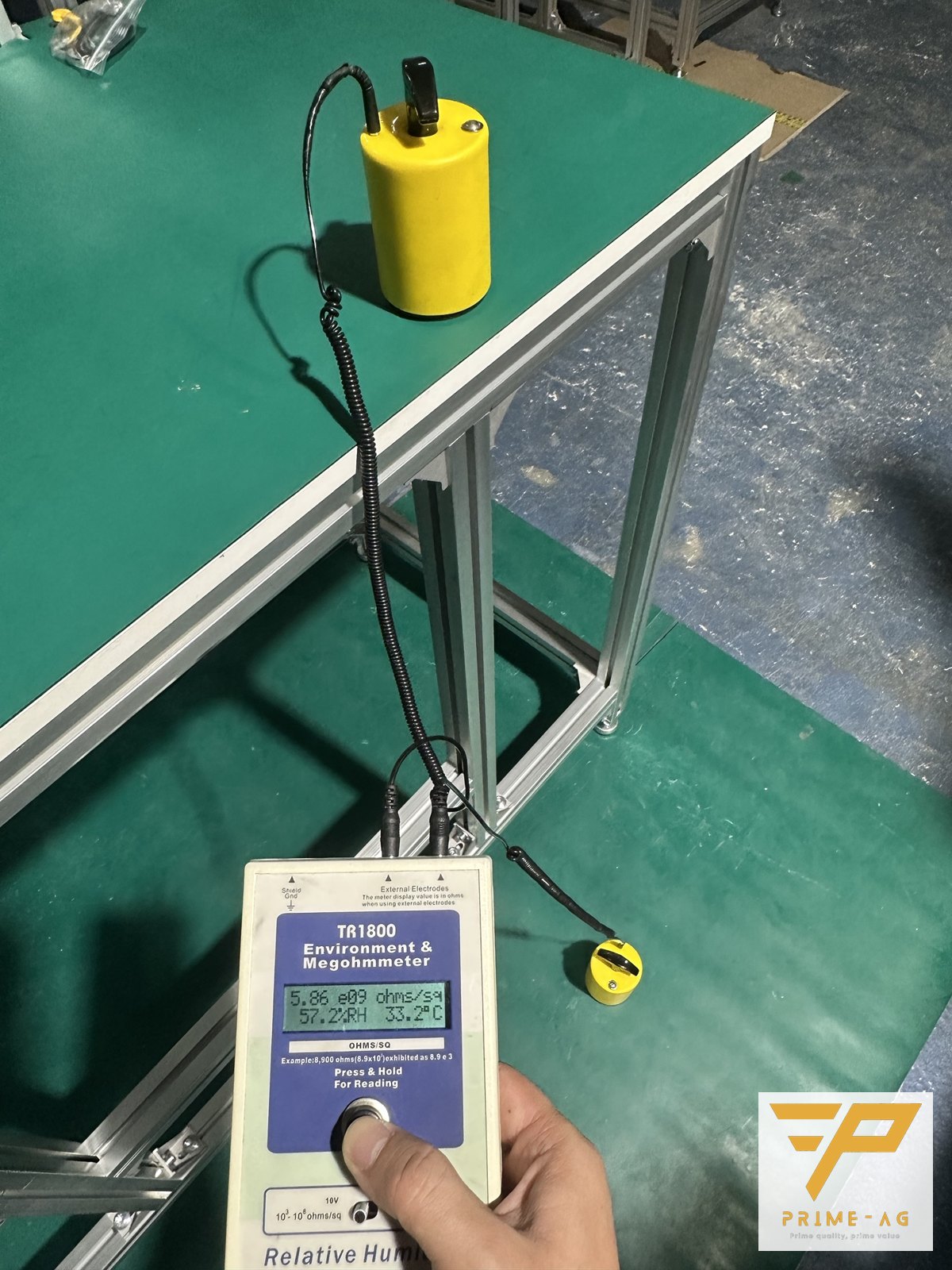
Fluctuating readings: check these seven points in turn
1. Dirty or still-wet surface
Skin oil, solder dust and cleaner residue make the contact uneven. Measuring right after wiping gives readings that drift as the solution evaporates.
2. Dirty 5 lb electrodes, not placed flat
Adhesive, dust or scratches on the electrode base change the contact area every time it is placed. Wipe the base with IPA, place it squarely and do not press down by hand.
3. Reading too early
The initial charging current makes the value keep moving. Following the ANSI/ESD test method, record the value after about 15 seconds, waiting the same time on every measurement.
4. Wrong 10 V/100 V setting
The TR1800 measures at 10–100 V. Measure at 10 V first; at 1×10⁶ Ω or above, switch to 100 V and measure again. Getting two different values at the two voltages is normal.
5. Weak battery, test leads, connectors
The meter runs on a 9 V battery; with a weak battery the reading keeps creeping and never settles. Gently wiggle the lead while measuring: if the value jumps with your hand, the lead or connector has poor contact.
6. Changing room humidity
Dissipative materials generally conduct better in humid air, so morning and afternoon readings may differ. The TR1800 displays temperature and humidity along with resistance; record all three.
7. Insulative object or open ground path
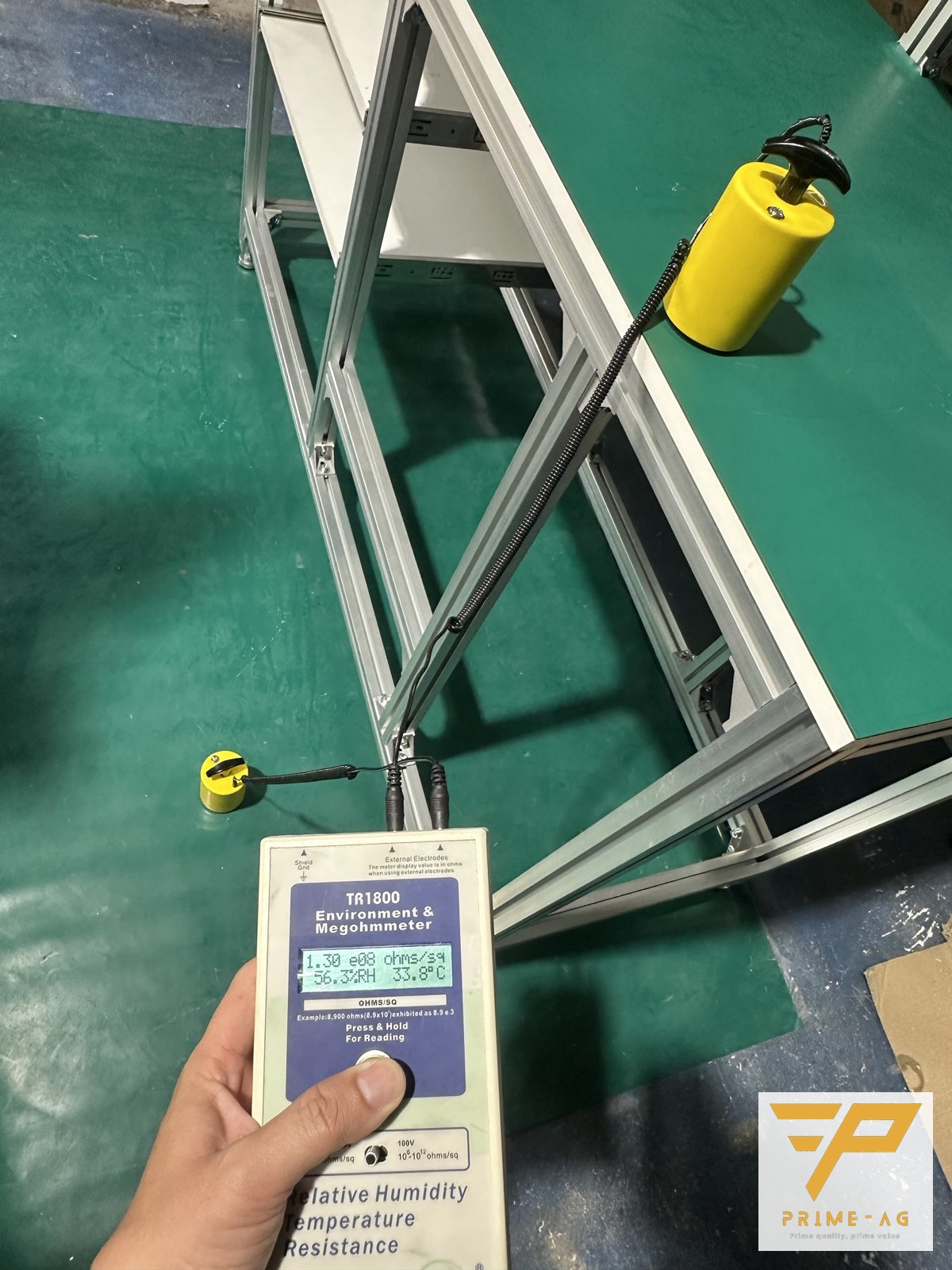
Insulative objects push the reading to the top of the range at 10¹² Ω. The anodized surface of an aluminum frame barely conducts, so it needs its own ground wire: the photo above reads 5.86×10⁹ Ω, and after fitting the wire it drops to 1.30×10⁸ Ω.
A procedure for repeatable readings
- Mark fixed electrode positions.
- Keep the same test type, test voltage and dwell time.
- Measure each point 3 times, lifting and replacing the electrodes; record the middle value.
- If readings differ by several orders of magnitude, go back to point 1.
When to send the meter for calibration
If you have cleaned everything, replaced the battery and swapped the leads, and readings still jump on a reference sample that is normally stable, suspect the meter. Meters can be supplied with calibration and a 12-month certificate; PRIMEAG can send meters out for calibration on your behalf.
Choosing the right meter
The TR1800 digital surface resistance meter shows actual values such as 2.7e06, range 10³–10¹² Ω, ideal for log sheets. If you need ±3 %, use the TR1801 analog meter; for quick pass/fail checks there is the TR1380 LED meter. Other models: wrist strap testers and resistance meters.
If the meter is fine but the worktop still fails, look at the material: the 2-layer ESD rubber mat has a top layer of 10⁶–10⁹ Ω. See also the case of an ESD mat reading above 10⁹ Ω after 6 months.
Where to start
Measure 3 fixed positions every day for one week, then set up a schedule following the article resistance testing for incoming ESD materials. To compare your own meter against an independent measurement, you can book a free comparison measurement session carried out by PRIMEAG at your plant in Binh Duong, Dong Nai or Ho Chi Minh City (Mon–Sat), using a TR1800 with 5 lb electrodes, covering any materials in use wherever they were bought and with no purchase required; a PDF of readings by position with photos arrives within 3–5 working days, for reference only and not a substitute for audit documentation.
Frequently asked questions
- Why does my resistance meter give different readings at 10 V and 100 V? — The resistance of many dissipative materials depends on the test voltage; this is not a meter fault. Only compare measurements taken at the same voltage.
- How long should I wait before recording a TR1800 reading? — About 15 seconds, once the value has stopped moving. Keep the same dwell time for every measurement.
- How often should a surface resistance meter be calibrated? — Calibration certificates are usually valid for 12 months. If the meter has been dropped or reads a reference sample clearly off, send it in sooner.
Email: info@primeag.vn · Phone/Zalo: +84 906 108 292
Written by the PRIMEAG engineering team
Updated: 2026-10-24