
Hand-soldering defects mainly come from the wrong tip shape, the wrong temperature and improperly stored solder paste. PRIMEAG recommends a tip with a contact area close to the pad size, the lowest temperature that melts the joint in 2–3 seconds, never mixing leaded and lead-free solder, and letting solder paste reach room temperature before opening.
Most hand-soldering defects (cold joints, solder bridges, lifted pads) are not caused by operator skill but by the wrong tip shape, the wrong temperature setting and incorrectly stored solder paste. PRIMEAG recommends fixing 4 things: choose the tip by pad size, set the lowest temperature that solders properly, use the right solder alloy, and let solder paste warm up before opening. Checking one soldering station against the list below takes about 15 minutes.
- Tip: choose by pad and component size; a larger tip transfers heat better at a lower temperature.
- Temperature: set the lowest level at which the joint melts within 2–3 seconds; raising the temperature to compensate for a worn tip is the wrong approach.
- Solder: never mix leaded and lead-free solder on the same product or the same tip.
- Solder paste: store refrigerated, bring to room temperature before opening, write the opening date.
1. Choose the tip by pad, not by habit
Conical tips (B, I) transfer heat poorly. When a conical tip is used on a large pad, operators tend to raise the temperature to compensate, burning the flux and lifting pads. Rule: the tip contact area should be close to the pad size.
| Tip type (900M-T / T12 series) | Suited to | Typical defect when misused |
|---|---|---|
| B, I (conical, fine) | Fine IC leads, small touch-ups, tightly spaced components | Cold joints when used on large pads |
| 2C, 3C (bevel) | General hand soldering, through-hole leads | Few defects; use as the station’s standard tip |
| 2.4D (chisel) | Wires, connectors, medium pads | Solder bridges if leads are too close |
| K (knife) | Drag soldering multi-lead ICs, removing bridges | Requires skill; easily touches neighbouring components |
PRIMEAG supplies Hakko tips, soldering irons, solder paste and solder wire: 900M-T series for Hakko 936/937 stations, T12 for FX-951, T18 for FX-888D. Stocked items are delivered in 24–48 hours; tip part numbers that must be ordered take 3–5 days.
2. Set the lowest temperature that solders properly
Sn63/Pb37 solder melts at 183 °C; lead-free SAC305 at about 217–220 °C. Tip temperature must be above the melting point to compensate for losses, but the exact setting must follow the component and solder manufacturers’ instructions. Quick test: the joint should melt and spread evenly within 2–3 seconds. If it takes longer, switch to a larger tip before raising the temperature. Excessive temperature oxidizes the tip quickly, chars the flux and makes pads lift easily.
Periodically measure the actual tip temperature with a tip thermometer and record it; the value displayed on the station is not always accurate.
3. Solder: never mix leaded and lead-free
- Lead-free (RoHS) products use dedicated solder wire, solder paste and tips, labelled on the station.
- Solder wire 0.6 mm for small components, 0.8 mm for general use, 1.0 mm for wires and connectors.
- Flux-cored wire: when reworking the same joint several times, add flux with a flux pen instead of continuously feeding more solder.
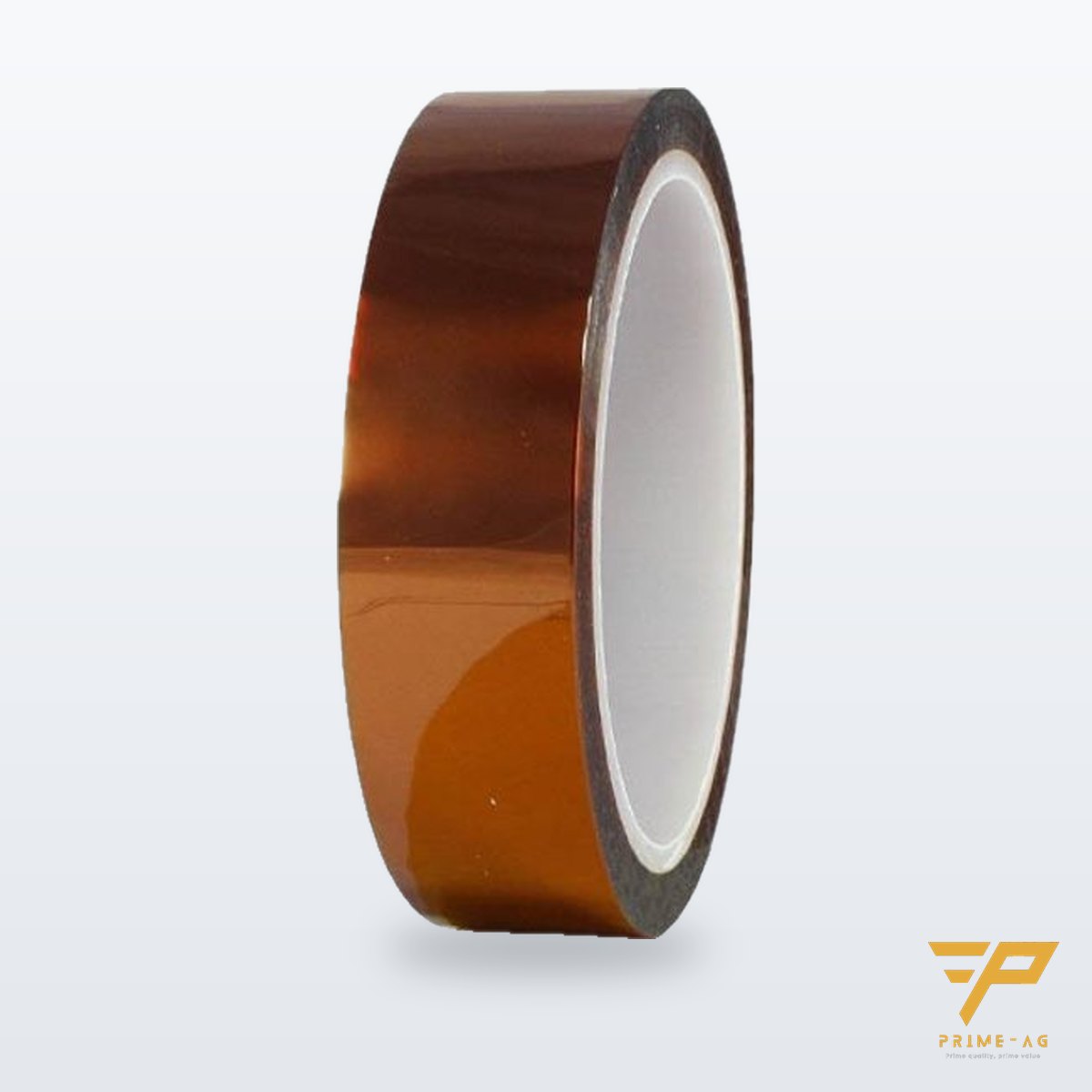
- Mask pads, gold fingers and connectors with Kapton heat-resistant tape, 260 °C and peel it off cleanly after cooling.
4. Storing solder paste
Solder paste is a mixture of solder powder and flux that easily absorbs moisture and dries out. General rules (always check the manufacturer’s datasheet):
- Store refrigerated in a dedicated refrigerator, typically 0–10 °C, never together with food.
- Take it out before use and let the jar reach room temperature while still closed. Opening it cold lets moisture condense into the paste, causing solder balls.
- Write the receiving and opening dates on the jar; use older jars first (FIFO).
- Paste that has been on the stencil longer than the allowed time must not be returned to a new jar.
5. Tip maintenance
Clean with brass wool instead of an overly wet sponge; tin the tip before placing it in the holder or switching off; never use the tip for prying. Replace the tip when its plating is worn and it no longer wets.
Soldering station layout
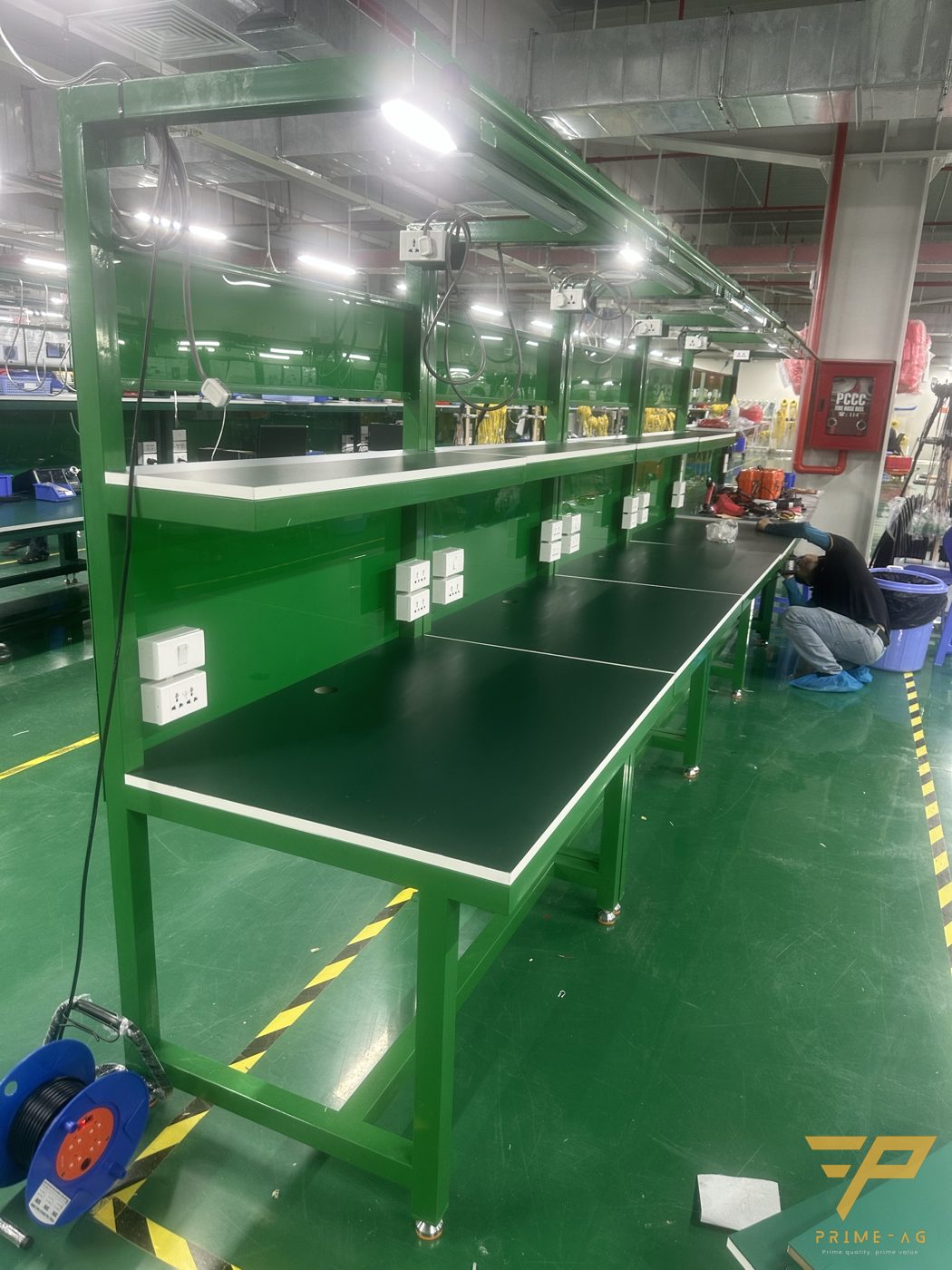
A soldering station needs a grounded ESD bench top, good lighting, outlets within reach and a clamp-on LED magnifier for inspecting joints. PRIMEAG has delivered about 500 ESD workbenches with lights, outlets and ground cords to a Taiwanese-invested electronic components plant in Da Nang (2024–2025, 4 batches). For choosing benches, see choosing workbenches for electronics lines; for grounding soldering stations, see setting up an EPA for SMT lines.
15-minute soldering station self-check
- Does the tip in use match the pad size of the product?
- Is the set temperature written on the station and consistent with the work instruction?
- Are leaded and lead-free solder mixed on the same bench?
- Does the solder paste jar show the opening date, and was it warmed up before opening?
Frequently asked questions
Why does a new soldering tip turn black and stop wetting after a few weeks? Usually because the temperature is set too high, the tip is left hot without a layer of solder, or it is wiped on a sponge that is too wet. Lower the temperature, tin the tip before placing it in the holder and clean it with brass wool.
What temperature should a soldering iron be set to? Set the lowest temperature at which the joint melts and spreads evenly within 2–3 seconds, following the solder and component manufacturers’ instructions. Lead-free solder needs a higher temperature than leaded solder because its melting point is higher (about 217–220 °C versus 183 °C).
Can solder paste be used straight out of the refrigerator? No. Let the closed jar reach room temperature for the time recommended by the manufacturer, then open it. Opening it while still cold lets moisture condense into the paste, causing solder balls and voided joints.
Updated: 14 October 2026 — PRIMEAG engineering team
Mon–Sat, 8:00–17:00 (GMT+7) · Phone/Zalo: +84 906 108 292 · Email: info@primeag.vn
Start where it suits you: Free technical advice · Send a drawing or layout · Get a quote within 30 minutes
Written by the PRIMEAG engineering team
Updated: 2026-10-21