
Peeling on plastic-coated steel pipe usually starts at cut ends missing PJ110A end caps, at burrs or over-tightened joints, followed by cleaning chemicals and standing water at the feet. In dry areas, simply cap the pipe ends and replace damaged sections with a 5 mm hex key; wash, food and pharma areas should use PRIMEAG 304 stainless steel frames.
The end-of-day cleaning shift in the food prep area of a factory in Vietnam has just finished hosing down; water is still pooled around the feet of benches and trolleys. After 1–2 years, maintenance finds the plastic at the pipe ends bulging and peeling off in patches, with rusty steel exposed at the feet. Most of these cases can be repaired without scrapping the whole frame.
- The plastic coating rarely fails by itself; water and chemicals usually get in through open cut ends.
- Check in this order: end caps, burrs and joint tightening torque, cleaning agents, standing water at the feet, impacts.
- Damaged sections can be replaced individually; all you need is pipe, joints and a hex key.
- Areas washed down daily, food, pharma: switch the frame to 304 stainless steel.
Why plastic-coated steel pipe peels after 1–2 years
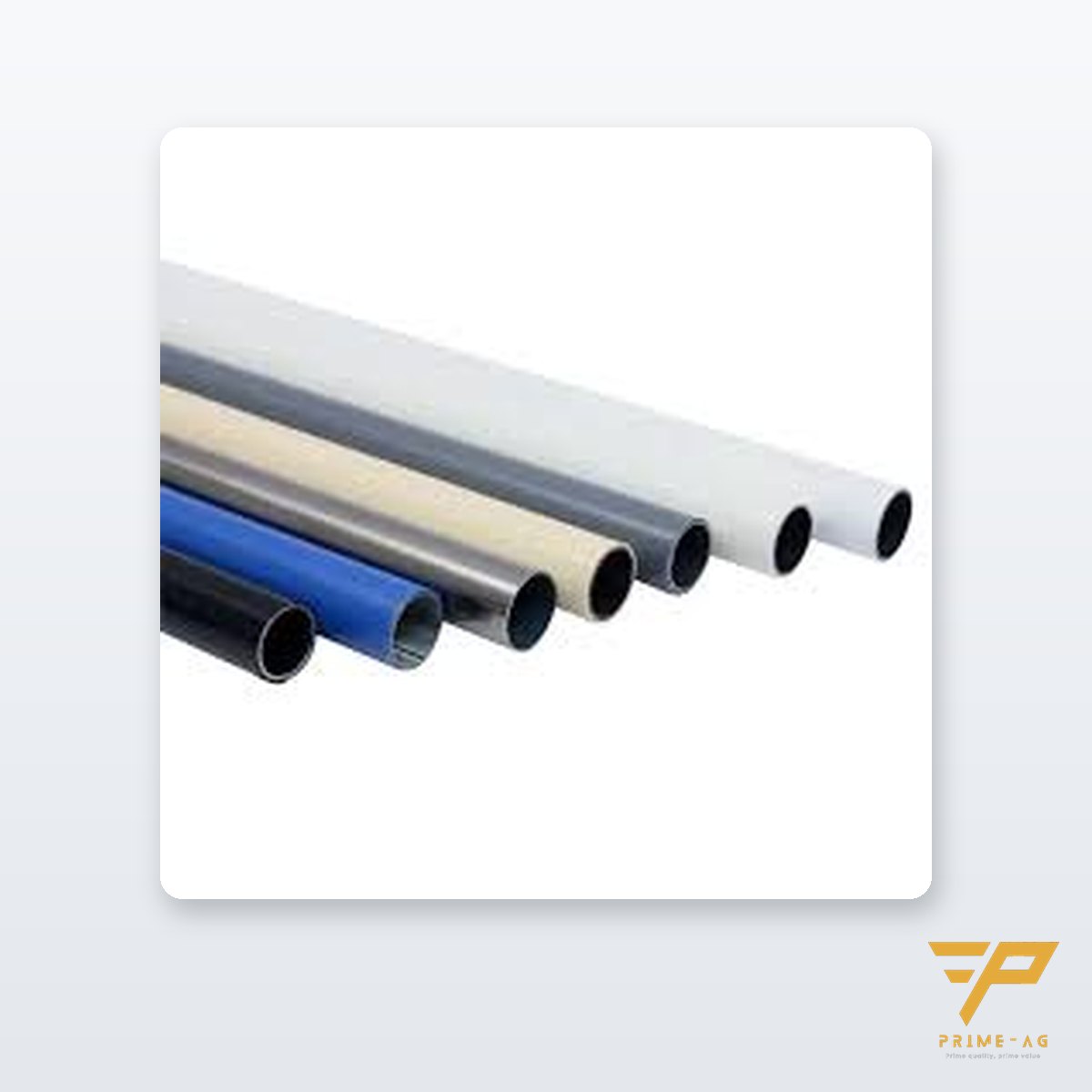
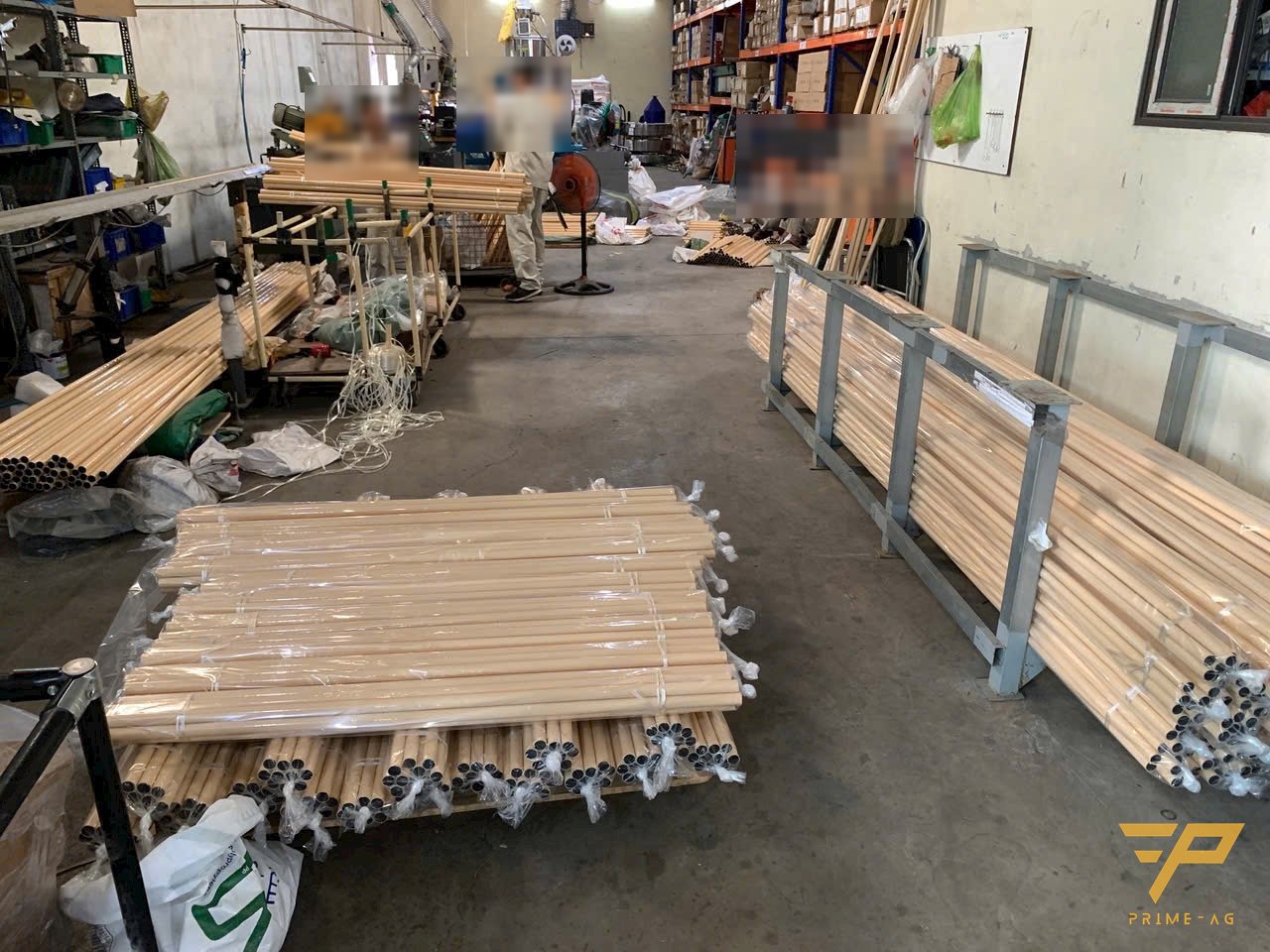
Lean pipe (plastic-coated steel pipe, Φ28) has a steel core with an outer ABS layer 0.6–0.8 mm thick heat-bonded to the pipe. Problems appear when the steel core meets water from the inside or the plastic layer is damaged. Check in the order below.
1. Cut ends left uncapped
Open pipe ends let wash water and cleaning solution run inside the pipe; the steel rusts from the inside out, pushing the plastic to bulge and separate at the edge. Fit PJ110A end caps wherever they are missing.
2. Burrs and over-tightened joints
Burrs left on the cut edge tear the plastic layer when the joint is slid on. Over-tightening the bolts dents the pipe and cracks the plastic around the joint.
3. Cleaning chemicals and hot water
Strong solvents, alkaline or acid cleaners and hot-water hoses age the ABS layer and make it lose adhesion. If the cleaning procedure requires these agents, plastic-coated frames are no longer suitable.
4. Feet standing in water
Pipe feet touching a wet floor all day are the first to rust. Fit ±20 mm leveling feet to lift the pipe off the floor and level the bench on sloped floors.
5. Forklift impacts, dragging
Forklift forks scraping rack legs or benches being dragged tear the plastic, and small tears in humid areas quickly become rust points.
Repair on site or change material
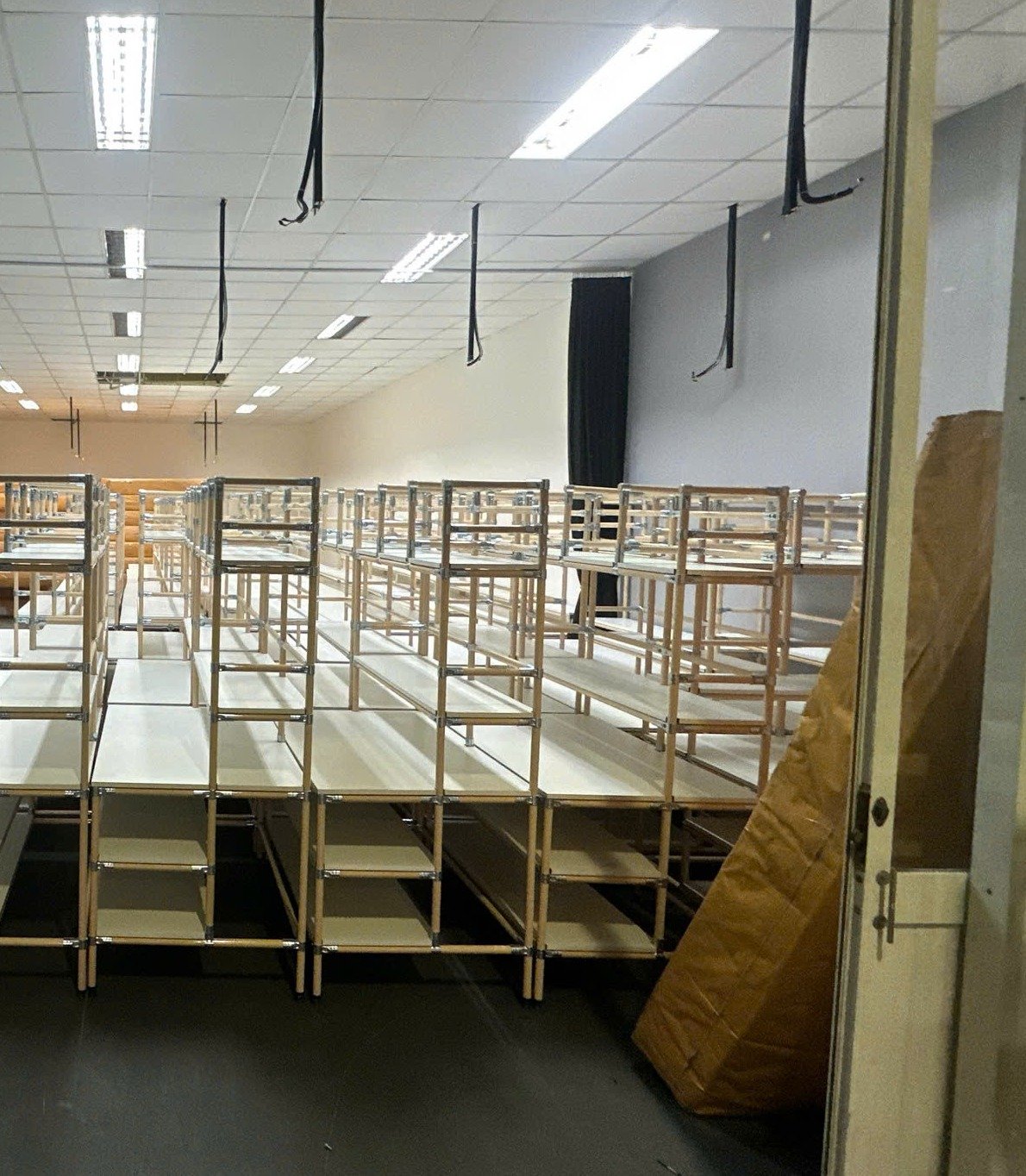
Frames are assembled with bolted joints, so you only need to loosen the joints with a 5 mm hex key, replace the peeling section with new pipe of the right length and cap both ends. PRIMEAG supplies Φ28 pipe, joints, PJ110A end caps and leveling feet. For wobbly frames, see lean pipe racks with loose joints, wobbling and sagging shelves.
If a new section still peels at the same spot, the cause lies in the operating environment; in that case switch to 304 stainless steel racks/trolleys or a wall-mounted 304 stainless steel frame bench for labs and wash areas. The difference between the two stainless grades is explained in 201 or 304 stainless steel for food and pharma plants.
| Area of use | Conditions | Recommended frame material |
|---|---|---|
| Dry warehouse, assembly line | No wash-down, damp wiping only | Plastic-coated steel pipe: Φ28 pipe workbench, multi-shelf steel pipe trolley 100 kg/shelf |
| Next to wet areas | Humid, occasional water spills | Plastic-coated pipe with all end caps and leveling feet |
| Wash area, food prep | Daily hosing, alkaline/acid cleaners | 304 stainless steel |
| Laboratory, pharma area | Chemicals, strict hygiene requirements | 304 stainless steel |
PRIMEAG bench, rack and trolley frames carry a 3-year warranty. If you see peeling plastic, photograph the spot and describe the area where the frame stands, then send it to PRIMEAG engineers for repair advice.
Real project
In 09/2026, PRIMEAG delivered 50 benches 1200×750, 30 benches 1500×750 and 4 stainless steel 304 tables 1200×2400 to a Singapore-owned e-commerce fulfillment hub in Ho Chi Minh City; production took 10 days and installation 2 days.
Self-check for pipe frames in humid areas
- Count open pipe ends and add end caps.
- Look for cracks and dents around joints.
- Find feet standing in water after the wash shift.
- Cross-check the cleaning chemicals in use.
- Mark sections with exposed rusty steel for replacement.
Frequently asked questions
- Does the plastic coating on lean pipe peel by itself under normal use? — Not in a dry workshop. Peeling is usually caused by water entering through cut ends, strong chemicals or impacts.
- If one pipe section rusts, does the whole bench have to be replaced? — No. Replace only the rusted section, add new joints if the old ones are damaged, then cap both pipe ends.
- When should we switch to a 304 stainless steel frame? — When the area is washed down daily, uses alkaline or acid cleaners or hot water, or belongs to a food or pharmaceutical zone.
Mon–Sat, 8:00–17:00 (GMT+7) · Phone/Zalo: +84 906 108 292 · Email: info@primeag.vn
Start where it suits you: Free technical advice · Send a drawing or layout · Get a quote within 30 minutes
Written by the PRIMEAG engineering team
Updated: 2026-10-25