
A lean pipe rack with loose joints, wobble or sagging shelves is usually caused by joint bolts that were under-tightened or have backed out from vibration, plastic joints at load-bearing nodes, missing diagonal bracing, long shelf spans and overloading. PRIMEAG recommends re-squaring and re-tightening the whole frame, switching to metal joints and adding bracing; if a shelf needs to carry 200 kg or more, change to a medium-duty rack.
A newly assembled pipe rack usually stands rock solid. A few months later, after a few bumps from carts and more stock piled on, the frame starts to wobble at the slightest touch.
- Check in this order: bolts, joint type, bracing, shelf span, feet, load.
- Most wobble cases: loosen, square up and re-tighten the whole frame.
- Must replace: stripped threads, cracked joints, bent or rusted pipe.
- Change rack type: shelves carrying 200 kg or more.
Why pipe frames come loose
Racks built from Φ28 plastic-coated steel pipe use bolted joints, not welds. The load is held by friction between the clamp joint and the plastic coating, so the tightening of the M6 bolts decides everything.
Causes, in the order to check them
1. Bolts under-tightened or backing out
The joint can be turned by hand and one end of a shelf drops. Vibration and impacts gradually loosen the bolts.
2. Plastic joints at load-bearing nodes
PJ plastic joints are fine for panels, trays and light racks. At nodes that support shelves or get bumped often, they deform. Main load-bearing nodes must use metal joints.
3. Missing diagonal braces and cross members
A frame with only uprights and shelf rails will rack into a parallelogram when pushed sideways.
4. Shelf span too long for the load
Long boards without a center support sag over time, especially MDF in a humid warehouse. Heavy boxes concentrated at mid-span cause about 1.6 times more deflection than the same weight spread evenly.
5. Leveling feet out of adjustment, uneven floor
If one foot is off the floor, the other three carry the entire load; the frame twists and the joints loosen faster.
6. Overloading
Φ28 pipe with 0.8–1.0 mm wall carries up to about 100 kg/shelf with an evenly distributed load. For heavier shelves, don’t switch to thicker pipe; add center posts, diagonal braces and cross members to shorten the span, and put the heaviest items on the bottom shelf.
Re-tightening and reinforcing
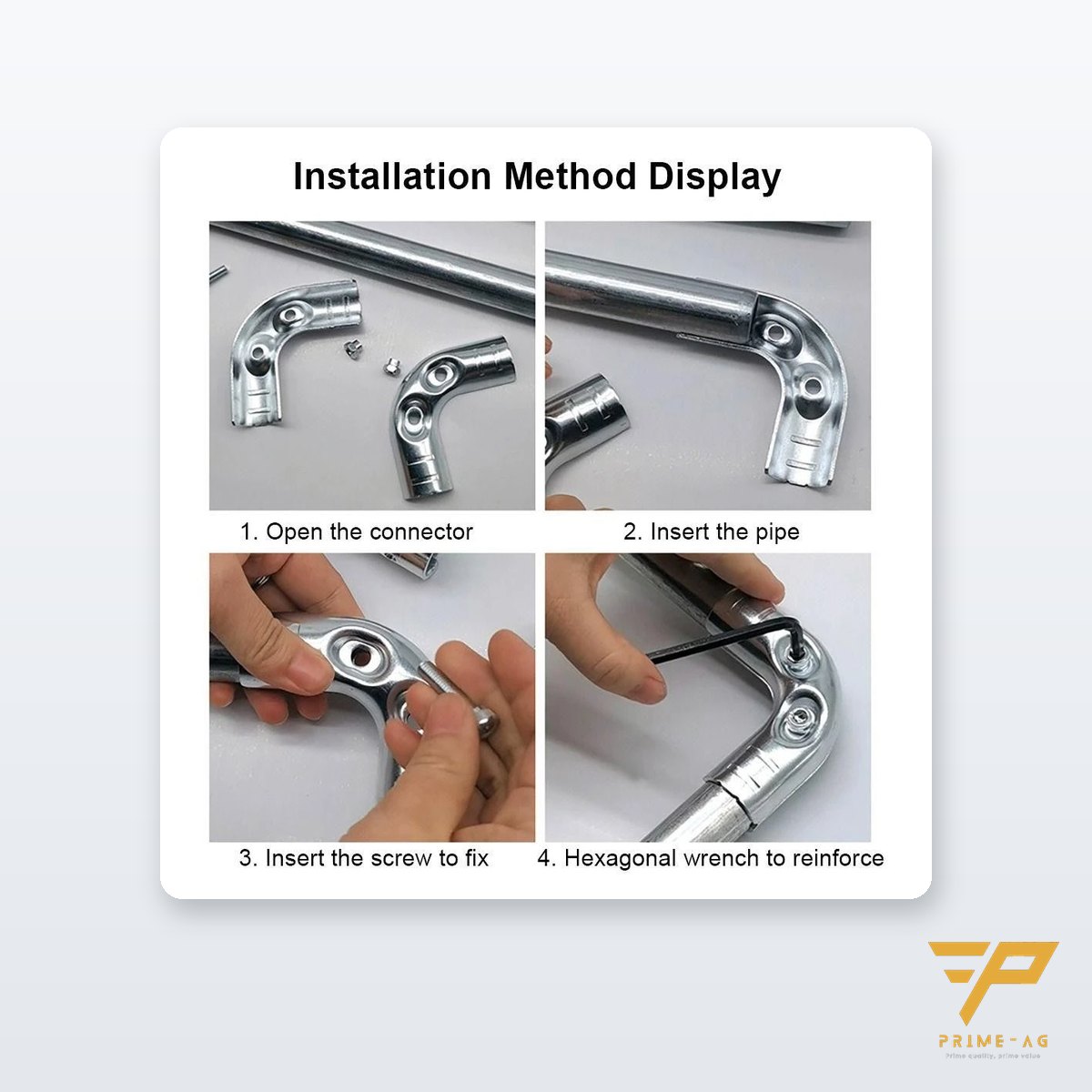
- Unload the rack and loosen the joints just enough for the pipes to slide.
- Square up with a try square, adjust each foot to touch the floor, and check level in both directions.
- Tighten each joint in turn with a 5 mm hex key, using even hand force.
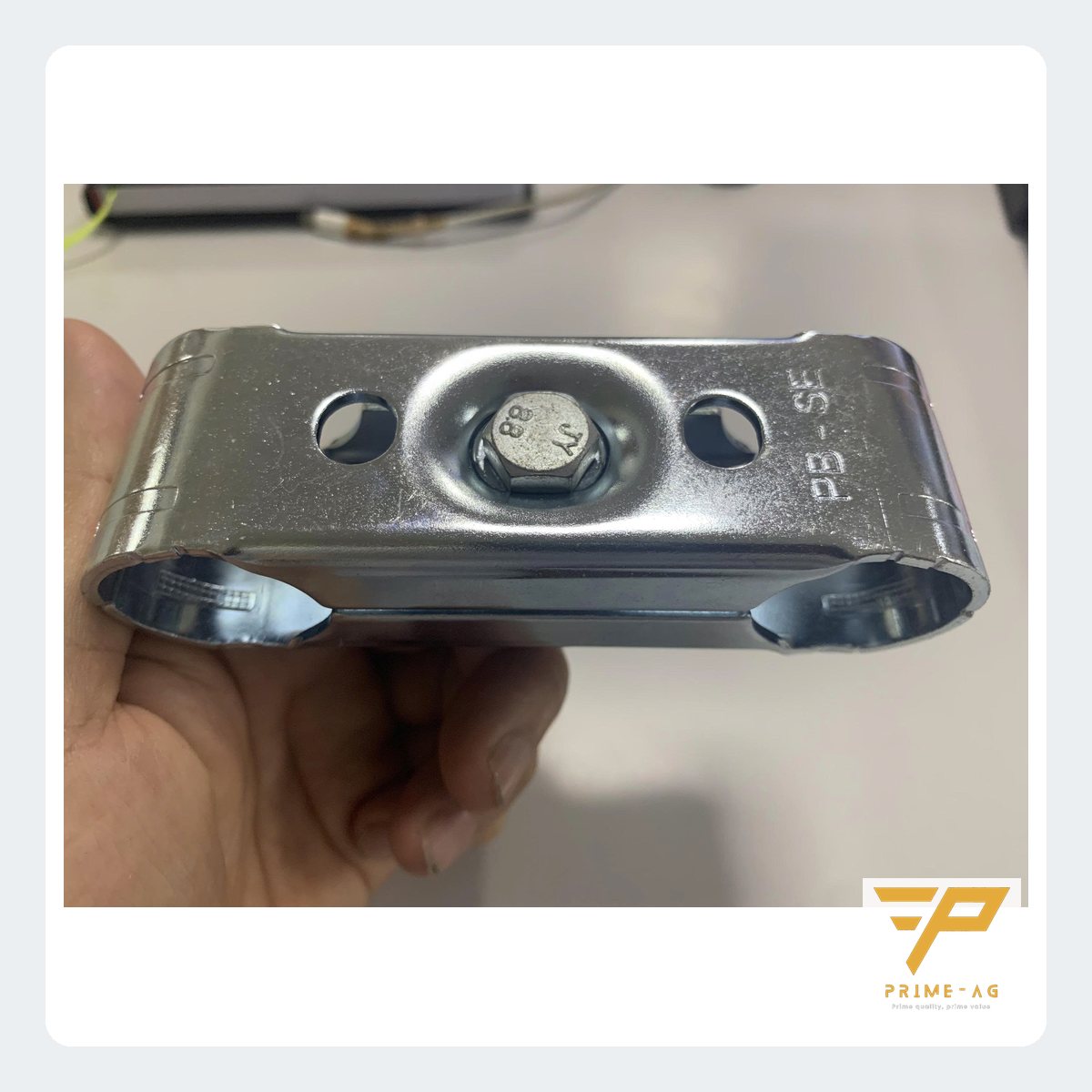
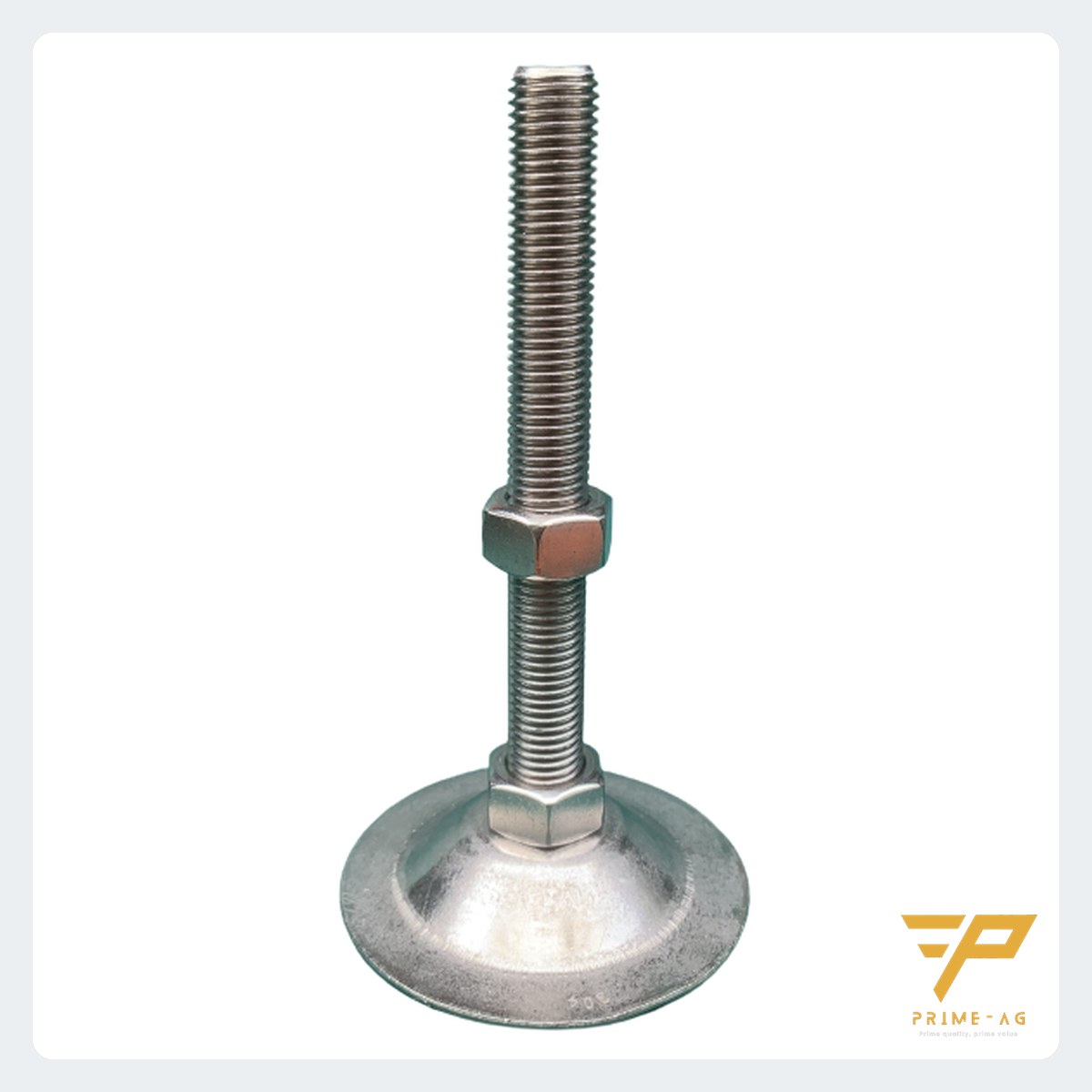
Over-tightening dents the plastic and strips threads. Reinforce in the right places: replace plastic joints at load-bearing nodes with DND or HJ metal joints; for two parallel pipes, use PB-SE double clamps with grade 8.8 bolts; add diagonal bracing on the back and center supports under boards. Leveling feet M8/M10/M12, base Φ40–60, adjustment ±20 mm depending on the model.
DND and HJ are both Φ28 and interchangeable; keep one system per assembly so the pipe-cut allowances stay consistent. Do not clean the pipe with acetone or thinner, as the plastic will cloud and crack.
When to replace pipes or joints
| Symptom | Action |
|---|---|
| Stripped threads, cracked or bent joint | Replace the bolt and the joint |
| Plastic dented or torn at the clamp | Move the joint or replace the pipe section |
| Permanently bent pipe, rust from the cut end | Replace the pipe, cap the end with a PJ110A plug |
| Still sagging after tightening and bracing | Add center posts and diagonal braces; if it still sags, change to a medium-duty rack |
When to move to a medium-duty rack
For shelves that need 200 kg or more, move to a medium-duty rack at 200–500 kg/shelf; for about 1,000 kg/shelf, use a heavy-duty rack with 90×60 uprights.
Line-side parts supply still suits a gravity flow rack at 100 kg/shelf; for lane layout, see the article FIFO flow racks for assembly line parts supply. Multi-tier lean pipe carts and lean pipe workbenches are re-tightened with the same three steps.
Where to start
Send PRIMEAG photos of the rack, its dimensions, the load on each shelf and where joints keep coming loose; our engineering team prepares the BOM and cut list free of charge. Rack frames carry a 3-year warranty; standard-model racks are finished in 5–7 working days. For an overview of the pipe system, see the article lean pipe racks and carts in Binh Duong, Dong Nai.
For export processing enterprises (EPEs), orders from VND 20 million are invoiced at 0% VAT; PRIMEAG prepares the import/export customs declarations on site at no charge.
Frequently asked questions
- How often should lean pipe rack joints be re-tightened? — Check for the first time after one month of use, then whenever you add a shelf or move the rack. Racks next to cart aisles should be checked more often.
- Can DND and HJ joints be mixed on the same rack? — Yes, since both are Φ28. Still, each frame assembly should use one joint system for consistency.
- What is the load capacity per shelf of a lean pipe rack? — About 100 kg/shelf with 0.8–1.0 mm pipe and an evenly distributed load. For heavier loads, shorten the span with center posts and bracing; from 200 kg upward, choose a medium-duty rack.
Email: info@primeag.vn · Phone/Zalo: +84 906 108 292
Written by the PRIMEAG engineering team
Updated: 2026-10-24