
Back pain and numb legs in garment factories in Vietnam mostly come from chairs that don’t suit the station: the chair rolls away when the operator presses the pedal, or the seat is too high or too low relative to the machine table. PRIMEAG groups chairs by 4 stations: sewing, cutting, ironing and QC, combined with glides or casters and a gas lift for height adjustment.
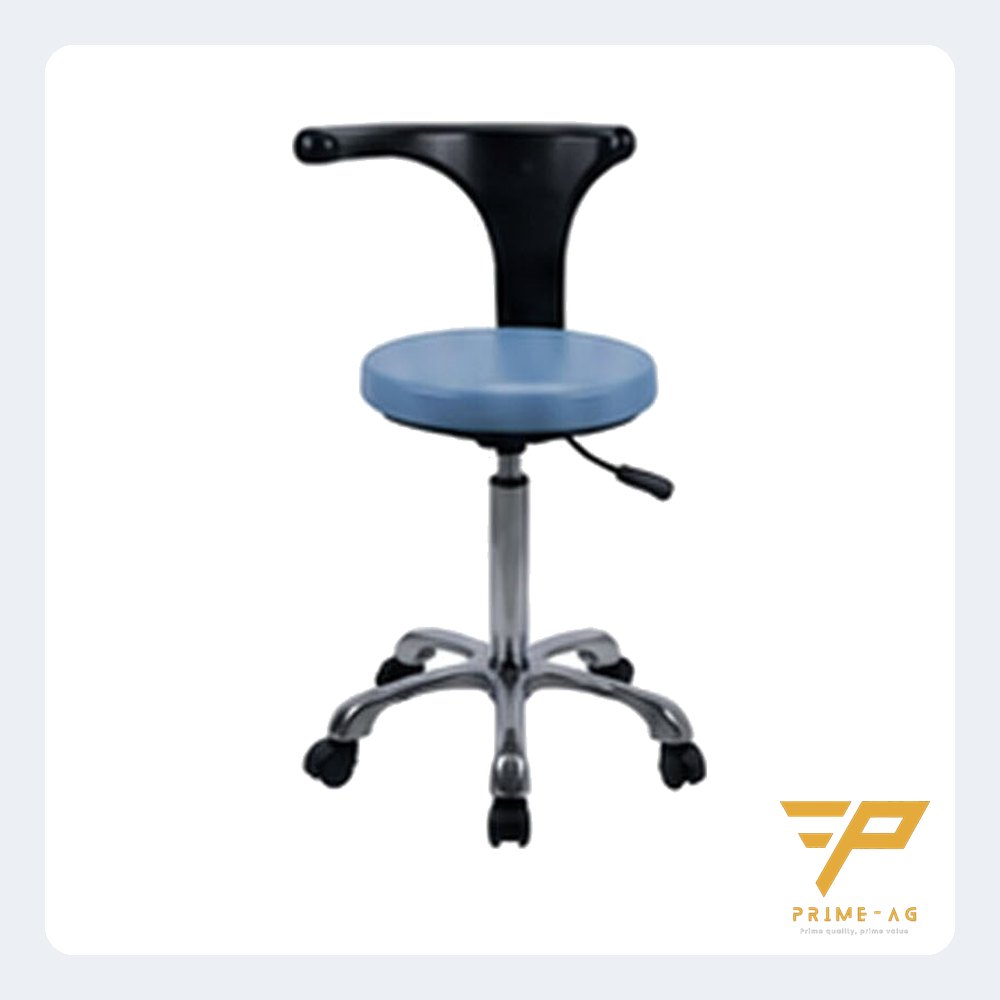
- Sewing machines: chair with a small backrest and fixed glides so it doesn’t roll.
- Cutting and ironing: FRP stool or saddle chair, tall gas lift with a foot ring.
- QC: casters for turning and moving back; swivel stainless steel stool for dry areas.
- Height: adjust with the gas lift to the machine table and to each operator.
Why sewing operators get tired after half a shift
Sewing operators sit leaning forward with their feet constantly on the pedal. A chair without height adjustment forces them to hunch their back or raise themselves onto their toes.
A chair with casters at a sewing machine also rolls backwards every time the pedal is pressed hard. The operator tenses their thighs to hold position, and by the end of the shift both the back and the calves are tired.
Setting chair height to the machine table
General rule: when seated, the thighs are nearly horizontal, the whole foot rests on the pedal and the elbows are roughly level with the machine table. Sitting tables about 750 mm high use a low gas lift.
Sit-stand tables of 900–1,000 mm need a tall gas lift with a foot ring so the knees bend about 90° and the feet are not left hanging.
Choosing chairs by station
| Station | Suggested chair | Base, lift | Reason |
|---|---|---|---|
| Sewing machine, seated all shift | leather-seat chair with small T-shaped backrest | Fixed glides, low gas lift | Backrest supports the lower back; chair doesn’t roll when pedalling |
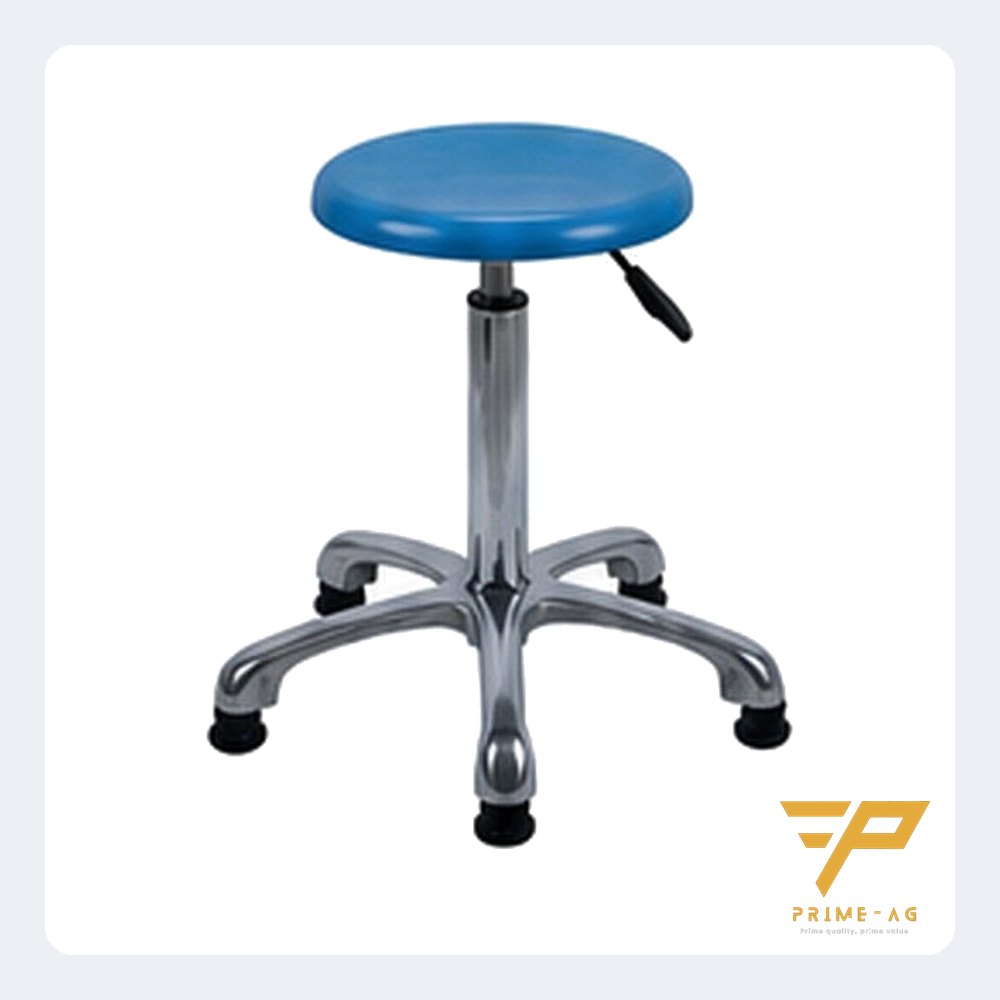
| Cutting table, short rests | FRP plastic-seat stool | Chrome-plated ring base, glides | Hard seat doesn’t tear when hit by scissors or knives |
| High ironing table | saddle chair with PU seat | Tall gas lift, foot ring, glides | Half-sitting, half-standing posture at a high table |
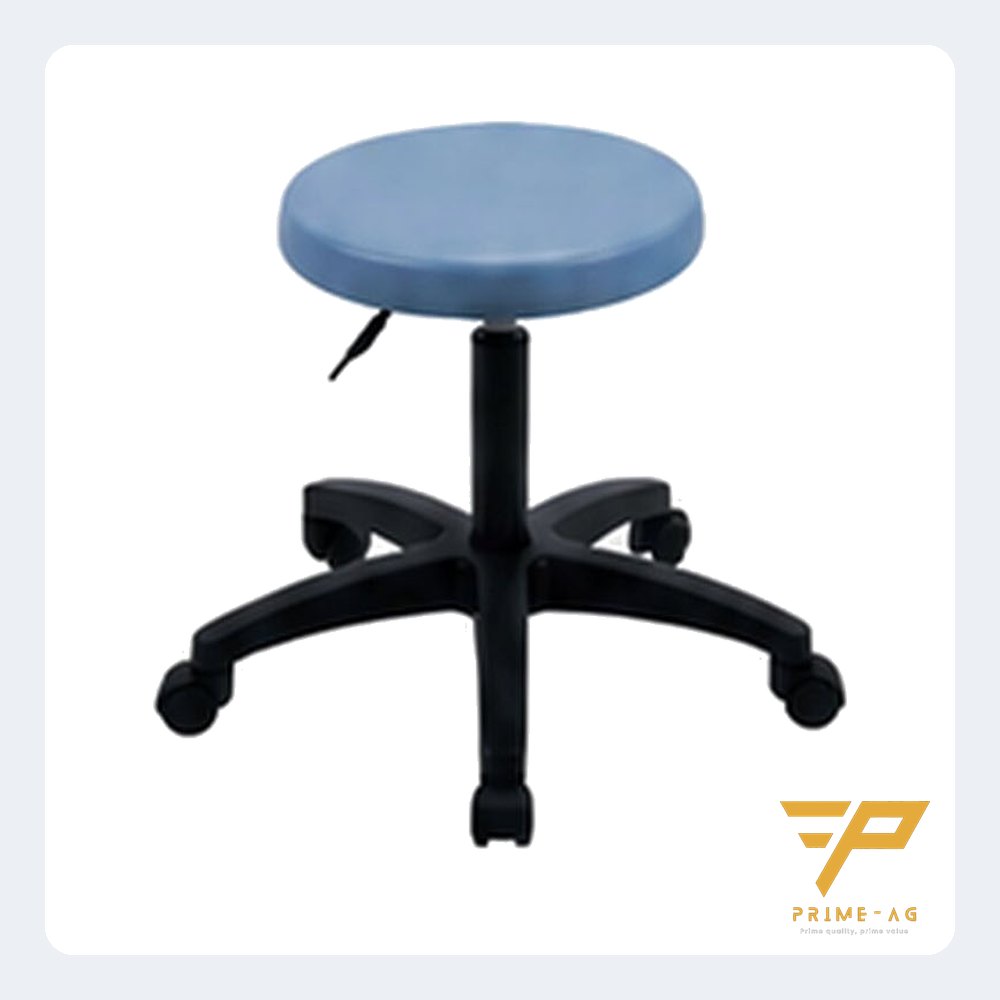
| QC, inspection | Leather-seat stool or swivel stainless steel stool | Casters, cast aluminium base | Operators need to turn and move back to reach goods |
Sewing machine: small backrest and glides
The small plastic backrest supports the lower back and is open at the sides, so it doesn’t get in the way of the elbows when feeding fabric. Glides keep the chair still under the machine. The small backrest supports exactly the lumbar area when leaning towards the machine; operators who need more back support while resting should mention it when ordering for further advice.
Cutting and ironing tables: high seats, short sitting
Cutters mostly stand and only need a temporary seat. FRP is glass-fibre reinforced plastic with no foam, so it doesn’t absorb liquids or tear, but it is less comfortable.
At high ironing tables, a saddle chair keeps the natural curve of the lower back better than a flat seat. New users need a few days to get used to it.
For mainly standing stations, see standing all shift: anti-fatigue mats, chairs and table height.
QC and packing: need to move around
Inspectors turn and move back constantly, so use casters. The swivel stainless steel stool is made of inox 201 with a matte seat that can be wiped with 70 % alcohol, suitable for dry packing areas; lead time 7–10 days.
Leather or stainless steel seat
- Leather seat: comfortable; wipe with a damp cloth or a neutral cleaner, avoid strong solvents.
- Inox 201 seat: cool and quick to wipe; use in dry areas and wipe dry after washing.
The chairs above are not ESD chairs, and garment factories do not need them. Only electronic component assembly requires an ESD chair with backrest.
Where to start
- Measure the height of the sewing, cutting, ironing and QC tables currently in use.
- Count the operators at each station and note where chairs must stay still and where they must move.
- Order a few sample chairs for one line to trial for a week (FRP chairs from 2 pieces).
- Send PRIMEAG the list of seat type, base, glides or casters and gas lift to receive a quote within 30 minutes.
Chairs carry a 12-month warranty. Rearranging the line: see WIP build-up between garment processes: WIP racks and trolleys.
Frequently asked questions
Should sewing operator chairs have casters or glides? At sewing machines, use fixed glides so the chair doesn’t roll when pedalling. Casters suit QC and inspection stations.
How do I know the chair height is right for the sewing machine table? Sit and test: thighs parallel to the floor, the whole foot on the pedal, no tiptoeing or tucking the legs. A gas lift allows adjustment for each person.
Do garment factories need ESD chairs? Usually not. Leather-seat, FRP, saddle and swivel stainless steel chairs are not ESD and are still suitable for sewing, cutting, ironing and QC.
Updated: 20/10/2026 — PRIMEAG engineering team
Mon–Sat, 8:00–17:00 (GMT+7) · Phone/Zalo: +84 906 108 292 · Email: info@primeag.vn
Start where it suits you: Free technical advice · Send a drawing or layout · Get a quote within 30 minutes
Written by the PRIMEAG engineering team
Updated: 2026-10-21