
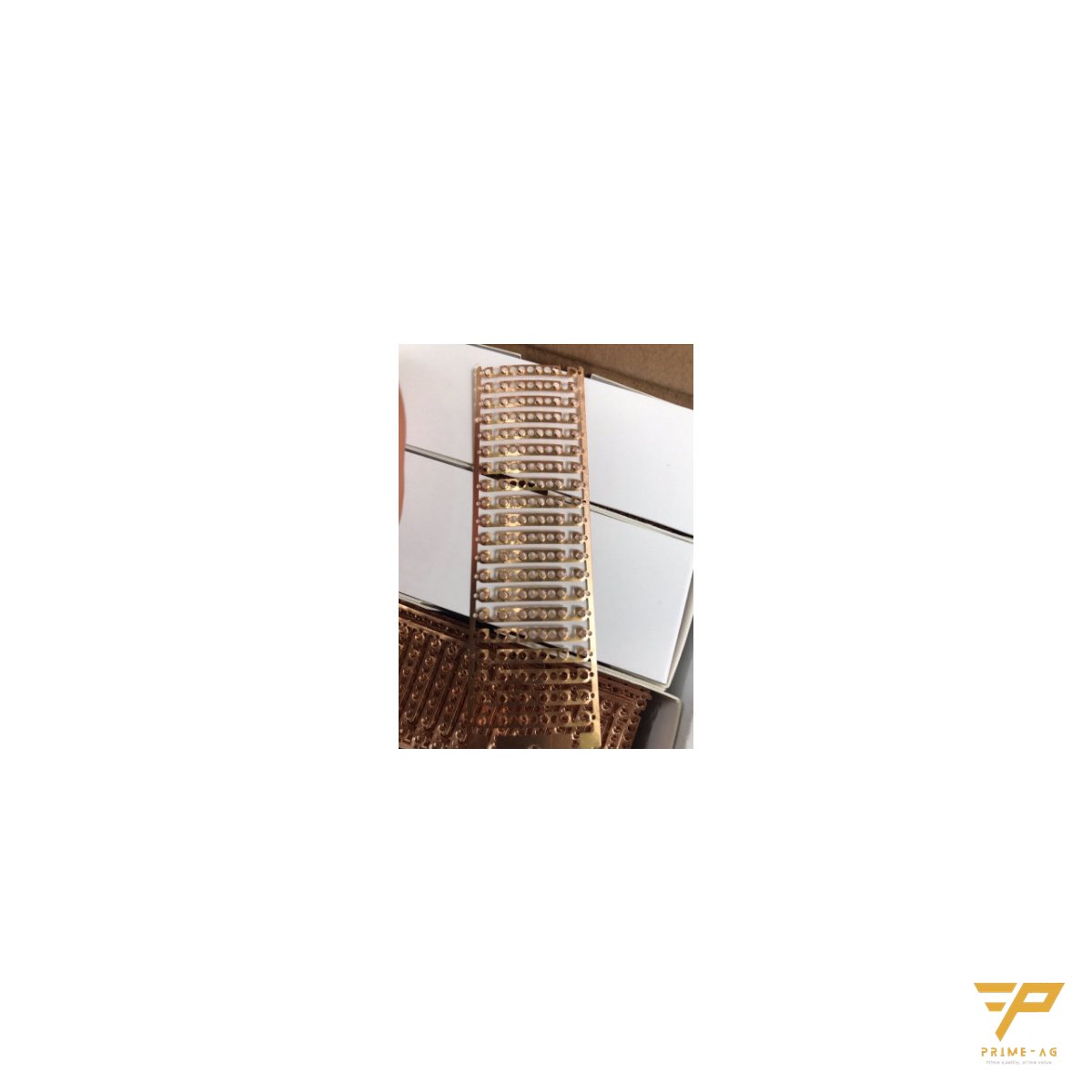
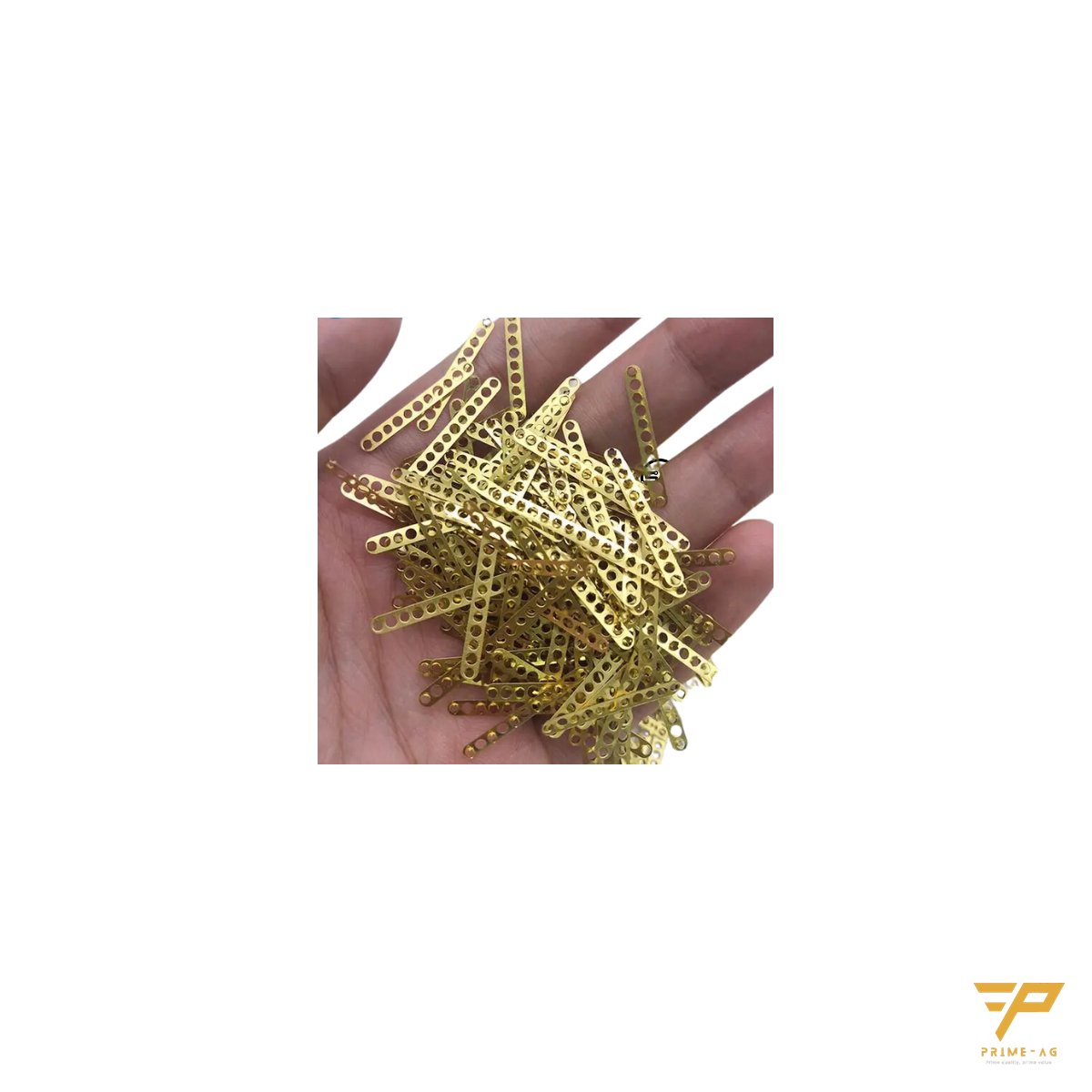
Splice tape or splice clips for 8 mm feeders on Fuji, Panasonic or Yamaha SMT machines? SMT splice tape with 4 mm pitch holes is enough for paper carrier tape at moderate speed. 0402/0201 chips running fast, or slick black plastic carrier tape, need a brass splice clip as well, held by its teeth. PRIMEAG recommends using both: the clip holds mechanically, the tape covers the joint.
A 10-machine line makes 300–600 material splices per shift. Every failed splice forces a machine stop to change the feeder for 1–2 minutes, so even a small share of bad splices adds up to many machine hours a month.
- Splice tape holds by adhesive and is quick to apply by hand; brass clips hold by teeth through the holes and do not slip pitch.
- 0402/0201 chips and slick black plastic tape: clip first, cover tape on top.
- Write the part number, lot and bag opening date on the reel with yellow PET label tape.
Choosing SMT splice tape or brass clips by carrier tape and chip size
What decides it is paper versus black plastic carrier tape and the chip size, not the machine brand. Both the SMT splice tape and the SMT brass splice clip are made for 8 mm carrier tape with 4 mm sprocket hole pitch.
| Situation on an 8 mm feeder | Use | Why |
|---|---|---|
| Paper carrier tape, moderate speed | 8 mm splice tape, individual pieces | Applied by hand, no tool needed, holes line up with the carrier tape holes |
| Slick black plastic carrier tape | Clip, or tape applied on both top and bottom | Single-sided adhesive slips easily on slick plastic |
| 0402/0201 chips, line running continuously 24/7 | Mechanical clip + cover tape on top | An adhesive joint slightly off pitch is already enough for the nozzle to mispick |
Loose clips or strip clips
Loose clips come in bags of 4,000 and are used with a hand tool, suiting shops with few feeders. Strip clips have 20 clips joined together; you snap off one clip per splice, nothing gets dropped and splices per shift are easy to count. Cost is about VND 60–115 per splice (price excluding 8% VAT).
Four common splice faults and their causes
1. Off the 4 mm pitch
Cut at an angle or not exactly between two holes, so the joint is one hole short or one too many. Component pockets end up off the pick position.
2. Adhesive lifting
Tape applied on one side only on slick black plastic tape, or oily fingers when pressing it down. After a few passes over the feeder sprocket it separates.
3. Cover tape breaking or jamming
The cover tape was not spliced; when the feeder peels the cover tape up to the joint, it breaks and raises an error.
4. Clip not fully crimped
Weak squeeze, teeth not fully through the holes; a raised clip makes 0402/0201 chips flip or get mispicked.
Splicing correctly in five steps
- Cut both ends of the carrier tape square and peel the cover tape back 2–3 holes.
- Place both ends in the tool’s guide groove so the sprocket holes run continuously at 4 mm pitch.
- Insert the clip and crimp the tool once, firmly.
- Apply splice tape over the joint, pressing from the centre outward; on slick tape also apply it underneath. Rejoin the cover tape.
- Pull-test by hand: no movement means it passes; if the joint is off pitch, cut it out and splice again.
Label tape for newly opened reels
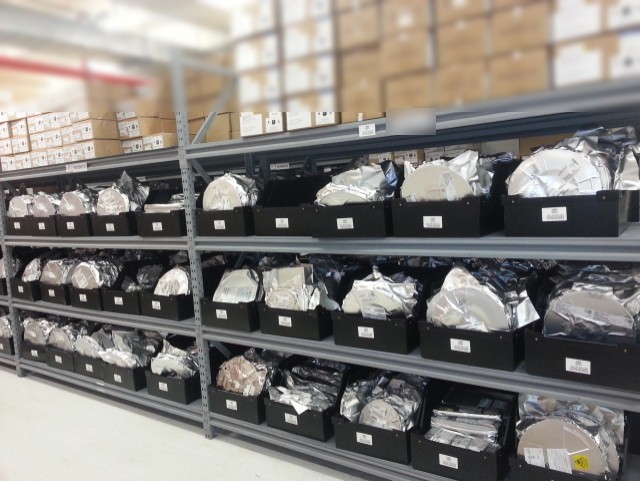
Yellow PET label tape can be written on with a marker and peels off without residue. A reel just taken out of its moisture barrier bag needs the part number, lot and opening date and time written on it to control the floor life of MSL components. Read the 6-spot humidity indicator card (HIC) as soon as the bag is opened and write the result on the same label.
Self-check at the kitting station
- Black ESD tape inside the EPA; yellow tape only outside the EPA.
- Splicing tool free of adhesive, guide groove not worn.
- Count failed splices per shift.
Feeder carts and reel racks next to the kitting station must also stay within the ESD range; to find out whether they still pass, book PRIMEAG to bring a meter and test these items free of charge – the readings are for self-assessment and do not replace official audit records.
A list by station is in ESD supplies for Panasonic, Fuji and Yamaha SMT lines; reels past their floor life should be handled per rebaking and repacking MSL components per J-STD-033.
Frequently asked questions
- Can yellow SMT splice tape be used inside an ESD protected area (EPA)? — Not recommended. Yellow tape is ordinary film, for use outside the EPA or only to mark splices; inside the EPA use black ESD-film tape.
- How long does a bag of 4,000 brass splice clips last? — For a 10-machine line with 60 feeders per machine using copper clips for only 40–60 splices per shift (the rest spliced with tape), one bag lasts about 1–1.5 months.
- Can 8 mm splice clips be used on 12 mm or 16 mm feeders? — No. Standard clips are made for 8 mm carrier tape; 12/16 mm tape needs wider clips, which PRIMEAG supplies to order.
Email: info@primeag.vn · Phone/Zalo: +84 906 108 292
Written by the PRIMEAG engineering team
Updated: 2026-10-26