
Stamping dies, injection molds and heavy jigs are often stored on the floor or on racks that are not rated for the load. The result is a risk of rack collapse, dented molds and 15–30 minutes spent searching for a mold at every changeover. PRIMEAG recommends choosing racks by the load per level, putting heavy molds on low levels, giving each mold a location code and keeping access aisles for lifting equipment.
- Load: choose racks by rated load per level with a load sign, not by feel.
- Arrangement: heavy molds on low levels, frequently used light jigs at waist height.
- Retrieval: leave aisle width and headroom for forklifts and hoists; never carry heavy molds by hand.
- Management: one code per mold, one location code per rack bay, a register or file showing where each mold is.

1. Calculate the load before choosing a rack
List the molds and jigs: overall dimensions, weight, frequency of use. The load rating of each level must exceed the total actual weight placed on it, with the safety factor specified by the rack manufacturer. Hang a sign on each rack row showing the maximum load per level so the people loading molds know the limit.
| Item stored | Recommended rack type | Retrieval method |
|---|---|---|
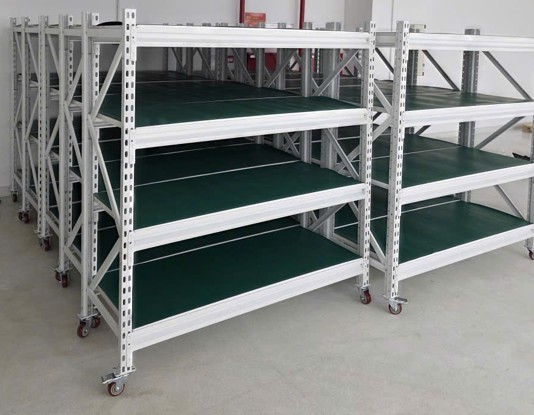
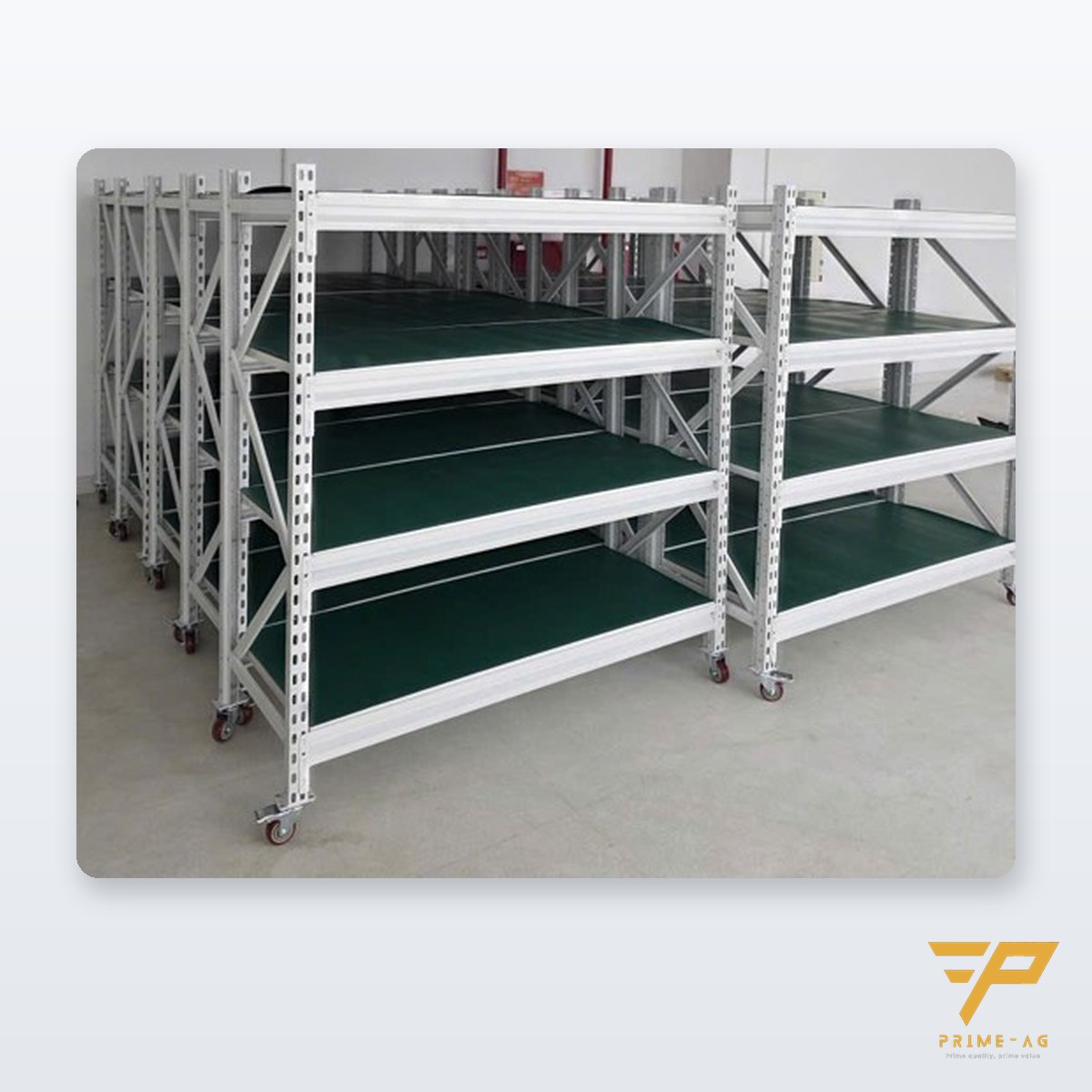
| Light jigs, inspection gauges, assembly jigs | Plastic-coated steel pipe rack built from lean pipe components, or a jig rack | By hand, waist to shoulder height |
| Medium jigs and molds (one person can lift safely) | Medium-duty rack 200–500 kg/level, steel or board shelves | By hand, low and middle levels only |
| Heavy stamping dies and injection molds | Mold rack or heavy-duty pallet rack | Forklift, hoist, overhead crane |
2. Arrange by weight and frequency of use
- The heaviest molds go on the lowest level. Never put a heavy mold up high just because “there is space”.
- Jigs used every day go at waist height, close to the machine. Molds used a few times a year go to remote storage.
- Molds must not overhang the shelf edge; molds on pallets require the pallet to sit fully on the beams.
- Finely machined mold surfaces must not rest directly on steel; use wood or plastic sheet underneath and apply rust-preventive oil per the tooling department’s rules.
3. Safety when retrieving molds
Most accidents happen during retrieval, not while the mold sits on the rack. Leave aisles wide enough for forklifts to turn and mark the working zone of lifting equipment with floor marking tape. Heavy-duty racks need floor anchors and upright protectors at the row ends. For medium jigs at workstations, a tool hoist saves workers from lifting by hand. Clearly define the maximum weight one person may lift according to the factory’s safety rules.
4. Location management to avoid mold mix-ups
- One engraved code or metal tag per mold; one location code per rack bay (row – level – bay).
- A board or file recording which mold is in which bay and its status (ready, awaiting repair, in production).
- Molds awaiting repair go to a separate, signed area, never mixed with ready molds.
- Apply 5S: when a mold is taken out, the empty location keeps its label so the mold returns to the right place.
For assigning location codes and cutting search time, see warehouse solutions: wrong picks and slow picking; for placing jigs near the station, see lean workstation improvement to reduce walking.
5. Lead time and warranty
Steel pipe frame racks and medium-duty racks in standard designs are produced in 5–7 working days; racks designed around specific molds and floor plans take 10–15 working days including drawing approval. Heavy-duty pallet racks made to order take 2–3 weeks. Rack frames carry a 3-year warranty.
Mold storage self-check
- Does every rack row have a load sign for each level?
- Are any heavy molds on high levels or on the floor in the aisle?
- How long does it take to find any given mold? Over 5 minutes means you need location codes.
- Do rack uprights show forklift impact marks, or are any beams bent or sagging?
Frequently asked questions
What kind of rack should be used for heavy molds? Molds that one person cannot lift safely should go on a dedicated mold rack or a heavy-duty pallet rack and be handled with a forklift or hoist. The load rating of each level must exceed the actual weight placed on it.
Should molds be stored on high levels to save floor space? Only if the rack is rated for the load and suitable lifting equipment is available. Heavy molds belong on low levels; high levels are for light jigs or rarely used molds on pallets handled by forklift.
How long does PRIMEAG take to make a custom jig rack? Standard rack designs are produced in 5–7 working days; racks designed around your molds and floor plan take 10–15 working days including drawing approval. Rack frames carry a 3-year warranty.
Updated: 14 October 2026 — PRIMEAG engineering team
Mon–Sat, 8:00–17:00 (GMT+7) · Phone/Zalo: +84 906 108 292 · Email: info@primeag.vn
Start where it suits you: Free technical advice · Send a drawing or layout · Get a quote within 30 minutes
Written by the PRIMEAG engineering team
Updated: 2026-10-19