
Why do cleanroom and ESD consumables run out mid-month at factories in Vietnam? Usually because there is no reorder point. PRIMEAG recommends setting a min–max level for every item: calculate usage per person/shift/line, add safety stock based on lead time (stock items 24–48 hours; made-to-order items add the ordering time), then consolidate orders on a fixed schedule.
Wednesday of the third week: the warehouse reports it is out of size M gloves. The SMT line leader borrows a box of a different glove type from the packing area, and nobody knows whether that type meets the cleanliness class.
- Each item needs two numbers: Min to trigger an order, Max to avoid overstock.
- Min = daily usage × (lead time + safety days).
- Consolidate orders on a fixed cycle; regular customers get prices held for 6 months.
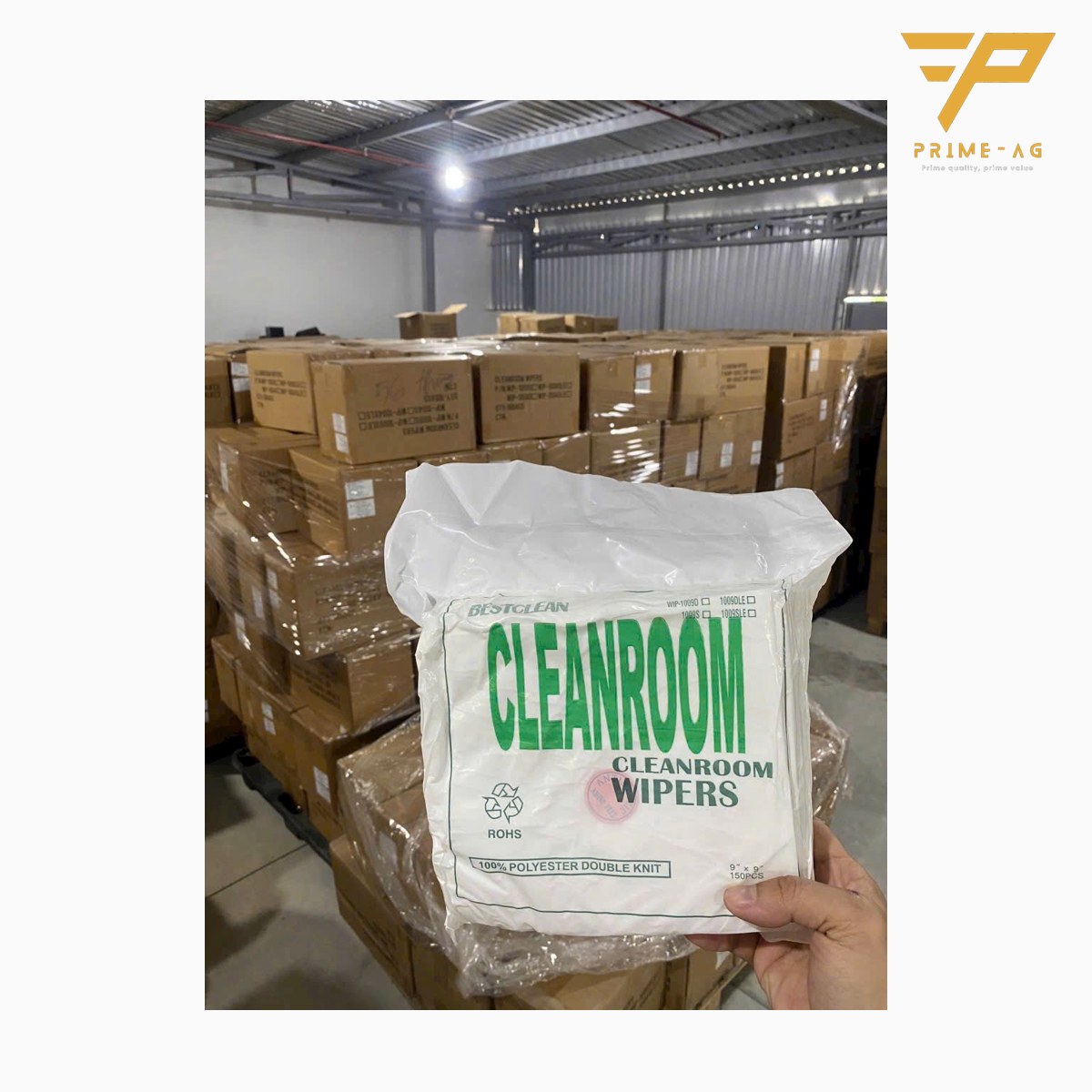
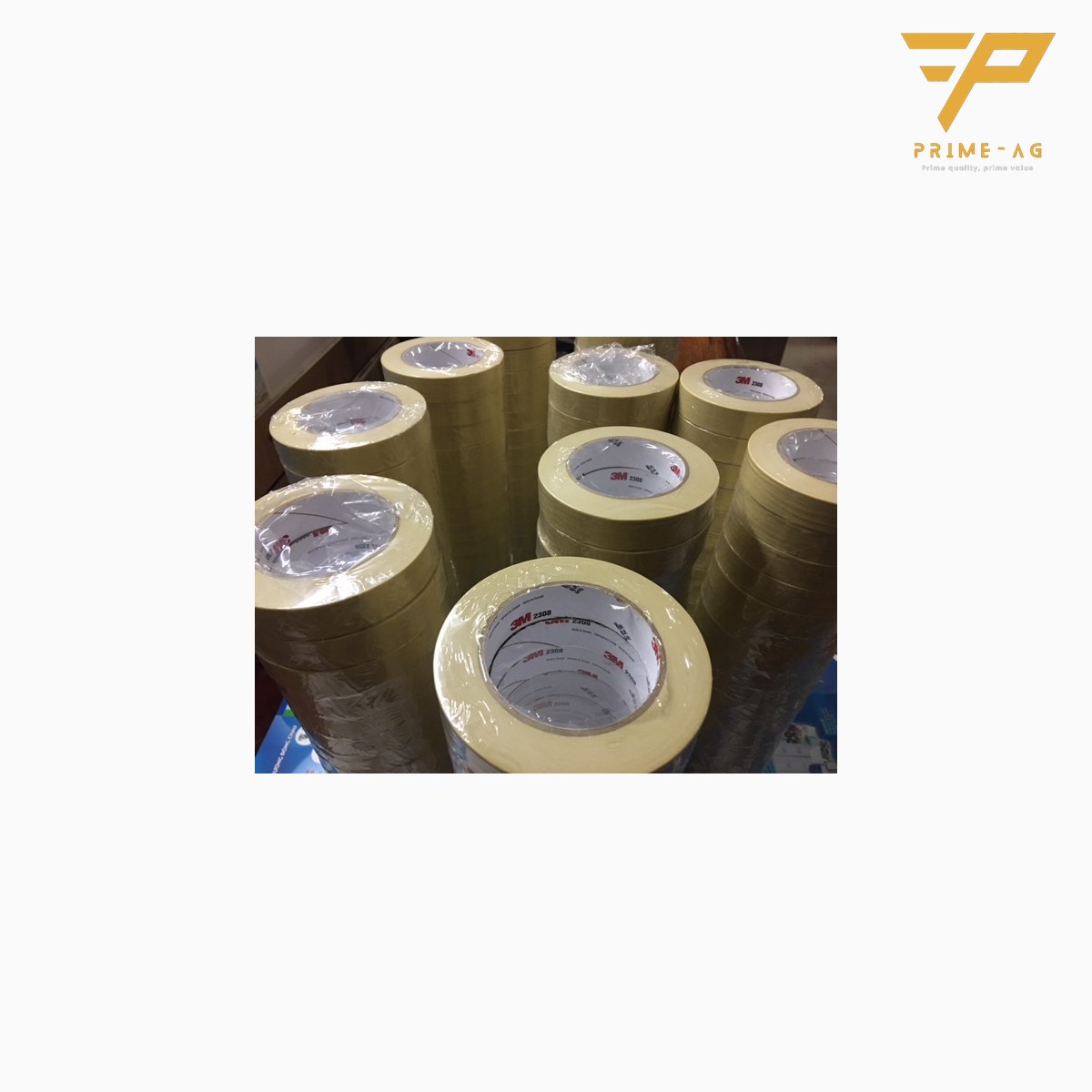
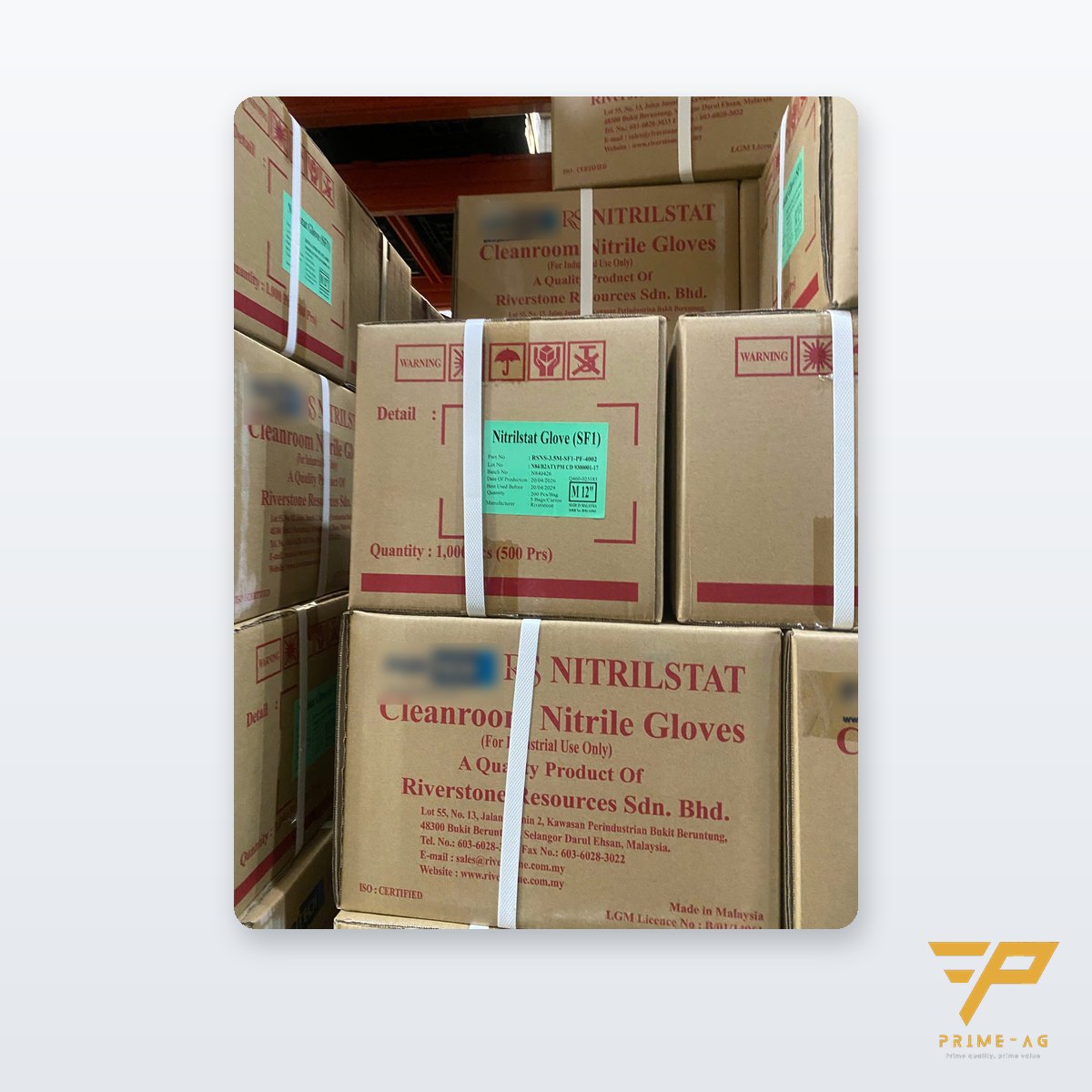
Why cleanroom consumables tend to run out mid-month
Orders are placed once a month, usage is calculated on total headcount instead of by size, and nobody is authorised to order when stock hits the threshold. Borrowed substitutes may shed particles and ions; latex finger cots are usually insulating material.
Step 1 – Usage per person, shift and line
Take the last 2–3 months of warehouse issues, split by line and size:
- 12-inch cleanroom nitrile gloves: pairs/person/shift, split into S, M, L.
- Sticky mats 600×900: sheets peeled per shift at each door; 30 sheets per pad.
- Silicone sticky rollers: roller core replaced after 6–12 months, DCR sheets consumed daily.
- 3M industrial tape: rolls/week, split by code.
Step 2 – Safety stock based on lead time
Gloves, sticky rollers and mats, tape, and ESD garments and footwear are stock items, delivered in 24–48 hours in Ho Chi Minh City, Binh Duong and Dong Nai, in all sizes and colours. Count lead time as 2 days; the safety margin covers internal order approval.
Cleanroom wipers, wiping paper and custom-made items (cut to size, custom sizes, logo printing) require you to ask for the ordering time and add it to the formula.
Step 3 – Min–max calculation table
| Quantity | Formula | Hypothetical example: nitrile gloves size M |
|---|---|---|
| Daily usage (D) | headcount × pairs/person/shift × shifts | 80 × 1.5 × 2 = 240 pairs |
| Lead time (L) | stock items: 2 days | 2 days |
| Safety days (S) | order approval time + buffer | 3 days |
| Min | D × (L + S) | 1,200 pairs → 3 cartons |
| Order cycle (T) | consolidated order schedule | 7 days |
| Max | Min + D × T | 2,880 pairs → 6 cartons |
Headcount and usage rates are hypothetical. One carton of 12-inch gloves holds 10 bags × 50 pairs = 500 pairs; round carton numbers up.
When stock reaches Min, order up to Max. Trufit ESD finger cots come in 1,440 pieces per bag, so round to whole bags.
Step 4 – Regular consolidated orders and price hold
Put every item on one fixed schedule, for example Monday morning, instead of each line ordering on its own. PRIMEAG holds prices for 6 months for regular customers. Quotations within 30 minutes; items not available are flagged immediately.
For export-processing enterprises (EPE), orders from VND 20 million are invoiced at 0% VAT, and PRIMEAG handles the on-the-spot import-export customs declaration free of charge.
Step 5 – Check every lot; never use untested substitutes
Incoming lots need a CoA (gloves, finger cots), CO/CQ (tape) and an ESD measurement report per lot. Emergency substitutes go onto the line only after QA has checked the documents and measured them; ESD trays and plastic bins must be within 10⁶–10⁹ Ω.
Before the ordering cycle, ask PRIMEAG to test the mats, trays and trolleys you are using right at your plant, free of charge and with no obligation to buy, so you replace only items that have drifted out of range; the readings are for planning and do not replace audit reports.
Weekly self-check
- Stock of each item and size against Min.
- Expiry date on glove carton labels; issue older lots first.
- Whether any substitutes in use (if any) have been measured.
Item list by cleanliness class: cleanroom supplies for electronics plants by class; how to keep CoAs and measurement reports: what records to keep for an ANSI/ESD S20.20 audit.
Frequently asked questions
- How often should min–max stock levels for cleanroom consumables be reviewed? — Every quarter, or when a line adds shifts, adds people or changes process.
- Can we temporarily use a different glove when the specified cleanroom glove runs out? — Only after QA has checked the CoA and measurements meet the area’s requirements.
- Do cleanroom wipers have the same lead time as gloves? — No. For wipers and wiping paper, ask for the ordering time when getting a quotation and add it to the safety days.
Email: info@primeag.vn · Phone/Zalo: +84 906 108 292
Written by the PRIMEAG engineering team
Updated: 2026-10-26