
PTFE (Teflon) tape on a bag sealer in a Vietnam factory that turns black and tears after a few shifts usually means the set temperature is too high, the tape was applied with wrinkles or air bubbles, molten plastic was not wiped off, or the wrong tape base was used. Use PTFE-coated glass-fabric tape, 0.13 or 0.18 mm thick, 25–60 mm wide, rated up to 260 °C; PRIMEAG cuts custom widths with 5 days’ lead time.
In packaging workshops, bag sealers run continuously over several shifts. When the release tape on the heating bar fails, the film sticks to the tape, the seal wrinkles and the machine has to stop. Replacing the tape without finding the cause means the fault returns a few shifts later.
- Check the heat first: a set temperature that is too high or a sealing time that is too long is the main reason tape turns black.
- Apply taut, without air bubbles: the tape must hug the heating bar, with straight-cut edges and spare length at both ends.
- Right tape base: sealing bars with friction need glass-fabric PTFE adhesive tape, not a thin film base; also check the silicone pad opposite.
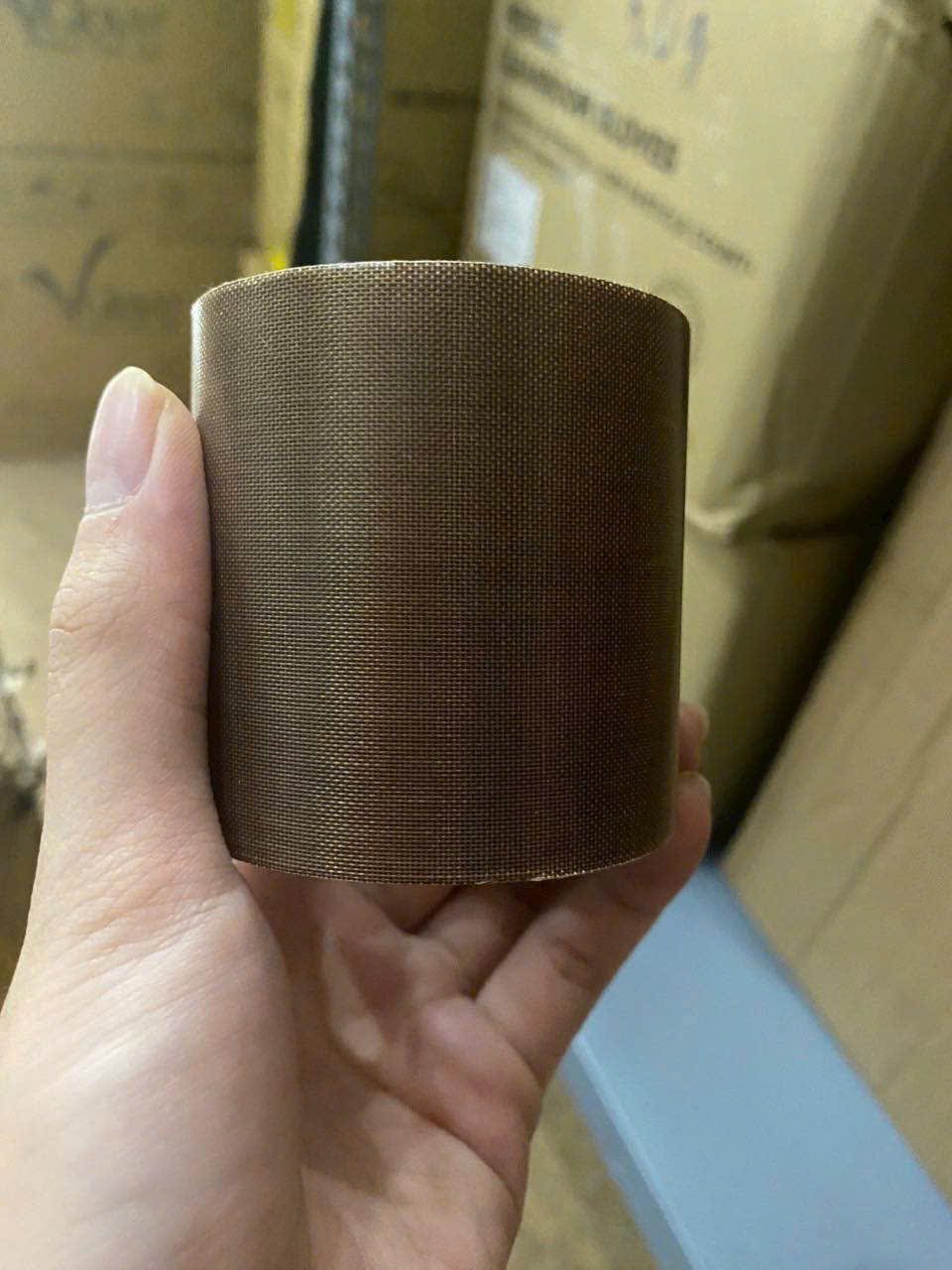
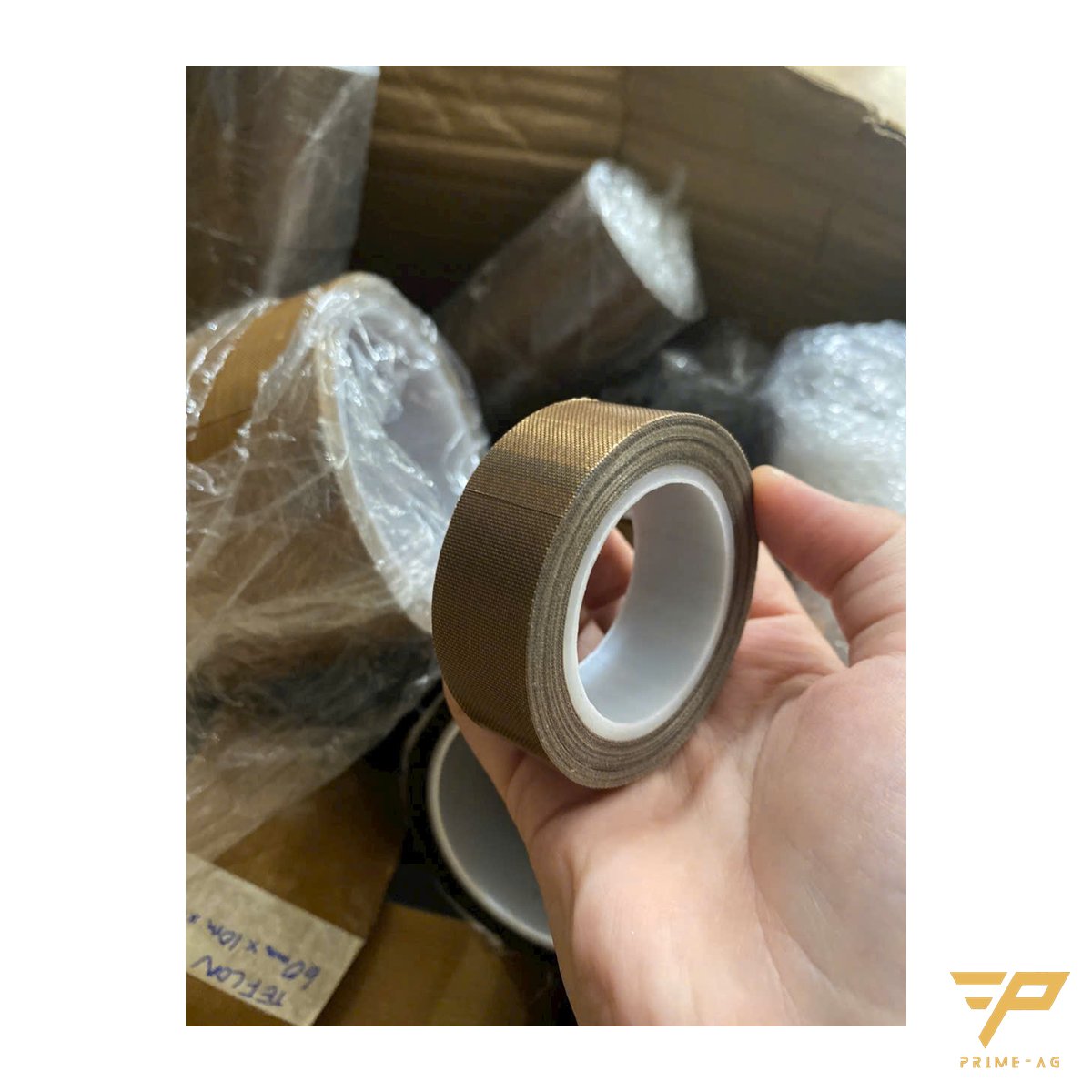
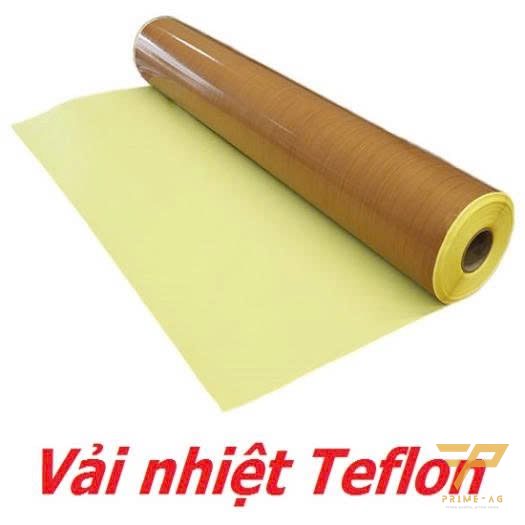
Reading the symptoms on bag-sealer PTFE tape
The type of damage tells you which step to check first; this applies to impulse/bar sealers, continuous band sealers and heat presses.
| Symptom | Common cause | Action |
|---|---|---|
| Tape black, dry and brittle | Set temperature too high, sealing time too long | Lower the temperature step by step, shorten the press time |
| Tape bulging, blistered | Air bubbles when applied | Peel off, clean, reapply |
| Tearing from the tape edge | Slanted cut edge sticks up and catches | Cut edges square, leave spare length |
| Film sticks to the tape | Molten plastic builds up in a layer | Wipe when the machine is cool; replace frayed tape |
| Wrinkled seal | Wrinkled tape, dented rubber pad | Reapply flat, replace the pad |
| Quick burn-through at one spot | Film-base tape, or tape too thin | Switch to glass-fabric base, consider 0.18 mm |
1. Set temperature and sealing time
Machine crews often raise the temperature when seals are weak and then forget to lower it. The tape is rated −70 to 260 °C, and PTFE starts to degrade from about 260 °C; running close to this level turns the tape black within a few shifts.
There is also a safety reason: fumes from overheated PTFE (above about 250 °C) can cause flu-like symptoms known as “polymer fume fever”. Keep the machine area ventilated. When switching to 0.18 mm tape, readjust the temperature or press time because thicker tape transfers heat more slowly.
2. How to apply tape to the heating bar
Wrinkles and air bubbles heat unevenly and blister. The tape must hug the bar surface and wrap over both edges. A slanted cut edge that sticks up is where tears start.
3. Molten plastic and adhesive residue not wiped off
When molten plastic builds up into a layer, the film sticks to that layer instead of touching the PTFE surface. Wipe the tape when the machine is cool with a Bemcot wiper moistened with IPA; do not scrape it with a knife.
4. Choosing the right base and thickness
A glass-fibre fabric base withstands friction and resists tearing; a thin film base only suits curved surfaces. Bag sealer bars use widths of 25–60 mm. Do not replace PTFE tape with Kapton polyimide tape: Kapton is for masking pads through reflow ovens, while spots that are continuously hot and under friction still need PTFE. Comparison of the three types: choosing heat-resistant tape: Kapton, PTFE or green PET.
5. The opposing rubber pad and when to replace the tape
A dented or hardened silicone rubber pad on the opposite side concentrates pressure on one section, and the tape wears there first. Do not wait for it to tear: when the tape surface loses its gloss, shows fibres or starts sticking to film, it is time to replace it.
Replacing the tape correctly
- Switch off the machine and wait until the sealing bar is fully cool.
- Peel off the old tape and clean off adhesive with IPA.
- Apply taut from the middle outwards, without air bubbles, with spare length at both ends.
- Press firmly along the whole length and run a few test bags.
Stocked goods are delivered within 24–48 hours in Ho Chi Minh City, Binh Duong and Dong Nai; ordered goods take 3–7 working days; custom-cut widths take 5 days. For wide-area release (chutes, table tops) use 100 mm tape, or PTFE fabric or sheet (made to order). To reorganise the area around the sealer: packing benches with shelves, lights and sockets for e-commerce warehouses.
Frequently asked questions
- 0.13 mm or 0.18 mm PTFE tape: which thickness for a bag heat sealer? — The 0.13 mm tape transfers heat quickly and suits fast-cycling machines; the 0.18 mm tape resists wear better but transfers heat more slowly, so first increase the sealing time slightly rather than pushing the temperature close to 260 °C. When you change thickness, test again on sample bags.
- Are ‘bang dinh Teflon’ and ‘bang keo Teflon’ two different tapes? — No. Northern Vietnam usually says ‘bang dinh’, the south says ‘bang keo’; both are the same PTFE-coated glass-fabric tape with silicone adhesive.
- Are fumes a concern when PTFE tape on a sealer burns? — Yes. Blackened tape is usually a sign the heating bar has overheated; fumes from PTFE heated that far can cause polymer fume fever. Lower the temperature and ventilate before replacing the tape.
Email: info@primeag.vn · Phone/Zalo: +84 906 108 292
Written by the PRIMEAG engineering team
Updated: 2026-10-28