
Bins stuck mid-lane on a FIFO flow rack usually come from a slope unsuited to the load, ribbed bin bases dropping between wheels, a bin resting on one track, or wheels fouled with dust or tape. PRIMEAG checks in that order; for slope, light bins under 10 kg need 6–7°, 10–25 kg bins only 5° on Φ36 aluminium tracks.
The front bin has been emptied and picked, yet the next bin sits still in the middle of the rack; or the opposite, a bin shoots down and slams into the end stop. It is a common complaint on FIFO flow racks at assembly lines in Vietnam: two opposite symptoms, but the same group of causes.
- Stuck mid-lane: measure the slope first, then look at the bin base and the number of supporting tracks.
- Running too fast: reduce the slope for heavy bins, add a cushion at the end stop.
- Stops at one fixed point: wheels fouled with tape, a fallen label, or a sagging track.
- Adjust on site: loosen the joints with a 5 mm hex key, no need to dismantle the rack.
What a flow lane needs to run smoothly
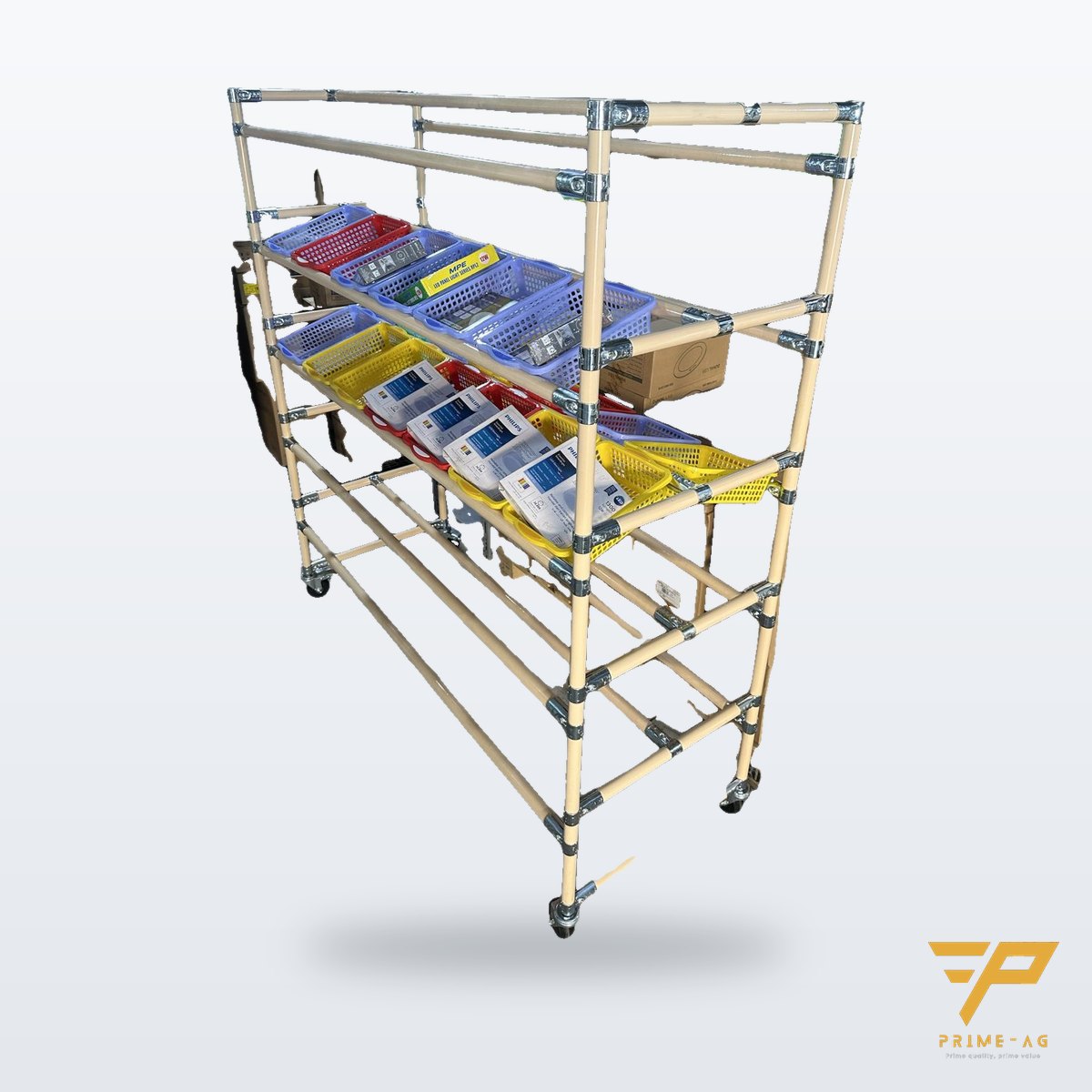
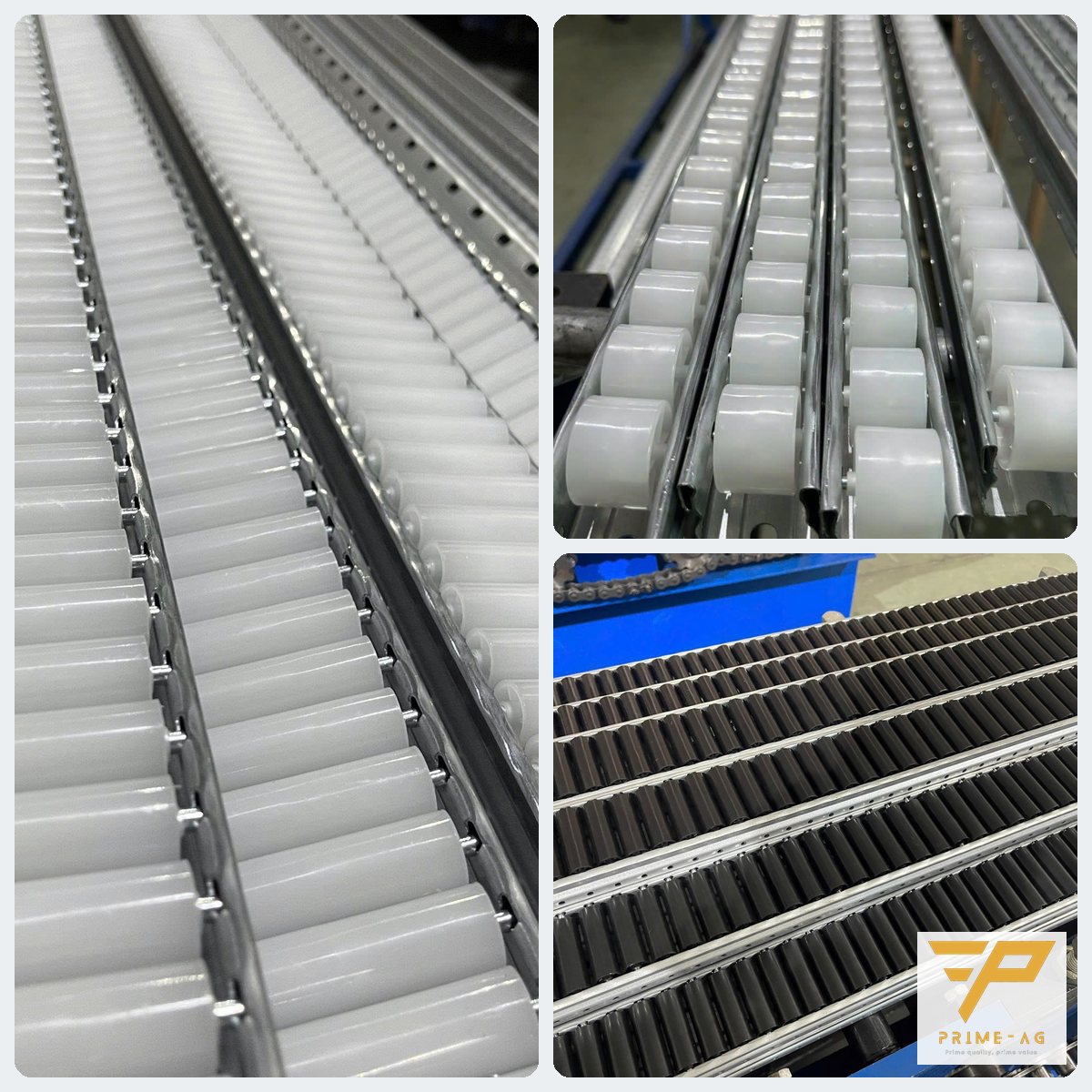
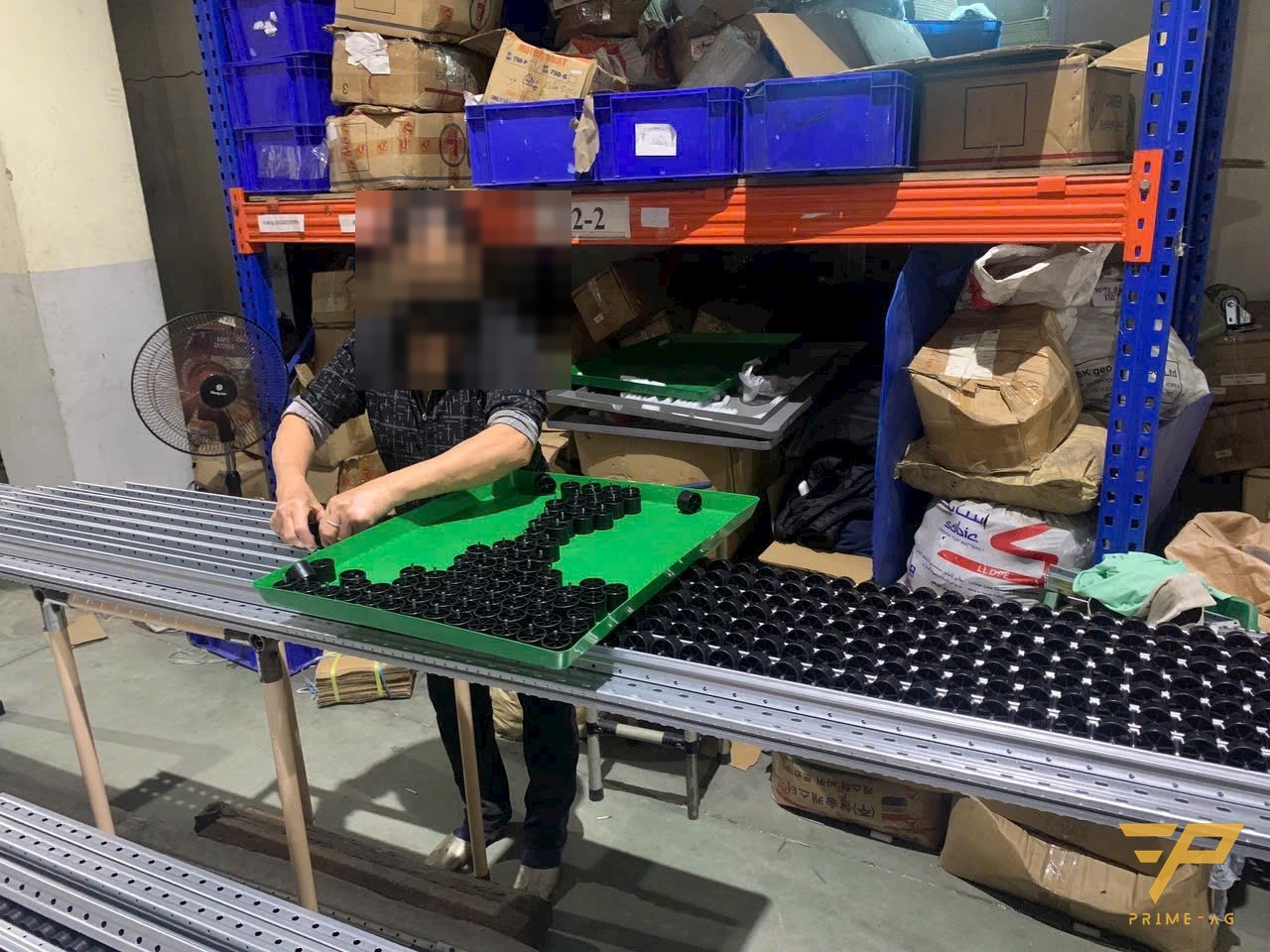
On PRIMEAG’s plastic-coated steel pipe gravity flow rack, each tier consists of two or more roller tracks laid in parallel on a Φ28 lean pipe frame (1.0 mm wall), tilted towards the picker. PP plastic tracks have Φ28 wheels at 33 mm pitch; aluminium tracks use Φ36 PP wheels. Each track carries 30 kg/m, and each tier 100 kg evenly distributed.
What to check, in order, when bins jam or run unevenly
1. Slope versus bin weight
The correct range is 5–8°. 400×300 bins under 10 kg: 6–7°; 600×400 bins from 10 to 25 kg: 5°. Quick check: over a 1,000 mm lane, 5° means the rear end is about 87 mm higher than the front end, and 7° about 122 mm.
2. Bin base
Ribs or feet that drop into the gap between two wheels make the bin stutter at every pitch; a damp carton base sags and wraps around the wheels. If the ribs run crosswise, switch to flat-bottomed sizes of industrial plastic bins (check the base before loading).
3. Number of tracks under one bin
A narrow bin resting on only one track tilts and rubs the frame. A heavy 600×400 bin needs 2–3 tracks; if bins tend to drift sideways, fit roller tracks with side flanges on both edges.
4. Dirty or jammed wheels
If a bin always stops at the same spot, some wheels are not turning: tape, a fallen label, dust on the axle. Spin each wheel by hand and remove any debris.
5. Sagging track or misaligned rails
A track sagging mid-span is overloaded. Loose joints let the two tracks go out of parallel, so the bin runs diagonally and then jams; the fix is in the article plastic-coated steel pipe racks with loose joints, wobbling and sagging tiers.
6. End stop without a cushion
Heavy bins still carry momentum; stick on a rubber cushion or use a custom stop bar.
| Symptom | Check first | Adjustment |
|---|---|---|
| Light bin stops mid-lane | Slope below 6° | Raise the rear end to 6–7° |
| Heavy bin shoots down, hits the stop | Slope above 5° | Lower to 5°, add a stop cushion |
| Stutters at every pitch | Ribs on bin base, sagging carton base | Switch to flat-bottomed bins |
| Stops at one fixed point | Wheels fouled with tape or labels | Remove debris, replace damaged roller track |
| Bin runs diagonally, rubs the frame | Misaligned tracks, bin on one track | Tighten joints, add flanged tracks |
How to adjust and when to replace tracks
Loosen the rear support joint with a 5 mm hex key, move it up or down, retighten, then test with a fully loaded bin. Plastic tracks last 2–3 years with plastic bins; lanes carrying cartons wear faster, so switch them to aluminium tracks. Tracks, joints and pipes can be replaced individually from the lean pipe components range.
If the lanes run smoothly but FIFO is still disordered, review the layout: depth from 900 mm, with an empty-bin return tier, as described in FIFO flow racks feeding components to assembly lines. New racks: standard models in 5–7 working days, frame warranty 3 years.
10-minute self-check
- Measure the height difference between both ends of each lane and record it.
- Weigh a full bin and compare it with the recommended slope range.
- Turn the bin over to inspect the base and count the tracks under it.
- Spin each wheel by hand to find jammed ones.
Send the bin size, weight and photos of the jammed lane via the technical consultation page; an adjustment proposal with a quote comes back within 30 minutes.
Frequently asked questions
- Can one slope be used for every tier of a flow rack? — Only when all tiers hold bins of the same size and roughly the same weight. Tiers with light bins need a steeper slope than tiers with heavy bins, so adjust each tier separately.
- Can carton boxes run on a flow rack? — Yes, if the base is dry and flat. Cartons wear plastic wheels faster, so use aluminium tracks with Φ36 wheels for those lanes.
- Can I add a tier to an existing flow rack myself? — Yes. You need extra pipes, joints and roller tracks, assembled with a 5 mm hex key, then re-test the flow with real bins.
Updated: 29/10/2026 — PRIMEAG engineering team
Email: info@primeag.vn · Phone/Zalo: +84 906 108 292
Written by the PRIMEAG engineering team
Updated: 2026-10-29