
An ESD heel strap (foot grounder) that fails at the entrance tester is usually caused by the conductive strip not touching the skin under the sock, a folded or dirty strip, wearing it on one foot only, or very dry skin at the start of the shift. PRIMEAG recommends checking these in order, then the tester; replace the strap only if it still reads above 3.5×10⁷ Ω on a person who has just passed.
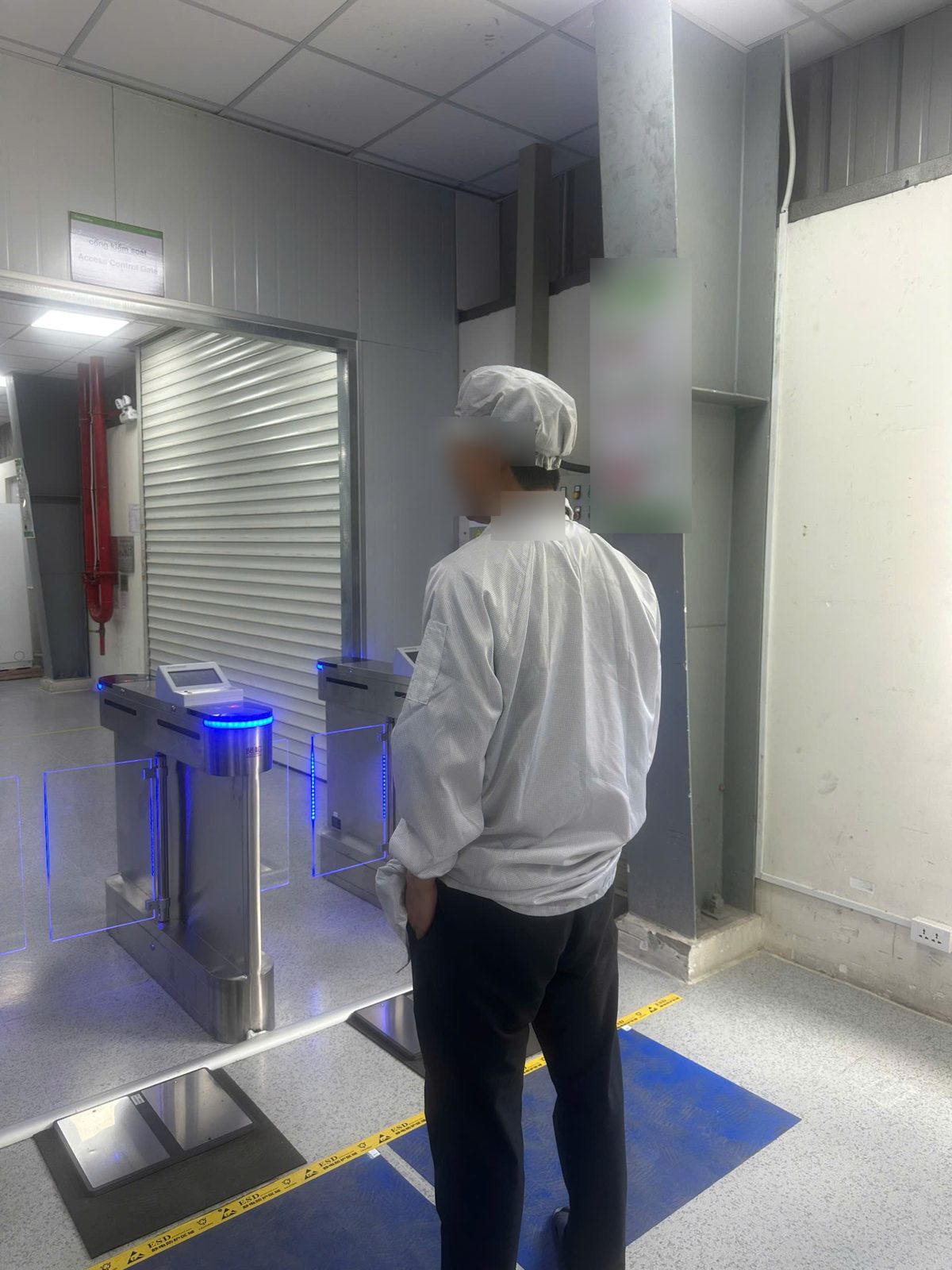
7:55 a.m.: the tester at the EPA entrance beeps HIGH every few people, and the queue backs up into the corridor. Many of these FAILs come from how the strap is worn or how people stand, not from a broken strap.
- Check how it is worn first: strip tucked under the sock, heel cup fitted snugly around the shoe heel.
- Both feet: wear two straps and stand evenly on both electrodes.
- Dry skin at shift start: walk around for a few minutes, then retest.
- Whole group fails: suspect the tester or the floor before replacing straps.

Discharge path of a heel strap
With the EH-01 ESD heel strap, charge flows from the skin through the carbon-woven strip, down to the conductive rubber heel cup, out to the ESD floor and then to ground. A 1 MΩ ± 10 % current-limiting resistor protects the wearer in case of accidental contact with a power source.
Under ANSI/ESD S20.20, the person–footwear–floor system must be below 3.5×10⁷ Ω (or below 1×10⁹ Ω with walking voltage below 100 V). A heel strap only works on a grounded ESD floor or mat.
Check order when the tester shows FAIL
1. Strip not touching the skin
The strip must go inside the sock, lie under the sole of the foot and press against the skin. Leaving the strip outside the sock is the most common mistake.
2. Strip folded, broken or dirty
Repeated folding breaks the fibers; oil, adhesive and solder paste residue kill the contact. Straighten, clean and retest; replace a frayed strip.
3. One foot only, or standing off-center
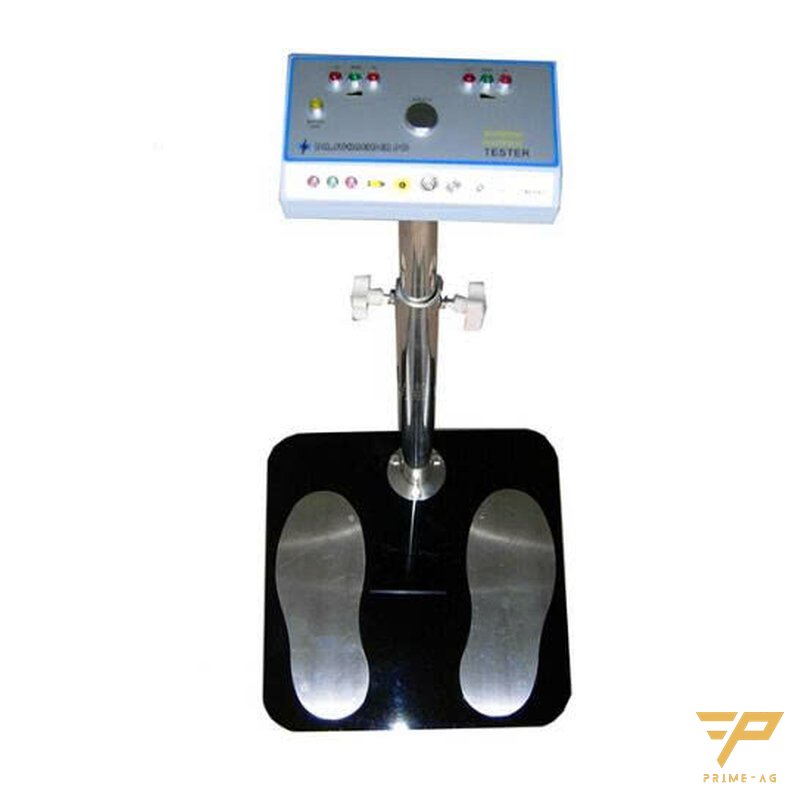
On testers with a dual foot plate such as the SL-031, standing off-center or a heel cup slipping off the electrode makes the tester read an open circuit. People who walk around the EPA should wear straps on both feet.
4. Very dry skin
Cold rooms, thick socks, the start of a shift: skin resistance is high. People who repeatedly FAIL for this reason can try Linkworld ESD shoes (conductive PU sole, 10⁵–10⁸ Ω) or ESD cleanroom slippers for comparison.
5. Heel cup in the wrong position
Thick soles and high heels leave the heel cup touching only at its edge. The rubber pad must sit directly under the heel; re-tighten the hook-and-loop fastener.
6. Tester not checked
Dirty electrodes, a weak battery and wrong limits all give false FAILs. Clean the electrodes, replace the battery and review the limits of the wrist strap and footwear tester (adjustable 0.75–35 MΩ).
7. Strap at end of life
Have someone who has just passed wear the suspect strap: if it still FAILs, replace it. A LOW reading (below 0.75 MΩ) also means replacement, because the current-limiting resistor may be shorted.
| Symptom | Check | Action |
|---|---|---|
| One person FAILs | Is the strip under the sock? | Put the strap on again |
| Only one foot FAILs | Heel cup and strip on that foot | Adjust, clean the strip |
| FAIL at shift start, pass mid-shift | Dry skin | Walk around, then test |
| Still FAILs on another wearer, or reads LOW | Strip, heel cup, resistor | Replace the strap |
| Several people FAIL in a row | Electrodes, battery, limits | Clean and adjust the tester |
When the whole group fails
Five or six people failing in a row is a system fault: check the tester with a person and a strap known to pass. Similar troubleshooting: wrist strap tester keeps showing red, ESD shoes failing after washing.
ESD PVC floor tiles 600×600 only work while the conductive adhesive, copper tape and ground points are in good condition. Not sure whether it is the floor or the tester? PRIMEAG’s on-site ESD measurement is free for plants in Ho Chi Minh City, Binh Duong and Dong Nai: we measure the floor, cross-check the tester, and also measure items bought elsewhere; no order required, and the readings are for reference only.
Where to start
- Post instructions at the entrance: strip under the sock, both feet, stand evenly.
- Keep a test log every shift, including how each FAIL was handled.
- Clean the electrodes daily.
For heel straps, testers or a floor survey, send a request via the quote page; PRIMEAG quotes within 30 minutes.
Frequently asked questions
- Do ESD heel straps work without an ESD floor? — No. A heel strap can only discharge through a grounded ESD floor or mat.
- Do operators wearing heel straps still need wrist straps? — Yes, if they work seated at a fixed station, because seated feet often leave the floor. Heel straps are meant for people who move around.
- How often should ESD heel straps be replaced? — There is no fixed number of days. Replace them when the strip is frayed, the heel cup is cracked, the hook-and-loop fastener no longer holds, or the tester still shows FAIL on a person who has passed.
Updated: 2026-10-28 — PRIMEAG engineering team
Email: info@primeag.vn · Phone/Zalo: +84 906 108 292
Written by the PRIMEAG engineering team
Updated: 2026-10-29