
Racking for a food ingredient warehouse at a factory in Vietnam must lift goods off the floor and keep them away from walls enough to inspect, sweep and place traps, using the clearances in your HACCP plan or customer criteria. PRIMEAG recommends 200–500 kg/tier powder-coated medium-duty racks for dry areas, 304 stainless steel for wet areas, plus lidded bins.
When auditors walk the warehouse, the first thing a hygiene audit team does is bend down to look at the rack feet, then check the gap along the wall. Below is how to lay out racking in a food ingredient warehouse for flour, sugar, spices and primary packaging.
- Clearances: per your internal HACCP plan or customer criteria, marked on the layout drawing before racks are placed.
- Materials: powder-coated steel for dry areas; 304 stainless steel for wet areas.
- Opened bags: transfer to lidded plastic bins.
- FIFO: one SKU per location, expiry date facing the aisle.
Food ingredient warehouse racking: why keep clearance from floor and walls
Goods placed directly on the floor absorb moisture and the bottoms of bags cake. A gap tight against the wall becomes a hiding place for rodents and insects that a broom cannot reach.
There is no single universal figure. The clearance to the floor and to the wall is set by the HACCP team or follows the checklist the customer brings. The racking just needs to keep that clearance fixed, with the bottom tier never encroaching onto the floor.
Dry areas: medium-duty racking or pallet racking
Hand-stacked bags and spice cartons suit medium-duty racks with white or grey painted steel frames and steel shelf panels, 200–500 kg/tier. That is a uniformly distributed load; do not concentrate heavy bags mid-span.
Warehouses receiving full pallets and picking by forklift use heavy-duty pallet racking with column guards and end-of-aisle barriers: 90×60 uprights, about 1,000 kg per level; the quotation includes installation and delivery to the warehouse, with a 2–3 week lead time for made-to-order racks. Placing pallets from the first beam level up keeps the floor under the racks always clear for sweeping.
Wire decking or solid shelves
Wire decking is open, light reaches the floor, and fallen dust is easy to see. Solid shelves stop spilled powder from falling onto the tier below, suiting locations for opened bags.
Wet and washing areas: 304 stainless steel
Near utensil washing areas or mixing rooms with water, paint on steel soon peels and rusts. There, use 304 stainless steel racks with draining shelves. Why 304 instead of 201: see 201 or 304 stainless steel for food tables, racks and trolleys.
Lidded bins for opened bags
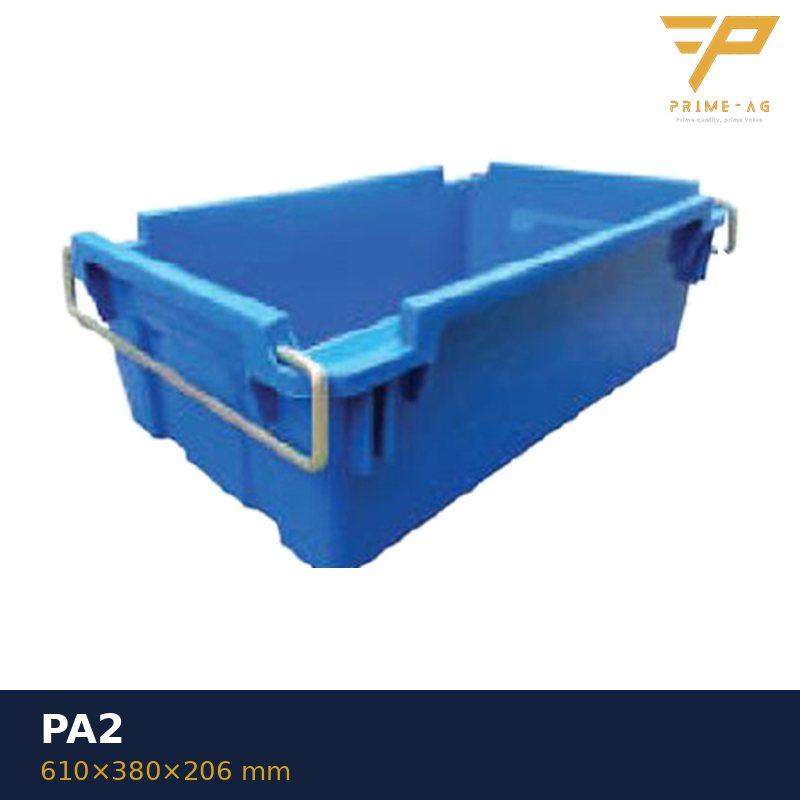
Opened bags do not go back on the rack with the top just folded over. Transfer the contents into lidded industrial bins made of virgin PP, for example model PDA55 at 610×430×320 mm, labeled with the ingredient name, lot number and opening date. When ordering, ask for test results to the Vietnamese Ministry of Health technical regulation for plastic packaging in contact with food; dark recycled bins are not for this use.
Stainless steel trolleys for moving ingredients
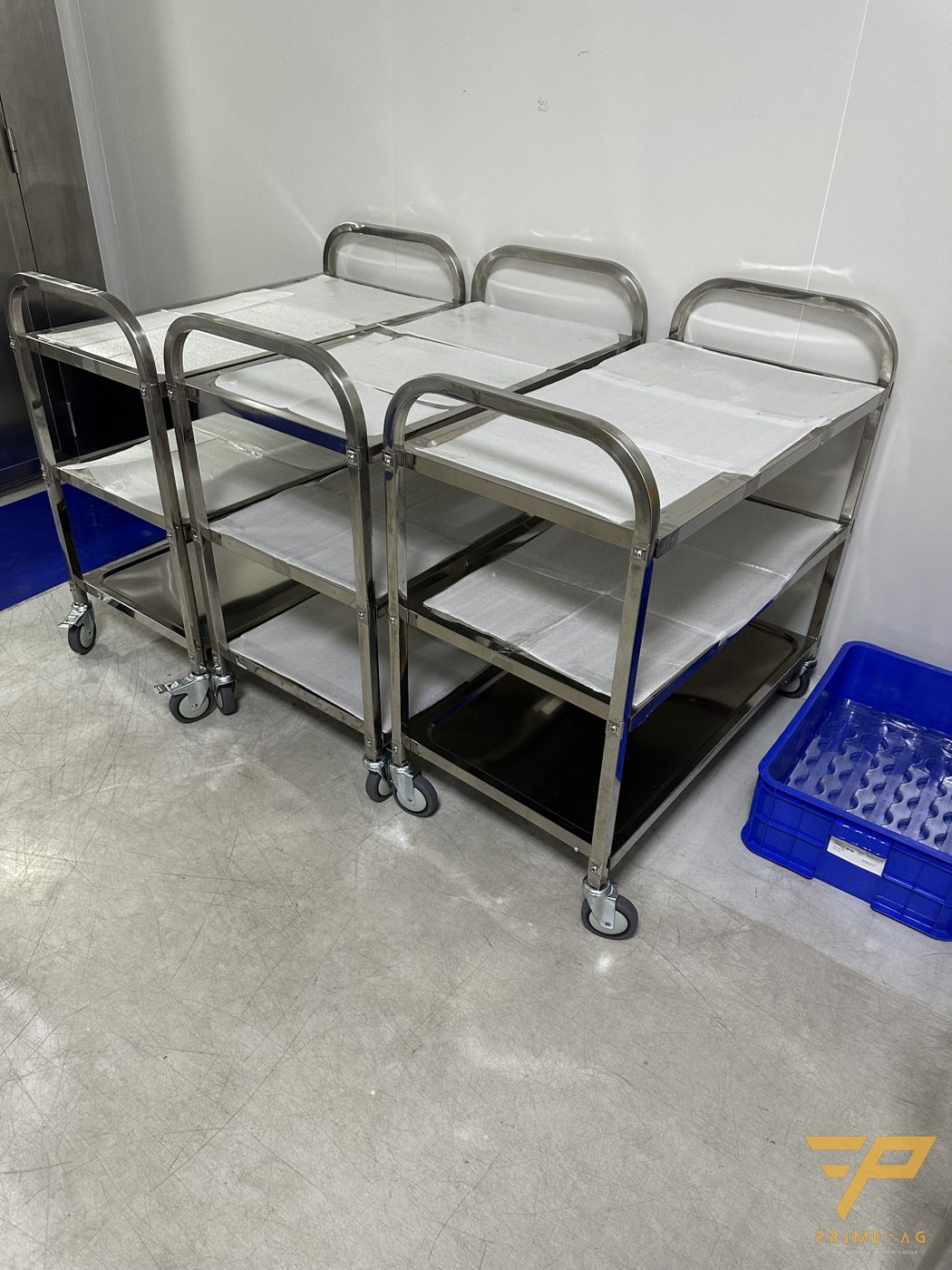
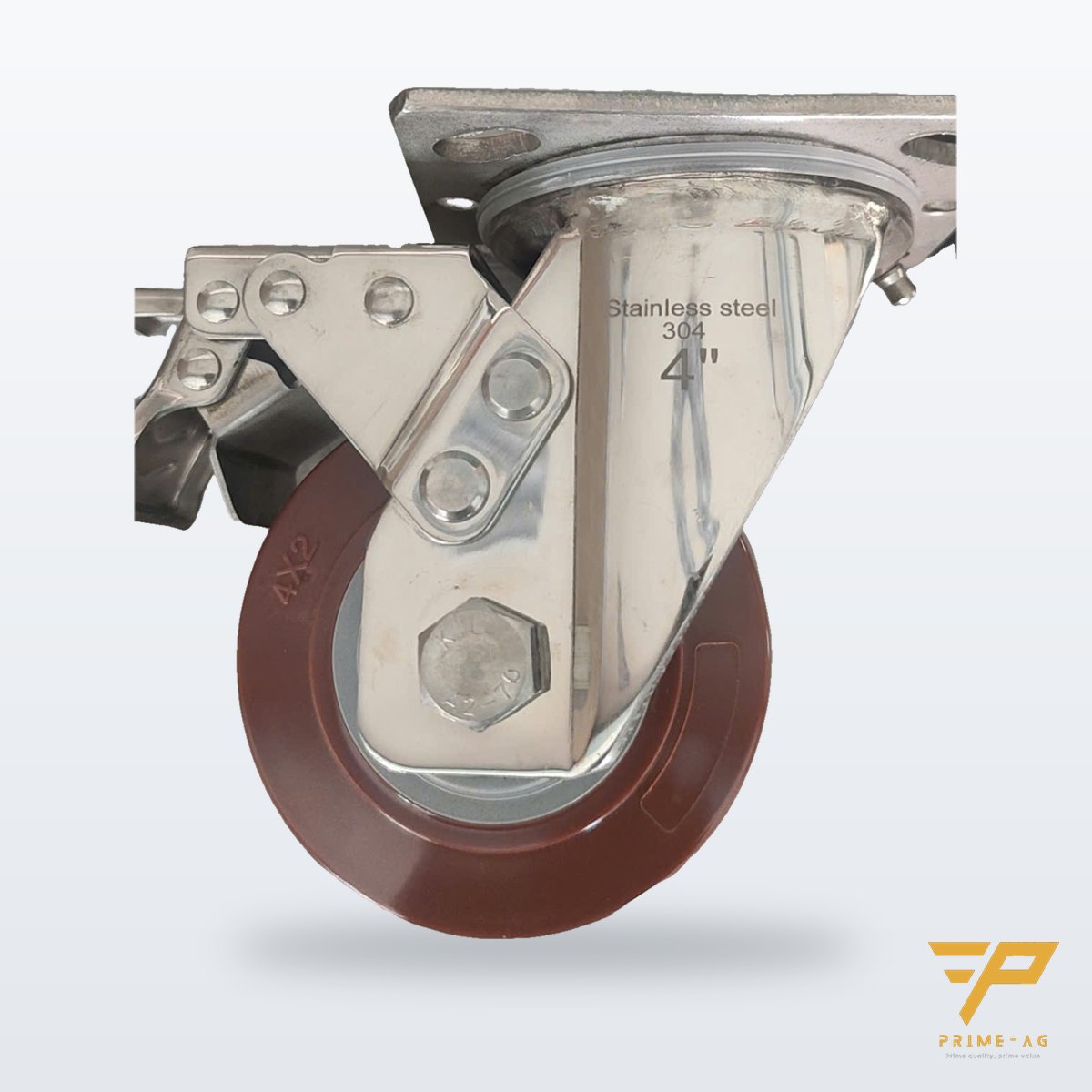
The route from the warehouse to the weighing and mixing areas is where bags often get dragged. Multi-tier 304 stainless steel trolleys keep bags off the floor. In wet-cleaned areas, fit industrial casters with 304 stainless steel brackets and PU wheels; zinc-plated brackets exposed to water rust within a few months.
FIFO labels by expiry date
Give every rack location a location label. New stock goes in at the back, lots nearing expiry come to the aisle, expiry dates face outward.
| Area | Choice | Note |
|---|---|---|
| Dry store, hand-stacked | Medium-duty racking | Distribute load evenly |
| Full-pallet store | Pallet racking, 90×60 uprights | Column guards, floor under beams kept clear |
| Wet and washing areas | 304 stainless steel racks | Draining shelves |
| Opened bags | Lidded virgin PP bins | Record lot number and opening date |
| Internal transfer | Stainless steel trolley, stainless casters | Do not drag bags |
Where to start
- Take the floor and wall clearances from your HACCP documents or the customer checklist.
- Measure the floor area and mark columns, doors and water points.
- Group ingredients: full pallets, hand-stacked bags, opened bags; choose racking for each group.
- Make location labels before installation day. For chilled storage, see also racks and trolleys for cold and chilled stores.
Send your warehouse layout via the drawing submission form and PRIMEAG will quote within 30 minutes. Rack and trolley frames carry a 3-year warranty; casters 12 months.
Frequently asked questions
- How far from the wall should food warehouse racking be? — PRIMEAG does not set this figure on the factory’s behalf. Take the distance from your HACCP plan, internal rules or the auditing customer’s requirements.
- Does a dry ingredient store need all stainless steel racks? — Not required. Powder-coated steel is sufficient for dry areas; 304 stainless steel is for areas that are often wet or need washing.
- Can blue plastic bins be used for sugar and flour? — Yes, if they are virgin PP and the supplier provides food-contact safety test reports per batch.
Updated: 30 Oct 2026 — PRIMEAG engineering team
Email: info@primeag.vn · Phone/Zalo: +84 906 108 292
Written by the PRIMEAG engineering team
Updated: 2026-10-30