
Garment packing areas run slow and mix sizes because goods travel back and forth and un-inspected pieces sit next to needle-detected ones. PRIMEAG recommends a one-way flow: folding tables 600–1,800 mm long to fit a garment laid flat, carton racks split by size, and different-colored 100 kg/tier trolleys before and after the needle detector.
“Why does a size M carton contain two size L shirts?” For garment factories in Vietnam, this question from the buyer’s QC usually leads back to the folding and packing area: shared tables, mixed-use trolleys, cartons stored far away. The fix is usually to re-route the product flow, not to add more people.
- One way: QC → folding → hangtags, polybag → needle detector → cartoning → weighing, labeling → pallet.
- Two separate zones: floor marking and different-colored trolleys for un-inspected and needle-detected goods.
- Cartons within reach: racks divided into size slots, placed right next to the cartoning table.
Why the packing area is both slow and mixing sizes
- Goods flow backwards: from the needle detector back to the folding table to be cartoned.
- Un-inspected and needle-detected goods share the same trolley.
- Cartons are kept in a corner of the workshop, one trip for every carton.
- Narrow tables with sharp edges that snag yarn; supplies stored under the table.
Set up a one-way flow around the needle detector
Keep this sequence fixed: receive goods from QC → fold → attach hangtags, bag → needle detector → carton by size ratio → weigh, label → pallet. The needle detector splits the floor into an un-inspected zone and an inspected zone; tables, racks and trolleys are arranged according to those two zones.
Folding and hangtag tables
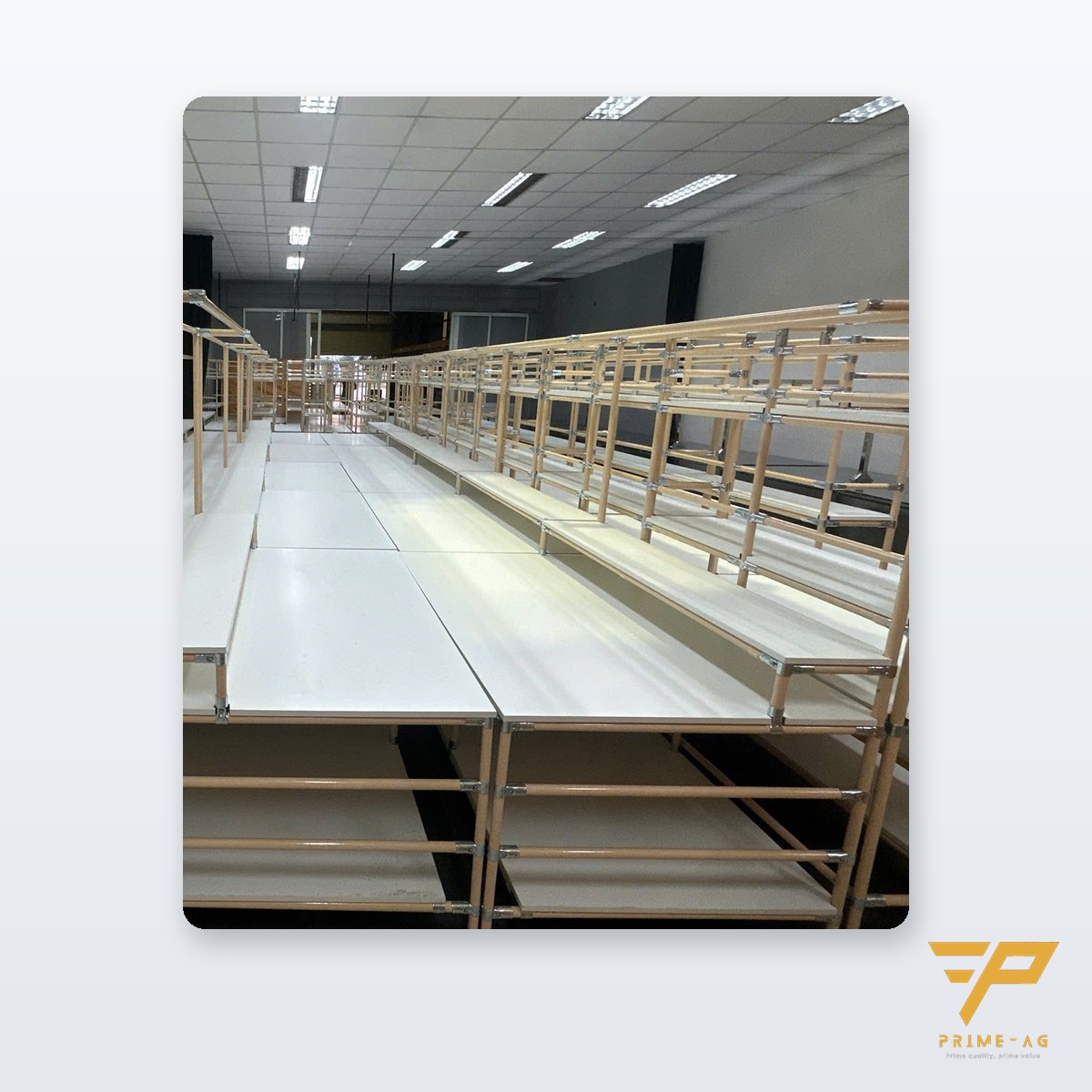
The plastic-coated steel pipe workbench has a Φ28 lean pipe frame assembled with bolted joints, can be ordered 600–1,800 mm long, with a 750 mm work height. The 15–17 mm moisture-resistant board top has plastic edge trim, is smooth and rarely snags yarn. Two upper shelves (800×250 and 800×400 mm, 20 kg/tier) hold hangtags, polybags and tape. The powered version carries 2 LED lamps of 0.6 m; where local lighting is needed, add a table lamp.
Keep a paper lint roller on every table to pick off lint and loose threads before a garment goes into its bag; 50 sheets per roll, widths 4″ to 12″. Details in the article removing lint and dust from garments before packing.
Separate un-inspected and needle-detected goods
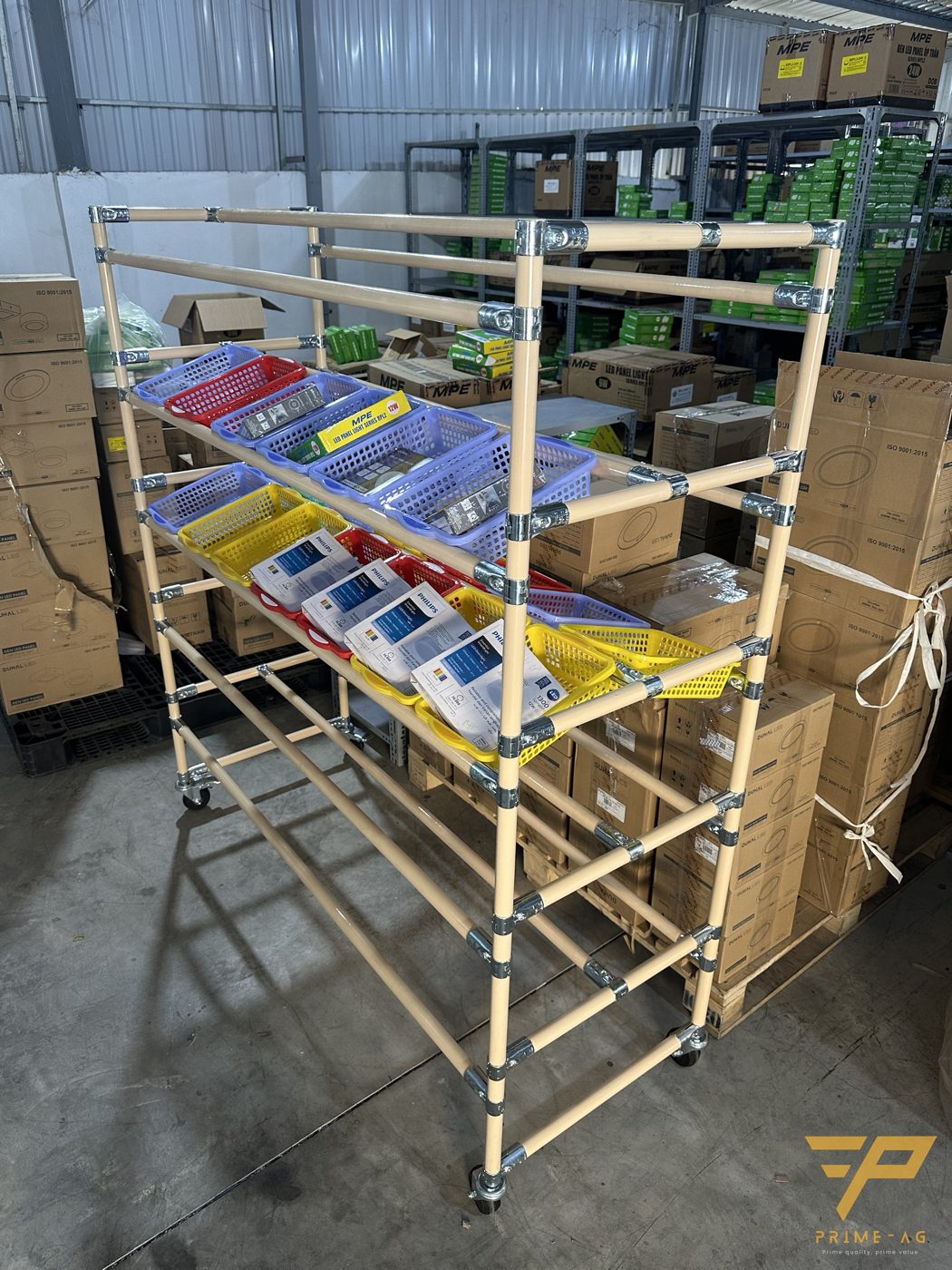
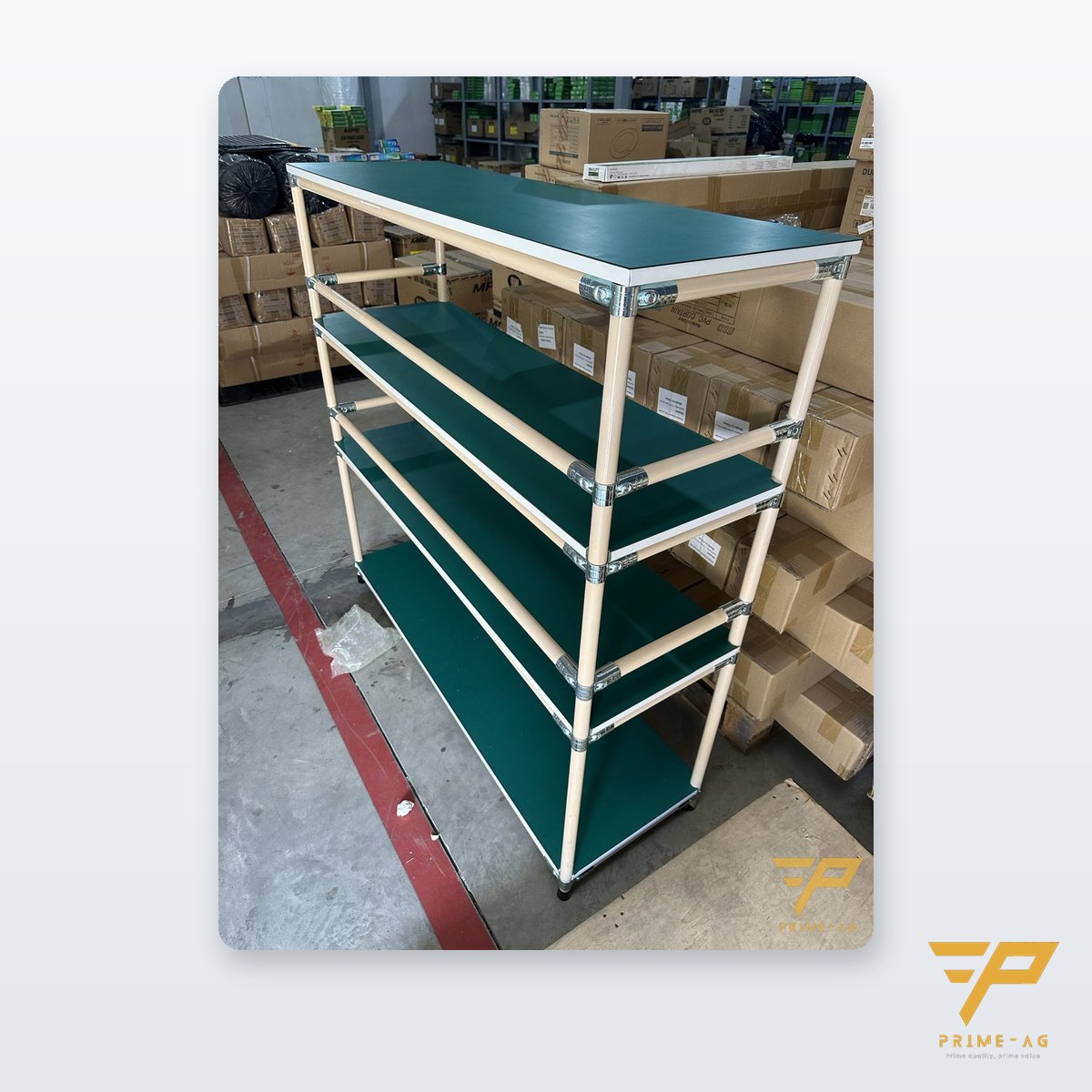
Mark the floor in two colors at both ends of the needle detector. Use multi-tier plastic-coated steel pipe trolleys with different coating colors, e.g. cream before the machine and green after it. Trolleys carry 100 kg/tier, 3 tiers as standard, configurable from 2–5 tiers; choose boards with a lip. Garments rejected by the detector go into a separate lidded bin, never onto any trolley. How to calculate the number of trolleys is covered in the article WIP piling up between garment process steps.
Carton racks by size
Place a multi-tier plastic-coated steel pipe rack right next to the cartoning table, one slot per size, with large size labels on the rack edge. Pre-fold cartons according to the size ratio of the running PO; when the style changes, loosen the joints and adjust the slot height.
| Symptom | Layout cause | Fix |
|---|---|---|
| Mixed sizes in a carton | Cartons in one stack, no slots | Rack with size slots, clear labels |
| Un-inspected garments slip into cartons | Trolleys and tables shared on both sides of the machine | Floor marking, different-colored trolleys, separate bin for rejects |
| Low cartoning output | Walking to fetch cartons, going back to the folding table | One-way flow, carton rack next to the table |
Where to start
- Draw the path of one bundle from QC to the pallet.
- Mark two zones around the needle detector and assign trolley colors.
- Measure the length of the garment laid flat to choose the table length.
Standard tables and trolleys are produced in 5–7 working days; new designs in 10–15 working days. Frames carry a 3-year warranty, lamps and casters 12 months. Send the floor plan of your packing area via the layout consultation request; the PRIMEAG team replies with a layout proposal and quotation within 30 minutes.
Frequently asked questions
- Should the needle detector sit right after the folding table? — Place it after hangtagging and bagging, because broken needles or tag pins can get in while tags are attached. Only bagged garments go through the machine, then straight on to the cartoning table.
- How long should a garment folding table be? — Plastic-coated steel pipe tables can be ordered 600–1,800 mm long. Choose based on the length of the garment laid flat, so the whole body and sleeves can be spread out.
- Can trolleys for needle-detected goods carry other goods too? — Not recommended. Trolleys after the needle detector should carry only goods that have passed the machine. Different frame colors make it obvious at a glance which trolleys may enter the cartoning area.
Updated: 29/10/2026 — PRIMEAG engineering team
Email: info@primeag.vn · Phone/Zalo: +84 906 108 292
Written by the PRIMEAG engineering team
Updated: 2026-10-30