
Slow model changeovers are usually caused not by machines but by preparation: hunting for fixtures, components and instructions while the line is already stopped. SMED aims for changeovers under 10 minutes. PRIMEAG recommends starting by moving everything that can be done in advance outside line-stop time, then adding kitting trolleys per model and racks that adjust quickly with joints.
- Video one model changeover and split the work into “line must stop” and “can be done in advance”.
- Kitting trolley per model: components, fixtures and instructions prepared before the changeover.
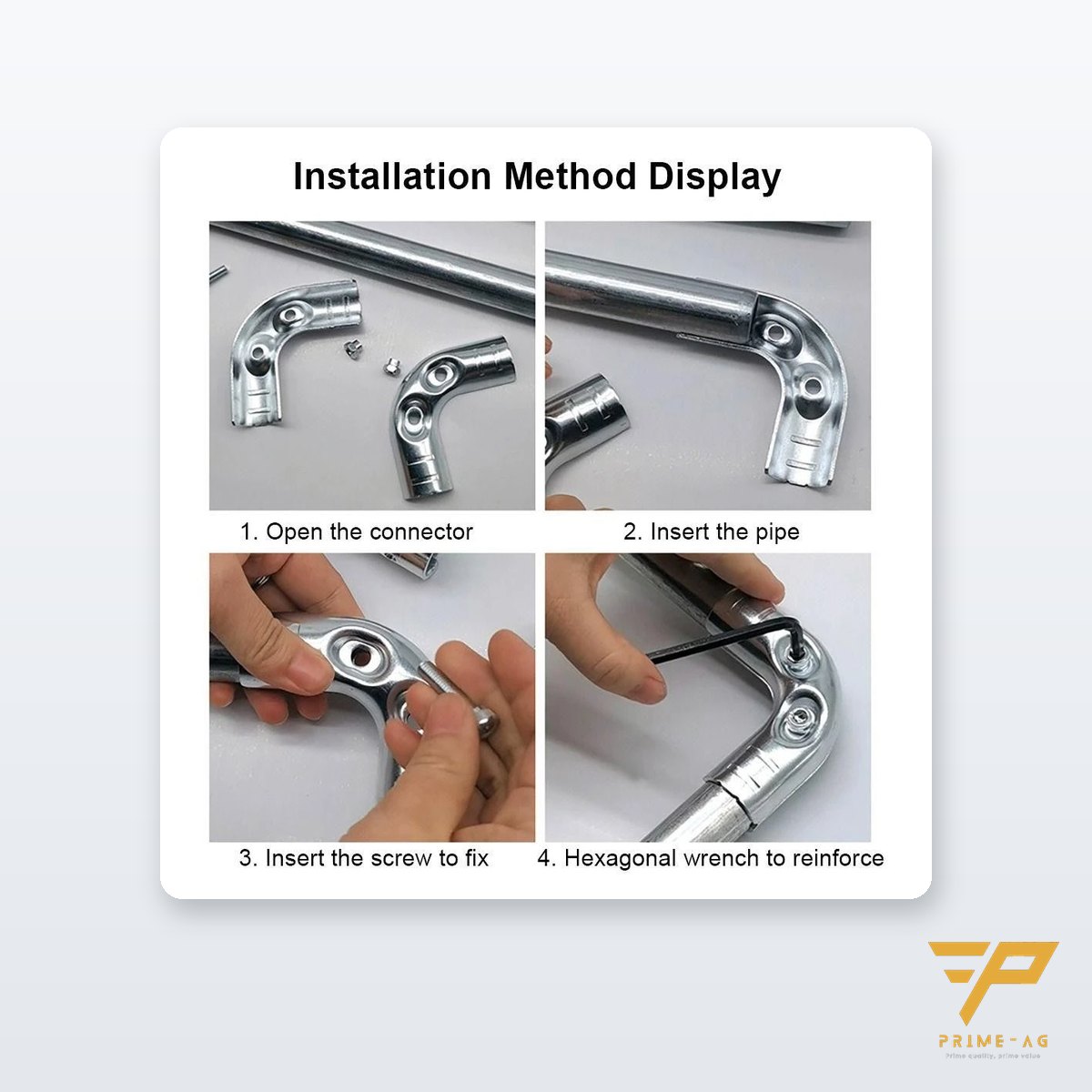
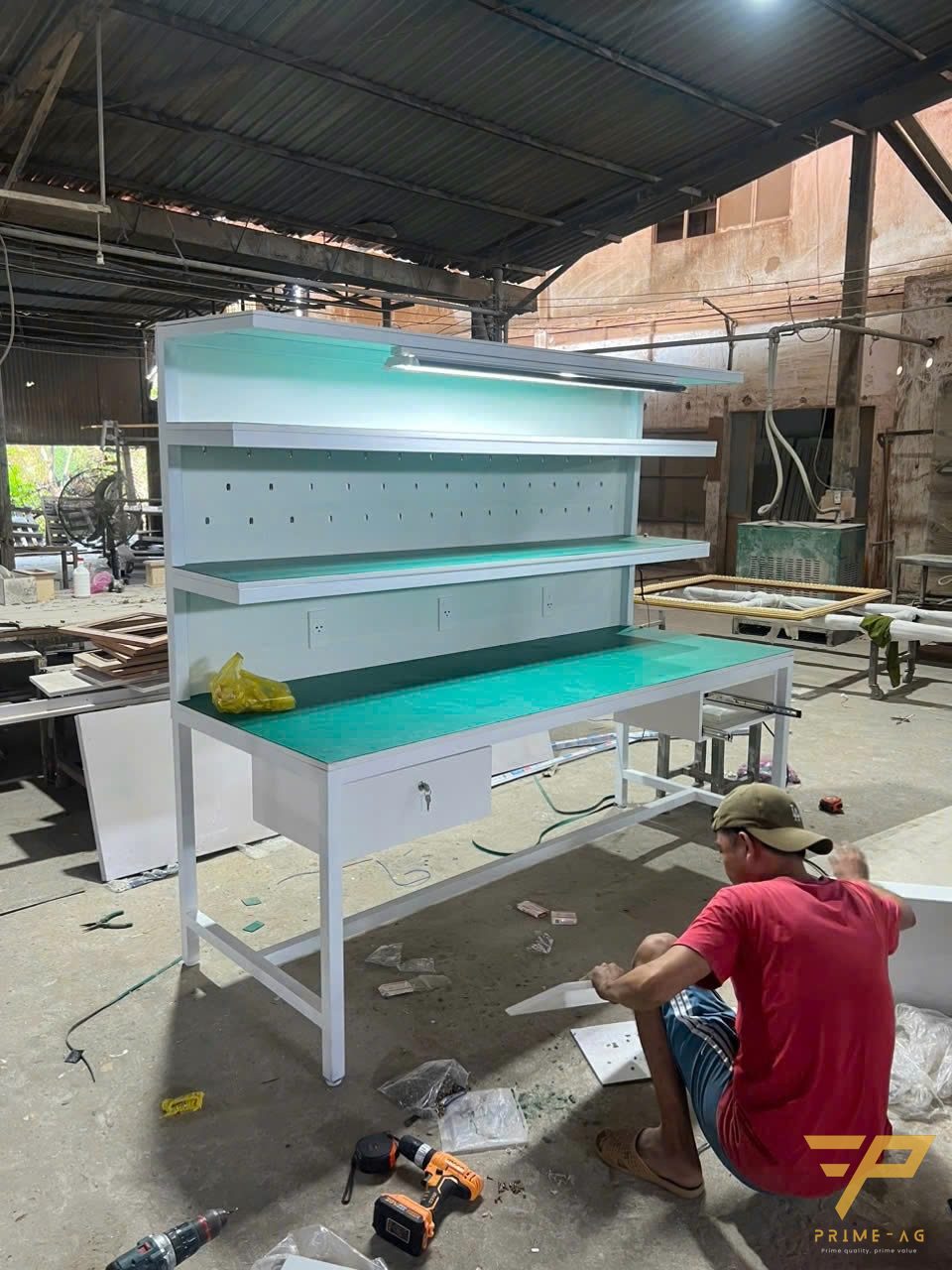
- Quick-adjust benches and racks: lean pipe frames where shelves are moved with a hex key, no welding.
- Standardize: fixed locations, color labels by model, a changeover checklist.
What SMED is and how it applies to manual assembly lines
SMED (Single-Minute Exchange of Die) was developed by Shigeo Shingo for stamping presses, with the goal of changing dies in under 10 minutes. The core idea applies to any line: split the changeover into internal work (can only be done while the line is stopped) and external work (done before the stop), then convert as much internal work as possible into external work.
1. Measure the current state
Video one model changeover from the last good unit of the old model to the first good unit of the new model. Record each step, its time and who does it. Typical findings: walking to the store for fixtures, waiting for components, looking for the work instruction, readjusting rack heights.
2. Kitting trolley: prepare before the line stops
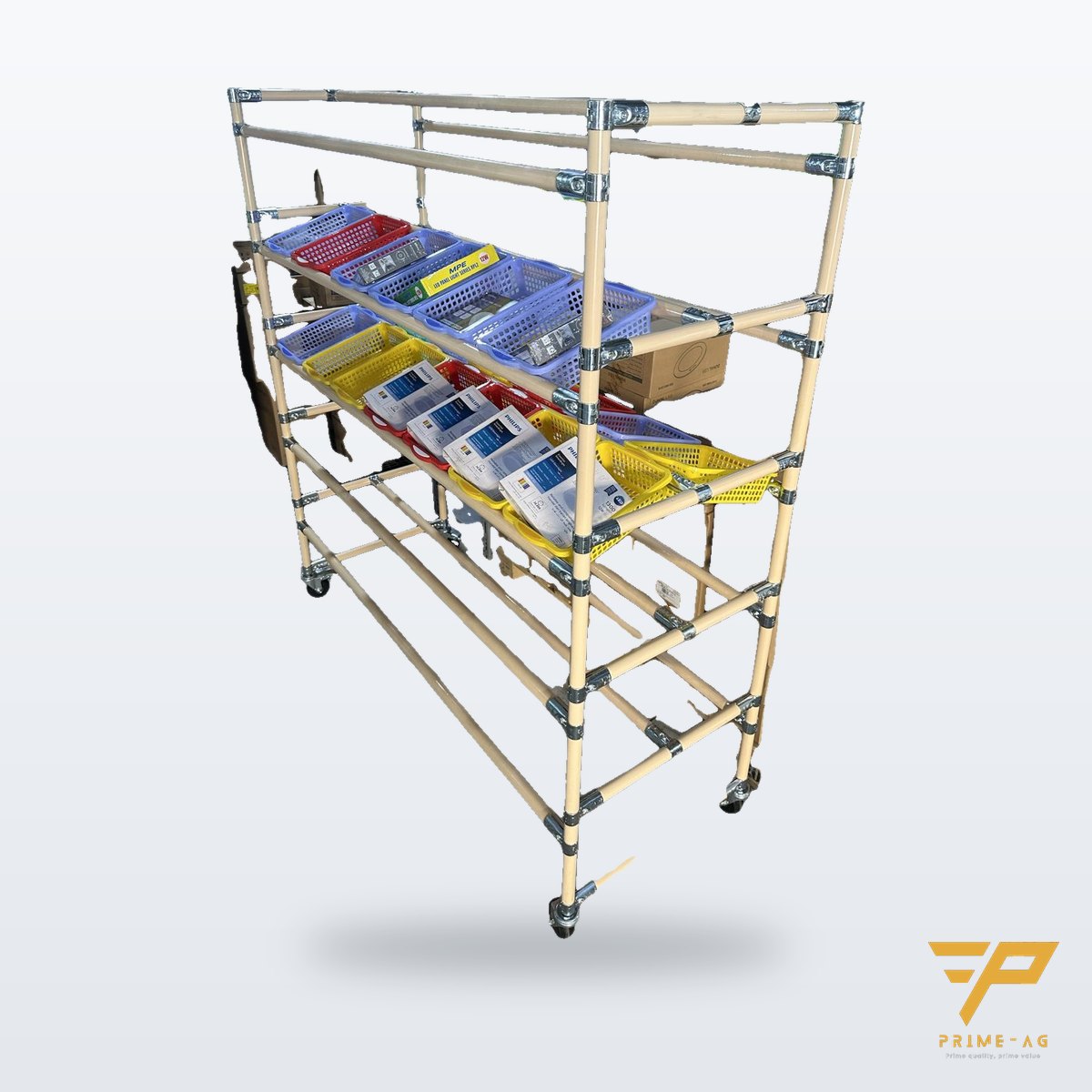
One kit per model: enough components for the first lot, fixtures, gauges and work instructions. The kit is loaded onto the trolley during the previous shift. For narrow aisles between lines, use a small steel-pipe trolley 720×430×1500 that can be pushed with one hand and extended with extra shelves. Heavy fixtures should have their own fixed place: a fixture rack near the line, each slot labeled with the model name.
3. Quick-adjust workstations
When a new model needs a higher shelf, a tray farther away or different tools, a welded frame means waiting for a technician. A lean pipe (plastic-coated steel pipe, Φ28) workbench uses metal joints: moving a shelf, adding a hanging bar or changing the angle of a tilted shelf takes only a hex key. Buy joints and pre-cut pipe separately so the maintenance team can do it themselves: lean pipe and aluminum profile components.
Tools shared across models hang permanently on the frame with a tool balancer, so they never need to be removed at changeover.
4. Feeding components without stopping
A gravity flow rack is loaded from the back: the material handler places the new model’s bins in the rear lane while operators keep picking the old model at the front. One lane per part number, color labels by model.
Typical internal and external tasks
| Task | Before SMED | After SMED |
|---|---|---|
| Fetching new-model components | Internal (after stopping) | External: pre-loaded onto the kitting trolley |
| Fetching fixtures and gauges | Internal: searching in the store | External: fixture rack beside the line, correct slot |
| Adjusting racks and trays | Internal: call a technician | Internal but short: positions already marked, hex key at the bench |
| Work instructions | Internal: print, search | External: travel with the kitting trolley |
| Clearing old-model components | Internal | External: put on the return trolley after restart |
Components of two models mix up easily at changeover: see divided trays, labels and layout to prevent component mix-ups.
Self-check checklist
- There is a video and time table of at least one model changeover.
- Each model has a kitting list, color labels and fixed fixture locations.
- Rack and tray positions for each model are marked on the bench frame.
- Someone is responsible for preparing the kitting trolley before the changeover.
- Time is re-measured after the improvement and the standard procedure is updated.
Need extra kitting trolleys or benches and racks adjusted to a new layout: standard designs are produced in 5–7 working days; new designs in 10–15 working days including drawing approval. See also lean workstation improvement: reducing walking and WIP.
Frequently asked questions
Can SMED be applied to manual assembly lines? Yes. The principle of separating internal and external work applies to any product changeover; on manual lines, most of the time goes into preparing components and fixtures and adjusting stations.
Do we need to replace all benches to change models faster? Usually not. Existing lean pipe benches only need shelves and hanging bars added or moved with joints; PRIMEAG sells components separately so the maintenance team can adjust them.
How many shelves should a kitting trolley have? It depends on the number of component types and fixtures per model; typically 3–5 shelves, with the top shelves for instructions and tools and the bottom shelves for component bins and heavy fixtures.
Updated: 2026-11-05 — PRIMEAG engineering team
Mon–Sat, 8:00–17:00 (GMT+7) · Phone/Zalo: +84 906 108 292 · Email: info@primeag.vn
Start where it suits you: Free technical advice · Send a drawing or layout · Get a quote within 30 minutes
Written by the PRIMEAG engineering team
Updated: 2026-10-19