
Looking for an ESD workbench for ICT/FCT testers in Vietnam? Use a 40×40 aluminum profile frame (300 kg evenly distributed), or a Φ28 lean pipe (plastic-coated steel pipe) frame when the jigs are light, with a 10⁶–10⁹ Ω ESD laminate top. PRIMEAG recommends grounding both the bench top and the frame, because the anodized layer on aluminum is insulating, and keeping boards waiting for test apart from NG boards in separately labeled ESD bins.
The bench top measures fine, but clip the meter lead onto the aluminum frame and the meter shows no reading: a common finding when auditing PCB test stations. An ICT or FCT station puts the tester, jig, PC, power supply, boards waiting for test and failed boards on one bench; choose it like an ordinary assembly bench and the problems show up quickly.
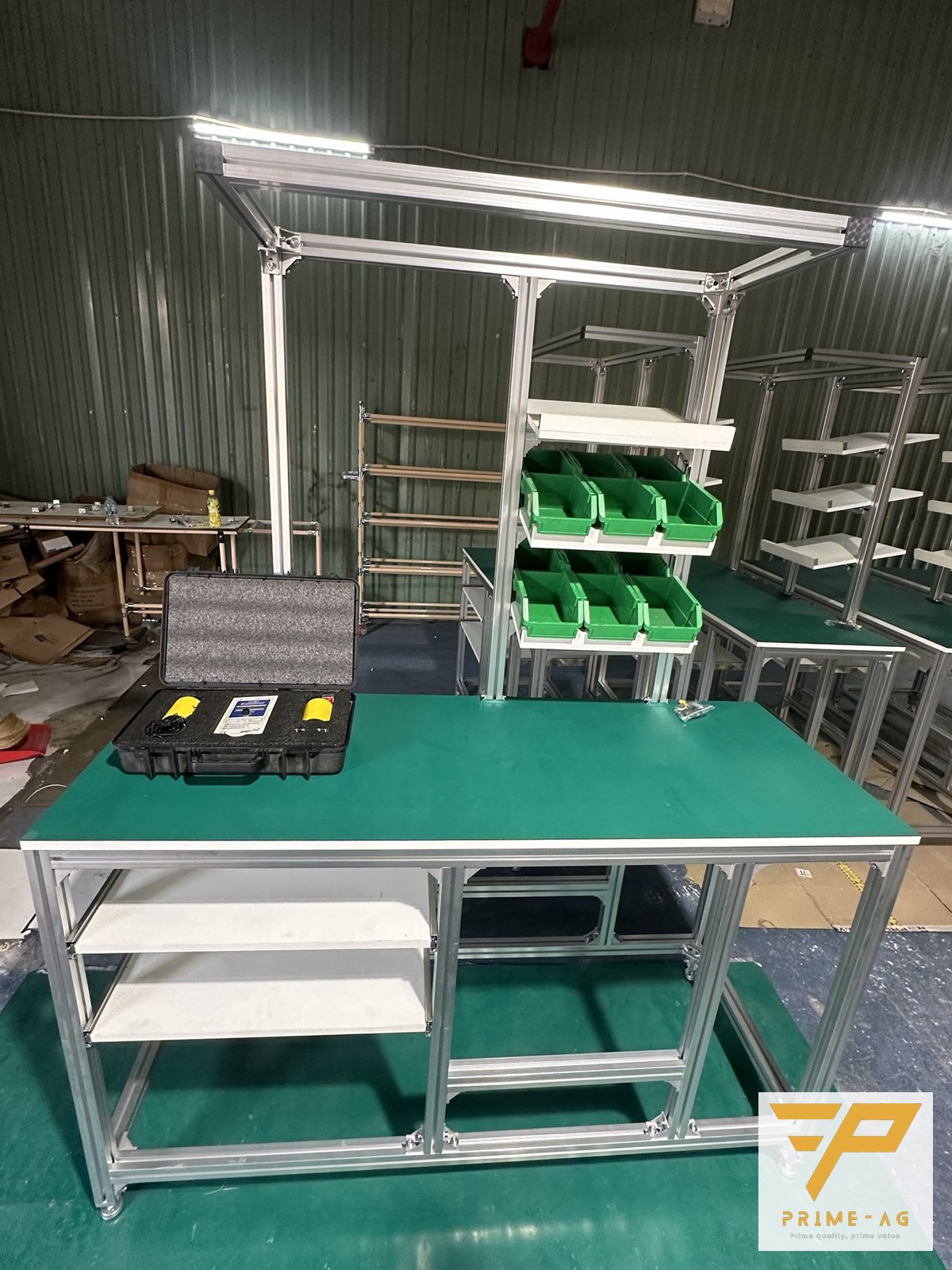
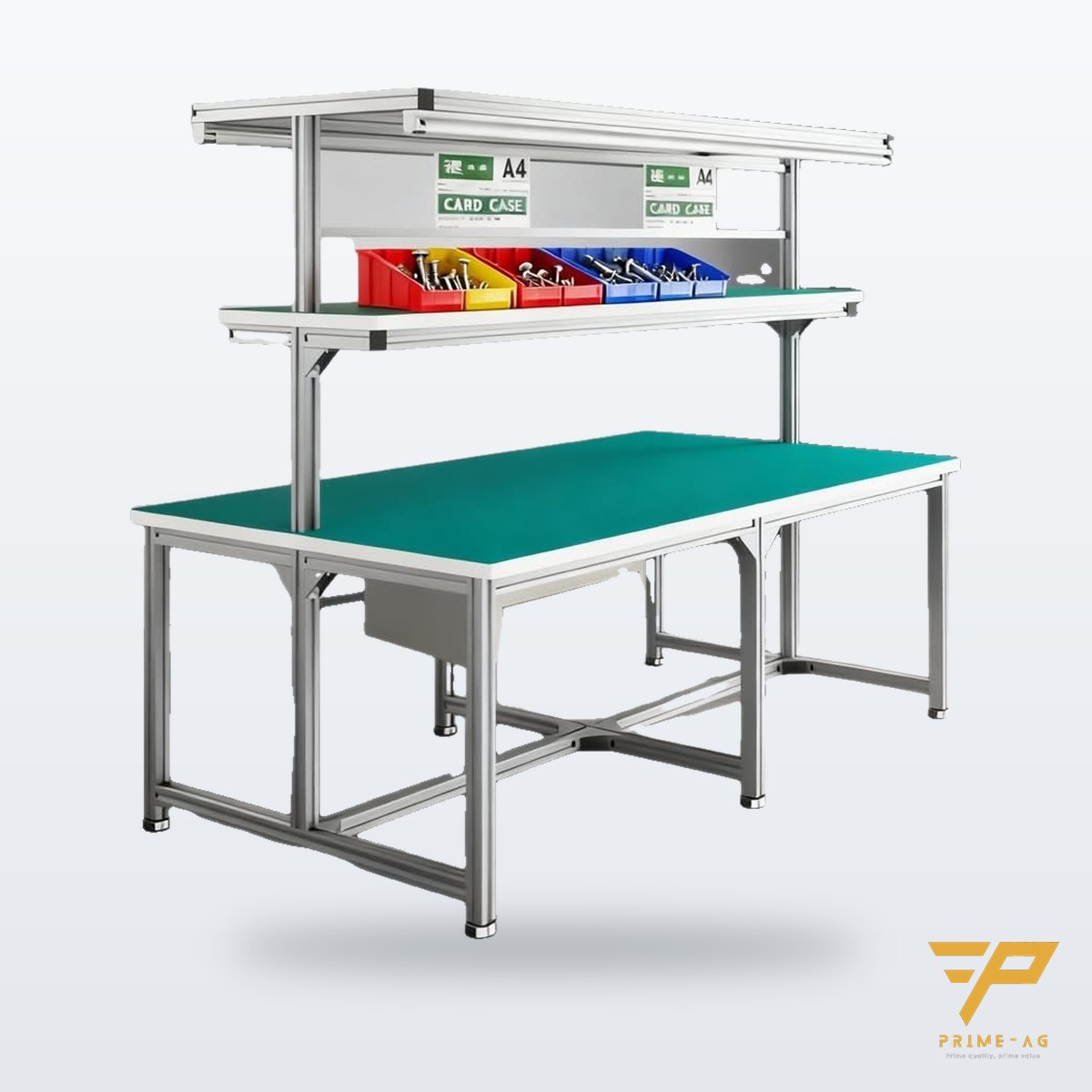
- Frame by load: 40×40 aluminum for heavy testers, Φ28 steel pipe for light jigs.
- Two ground paths: one wire for the ESD laminate top, a separate wire for the anodized aluminum frame.
- A place for every board: a rack for boards waiting for test, an ESD bin with its own marking for NG boards.
1. Common problems at test station benches
- The bench shakes when the jig closes.
- Jigs removed at changeover sit on the floor.
- Power cords and signal cables tangled behind the tester.
- Anodized aluminum frame not grounded.
- One power strip feeding every device.
2. Choosing the frame: 40×40 aluminum or Φ28 steel pipe
The 40×40 aluminum profile workbench with ESD top uses A6063-T5 aluminum and carries 300 kg evenly distributed; a point load is limited to 50 kg, and heavier testers need reinforcement. If the station only has light jigs, a Φ28 plastic-coated steel pipe workbench is enough: 150 kg on the top, 20 kg per shelf, and the layout can be changed without welding.
3. ESD bench top and grounding the frame as well
ESD laminate has a surface resistance of 10⁶–10⁹ Ω; once grounded, the resistance from bench top to ground must be below 1×10⁹ Ω. The anodized layer is insulating aluminum oxide, so the frame needs its own ground wire to the common ground point.
Operators wear a coiled-cord ESD wrist strap (1 MΩ resistor in the snap end); the person–strap–cord system must be below 3.5×10⁷ Ω. Old benches with ordinary tops can be covered with a 2-layer ESD rubber mat, with the mat snap connected to ground. When receiving benches, follow the 5-step ESD workbench acceptance procedure.
4. Layout for jigs, boards waiting for test and NG boards
The upper shelf holds the monitor; spare jigs go on a separate stand next to the bench, not on the floor. Boards waiting for test sit on the left in a PCB magazine rack with 50 slots at 10 mm pitch, and passed boards go out on the right. NG boards go into a carbon-filled PP ESD plastic bin (10³–10⁹ Ω) printed with a different marking so they are not dropped into the wrong bin.
5. Power and height
The aluminum bench has optional 18 W LED lighting and a 4–6 outlet power strip; if there are more devices than outlets, add a second strip instead of daisy-chaining strips. Height can be specified from 700 to 900 mm for standing or seated work.
| Bench item | Requirement for test stations | Notes |
|---|---|---|
| Frame | 40×40 aluminum for heavy testers; Φ28 pipe for light jigs | Point load 50 kg |
| Bench top | ESD laminate 10⁶–10⁹ Ω | To ground < 1×10⁹ Ω |
| Grounding | One wire for the top, one wire for the frame | Anodized aluminum does not conduct by itself |
| Board storage | Rack for boards waiting for test, ESD bin for NG boards | Different markings |
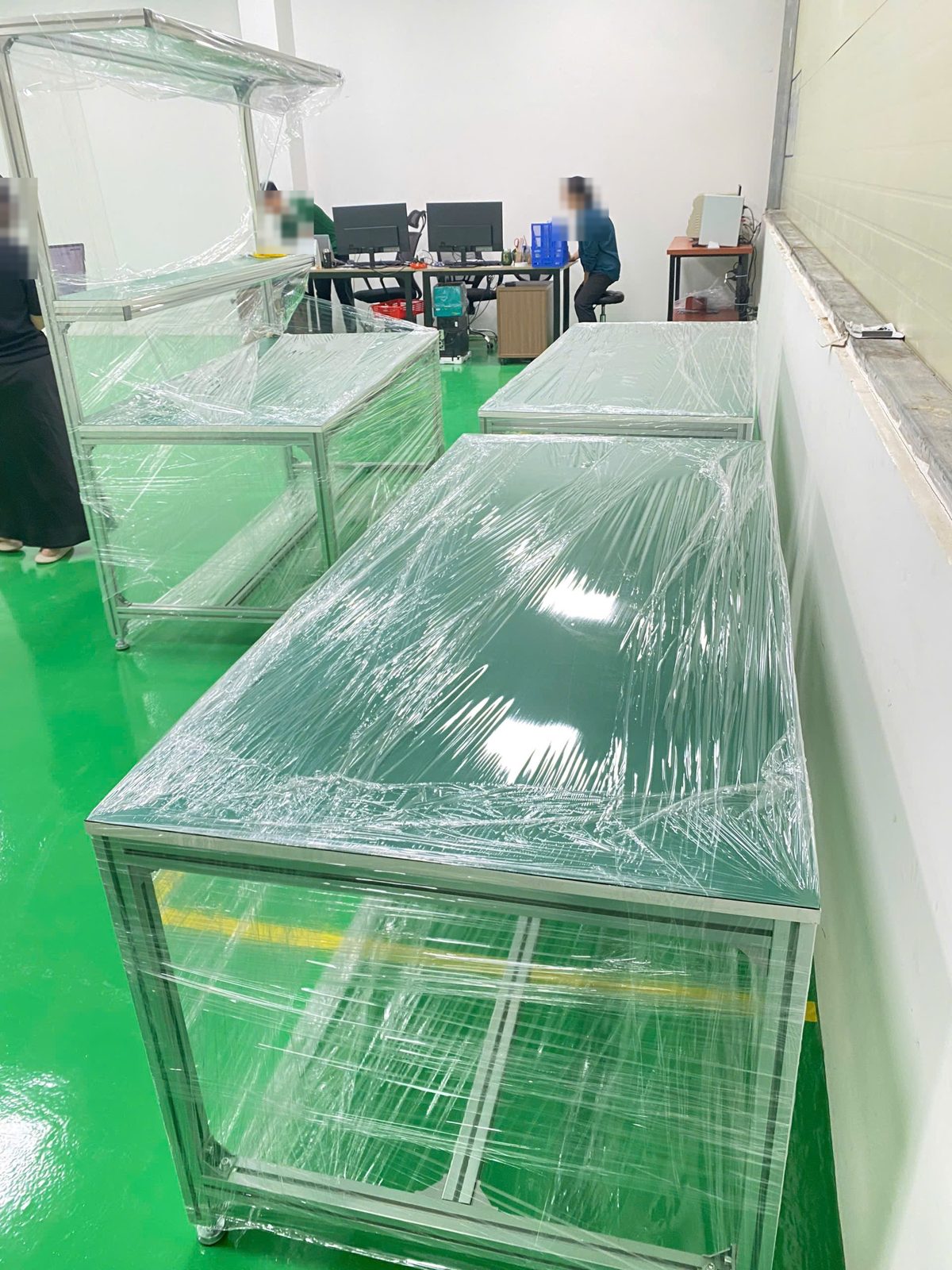
In 2024–2025, PRIMEAG delivered about 500 ESD benches with lights, power strips and ground cords, in 4 batches, to a Taiwanese-invested electronic components factory in Da Nang.
Where to start
- Note the weight of the tester and the largest jig; count the devices that need power.
- Sketch the board flow: waiting, testing, passed, NG.
- Send the layout via the drawing submission page and get a quote within 30 minutes.
For test stations already running, book a free trial measurement by PRIMEAG of the resistance from bench top and frame to the ground point before renovating; the service is for factories in Ho Chi Minh City, Binh Duong and Dong Nai, also covers benches not bought from PRIMEAG, involves no obligation to buy, and the results are for reference only.
Standard model benches are made in 5–7 working days; the frame carries a 3-year warranty, and the ESD top, light and power strip 12 months.
Frequently asked questions
- Does an aluminum profile frame need its own ground connection? — Yes. Anodized aluminum is coated with a non-conductive oxide, so a separate wire is needed from the frame to the common ground point.
- How heavy a tester can a 40×40 aluminum bench hold? — The bench carries 300 kg when the load is evenly distributed. If the tester puts more than 50 kg on one spot, the bench needs reinforcement; give the tester weight and foot positions when requesting a quote.
- Do NG boards need a separate ESD bin? — It is recommended. Failed boards are still ESD-sensitive because they go on to repair; a separate, marked bin keeps failed boards from getting mixed with passed boards.
Updated: 2026-10-28 — PRIMEAG engineering team
Email: info@primeag.vn · Phone/Zalo: +84 906 108 292
Written by the PRIMEAG engineering team
Updated: 2026-10-28